Why Concrete Removal in Kendall West Requires a Site-Specific Game Plan
Kendall West sits on the western edge of Miami-Dade County, where the soil profile transitions from urban fill to marl and limestone-based substrates common throughout South Florida. That geological reality directly affects how concrete behaves when it’s time to remove it. Slabs poured over compacted marl tend to bond tightly to the subgrade, making standard hydraulic breaking slower and more labor-intensive than contractors often expect. Before a single jackhammer hits the surface, a qualified crew needs to evaluate slab thickness, reinforcement type, proximity to utilities, and the load-bearing relationship between the concrete and adjacent structures. Skipping that assessment is how projects in this corridor blow past budget and schedule before they even get started.
Step 1 — Conduct a Full Pre-Demolition Assessment Before Any Equipment Arrives
The first step in any concrete removal project in Kendall West is a thorough pre-demolition survey. This is not optional — it is the document that governs every decision that follows. A proper assessment covers six critical areas:
- Slab thickness measurement: Use a ground-penetrating radar (GPR) scan or core sample to confirm actual poured depth. Residential slabs in Kendall West typically range from 4 to 6 inches, but older commercial pads can exceed 10 inches.
- Reinforcement mapping: Identify whether the slab contains rebar, wire mesh, post-tension cables, or fiber reinforcement. Post-tensioned slabs require a completely different removal protocol and must never be cut or broken without first locating and de-stressing the tendons.
- Utility marking: Call 811 and supplement with private utility locating. Embedded conduit, plumbing sleeves, and irrigation lines are common in Kendall West residential and commercial slabs.
- Structural dependency: Determine whether the slab acts as a grade beam, supports masonry walls, or is tied into a foundation system. Partial removal of a structurally integrated slab requires engineered shoring.
- Access and staging area: Assess gate widths, overhead clearances, and surface load ratings for equipment ingress. Many Kendall West HOA communities restrict equipment to specific entry points and hours.
- Debris volume estimate: Calculate cubic yards of concrete to be removed. Standard weight is approximately 150 lbs per cubic foot — a 1,000 sq ft, 4-inch slab generates roughly 18.5 tons of debris.
If you are unsure how to approach a complex slab situation, reviewing this guide on cutting existing concrete patios gives you a solid foundation for understanding what’s structurally feasible before committing to full removal.
Step 2 — Selecting the Right Demolition Method for Your Specific Slab Type
Not all concrete removal is the same. The method you choose determines equipment requirements, noise levels, vibration impact on neighboring structures, and haul-out logistics. Here are the primary techniques used in Kendall West projects:
Hydraulic Breaker Demolition for Standard Unreinforced and Lightly Reinforced Slabs
For residential driveways, pool decks, sidewalks, and patio slabs without post-tension cables, a hydraulic breaker mounted on a skid steer or mini excavator is the most efficient option. The machine fractures the slab into manageable chunks that are then loaded into a roll-off dumpster or dump truck. In tight Kendall West residential lots, a compact track loader with a 500 to 700 ft-lb breaker attachment provides the right balance of power and maneuverability. Expect production rates of 200 to 400 square feet per hour depending on slab thickness and rebar density.
Diamond Blade Saw Cutting Followed by Mechanical Breaking for Reinforced Slabs
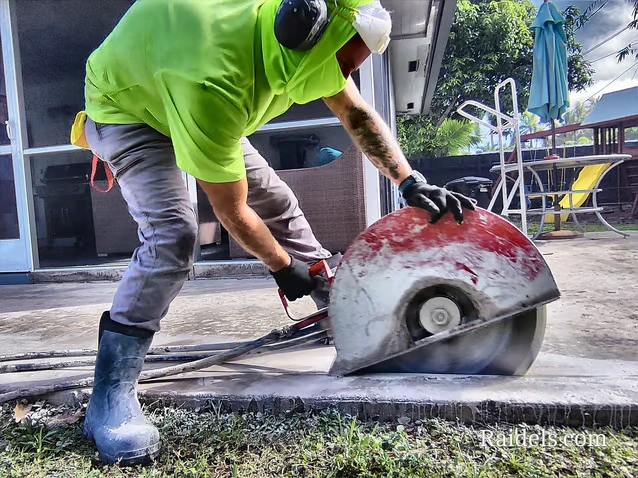
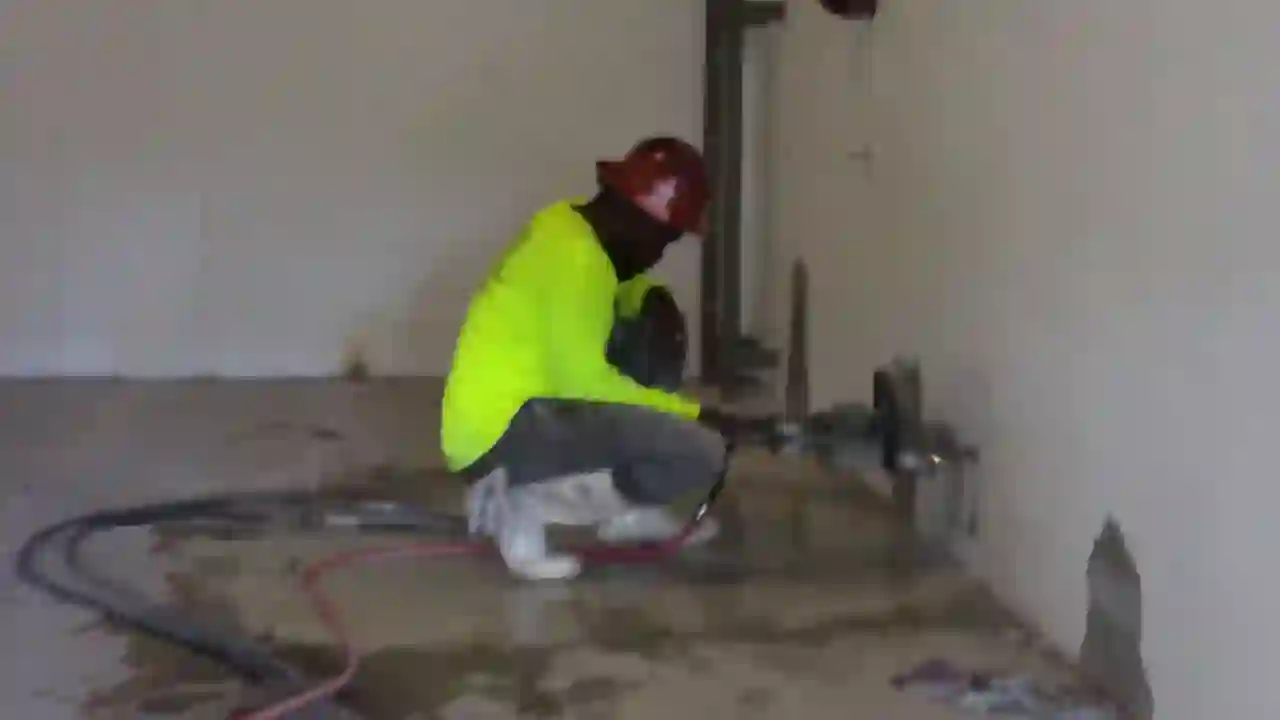
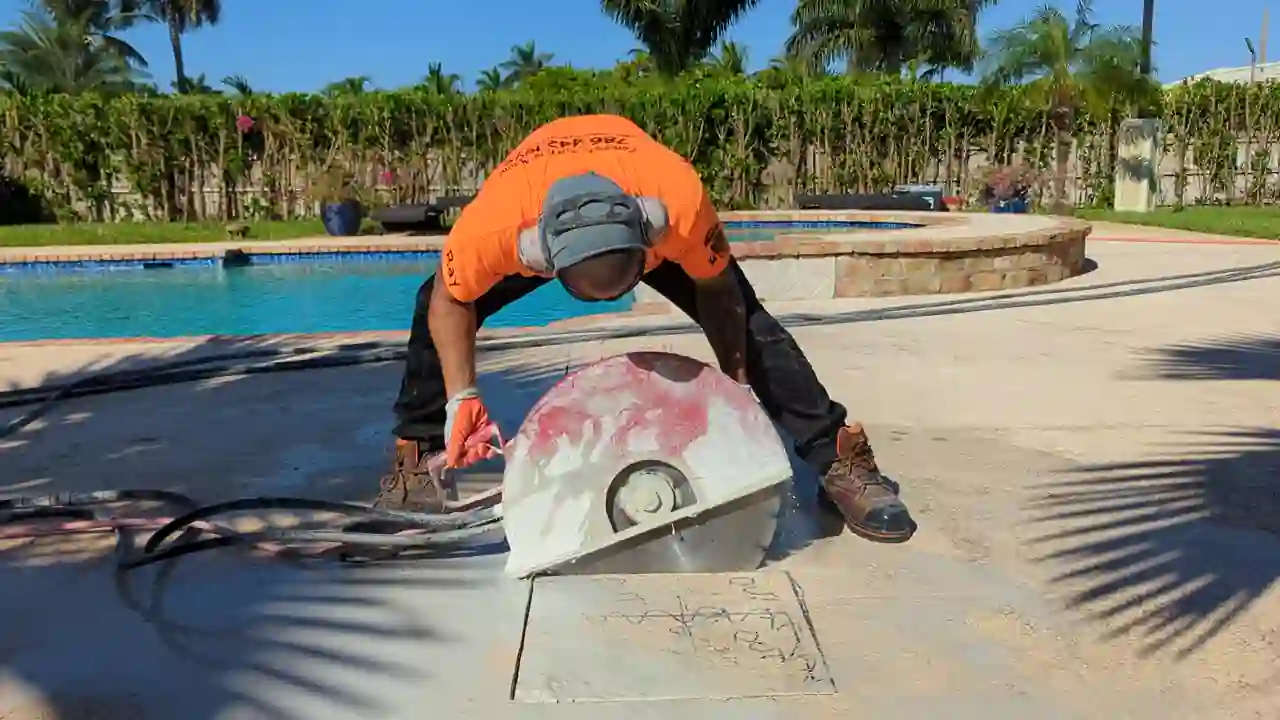
When rebar or wire mesh is present, pre-cutting the slab into defined panels before breaking dramatically reduces production time and makes debris handling safer. A flat saw with a 20-inch diamond blade cuts through 6-inch reinforced concrete in a single pass. Panels are typically scored at 24 to 36-inch intervals, then lifted using a pry bar or excavator bucket. This method also minimizes random cracking that can undercut adjacent structures. For projects that also involve interior concrete trenching for plumbing, the saw-cut approach keeps lines clean and precise.
Controlled Demolition Using Expansive Grout for Vibration-Sensitive Areas
In locations adjacent to occupied structures, historic masonry, or sensitive mechanical equipment, expansive demolition grout (also called non-explosive demolition agent) is the preferred method. Holes are drilled in a grid pattern at 12 to 18-inch centers, filled with the chemical agent, and left to expand over 12 to 24 hours. The resulting fracture pattern allows hand-removal of broken sections with minimal vibration. This technique is slower and more labor-intensive, but it is the right call when structural risk to neighboring elements is a concern.
Step 3 — Miami-Dade Permitting Requirements You Cannot Ignore
Concrete removal in Kendall West falls under Miami-Dade County jurisdiction, and permit requirements depend on the scope and nature of the work. Here is what you need to know:
- Demolition permits: Required for removal of any structural concrete element, including foundation walls, grade beams, and load-bearing slabs. Submit to Miami-Dade Building Department with a site plan and structural engineer’s letter if applicable.
- Right-of-way permits: If equipment or debris containers will occupy any portion of a public street or sidewalk, a separate ROW permit from Miami-Dade Public Works is required. This is commonly needed in Kendall West where residential lots have limited staging space.
- Environmental compliance: Concrete debris must be hauled to a licensed C&D (construction and demolition) debris recycling facility. Miami-Dade enforces this strictly. Confirm your contractor has an active hauling account with a permitted facility before work begins.
- HOA notifications: Many Kendall West communities require advance written notice and equipment approval before demolition begins. Failure to comply can result in work stoppage and fines.
Navigating permitting and contractor selection simultaneously is where most property owners lose time and money. The resource at getting the right concrete services without wasting time or money breaks down exactly how to vet contractors and structure your project scope before signing anything.
Step 4 — Debris Logistics and Haul-Out Planning for Kendall West Projects
Concrete is one of the heaviest demolition materials you will ever deal with. A 10-yard roll-off dumpster has a typical weight limit of 8 to 10 tons — meaning a mid-size residential slab removal may require two or three container swaps. Plan your haul-out schedule before demolition begins, not after. Key logistics considerations include:
- Schedule container delivery and swap-out times with the hauler in advance, especially for same-day or next-day turnaround.
- Confirm that the driveway or staging surface can support a loaded roll-off truck (typically 60,000+ lbs GVW). Place plywood sheets under container legs if surface is pavers or asphalt.
- For large commercial removals, consider direct-load into a tri-axle dump truck staged adjacent to the work zone to eliminate double-handling.
- Separate clean concrete from mixed debris — clean crushed concrete has recycled aggregate value and may reduce disposal costs.
For projects with complex site access or multi-phase demolition schedules, the Miami site logistics resources provide additional guidance on sequencing and equipment staging in tight urban environments.
Step 5 — Post-Removal Subgrade Preparation That Sets Up the Next Phase Correctly
Once the concrete is out, the subgrade condition determines what comes next. In Kendall West, it is common to find soft or organically contaminated fill beneath older slabs — material that was never properly compacted when the original slab was poured. Probing the exposed subgrade with a penetrometer or simply walking the area will reveal soft spots. Any zone that deflects more than half an inch under foot pressure needs to be excavated and replaced with compacted clean fill or limerock base before a new slab is poured.
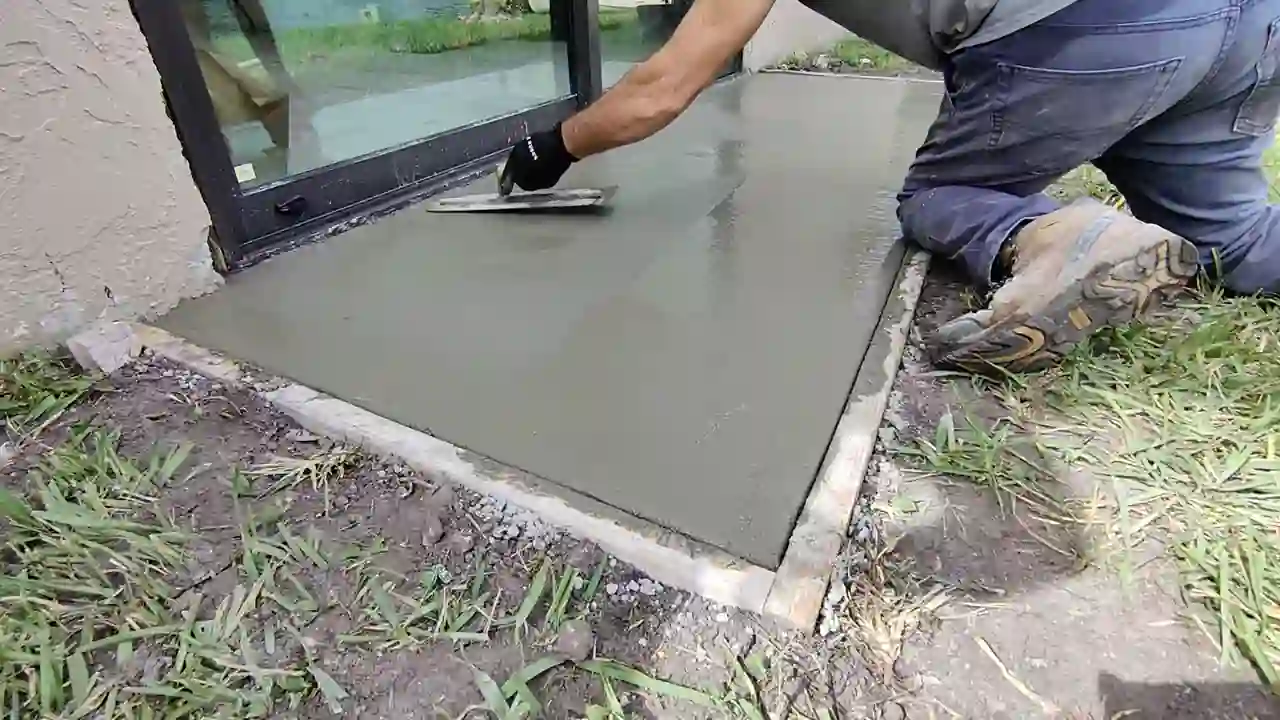
This step is also the right time to install or upgrade any underground utilities, irrigation sleeves, or drainage structures. Doing this work after the subgrade is exposed — before forming and pouring the new slab — eliminates the need for future cutting and trenching. Projects across South Florida that have followed this sequencing approach, including those documented in Miami construction project case studies, consistently report fewer change orders and faster overall project timelines.
Choosing a Concrete Removal Contractor in Kendall West — What to Verify Before You Sign
The concrete removal market in Miami-Dade is competitive, but not every contractor operating in Kendall West has the equipment, licensing, or experience to handle your specific project. Before committing, verify the following:
- Miami-Dade contractor license: Confirm active licensure through the Miami-Dade Building Department portal. A general contractor or demolition contractor license is required for permitted work.
- Liability and workers’ compensation insurance: Request certificates of insurance naming your property as an additional insured. Minimum $1M general liability is standard for commercial work.
- Equipment ownership vs. rental: Contractors who own their own hydraulic breakers, flat saws, and haul equipment have tighter schedule control than those who subcontract equipment. Ask directly.
- GPR scanning capability: Any contractor removing concrete near utilities or in post-tension slab territory should either own or have a standing relationship with a GPR scanning provider.
- References from Kendall West or adjacent projects: Local experience matters. Familiarity with HOA requirements, soil conditions, and permit office contacts saves time.
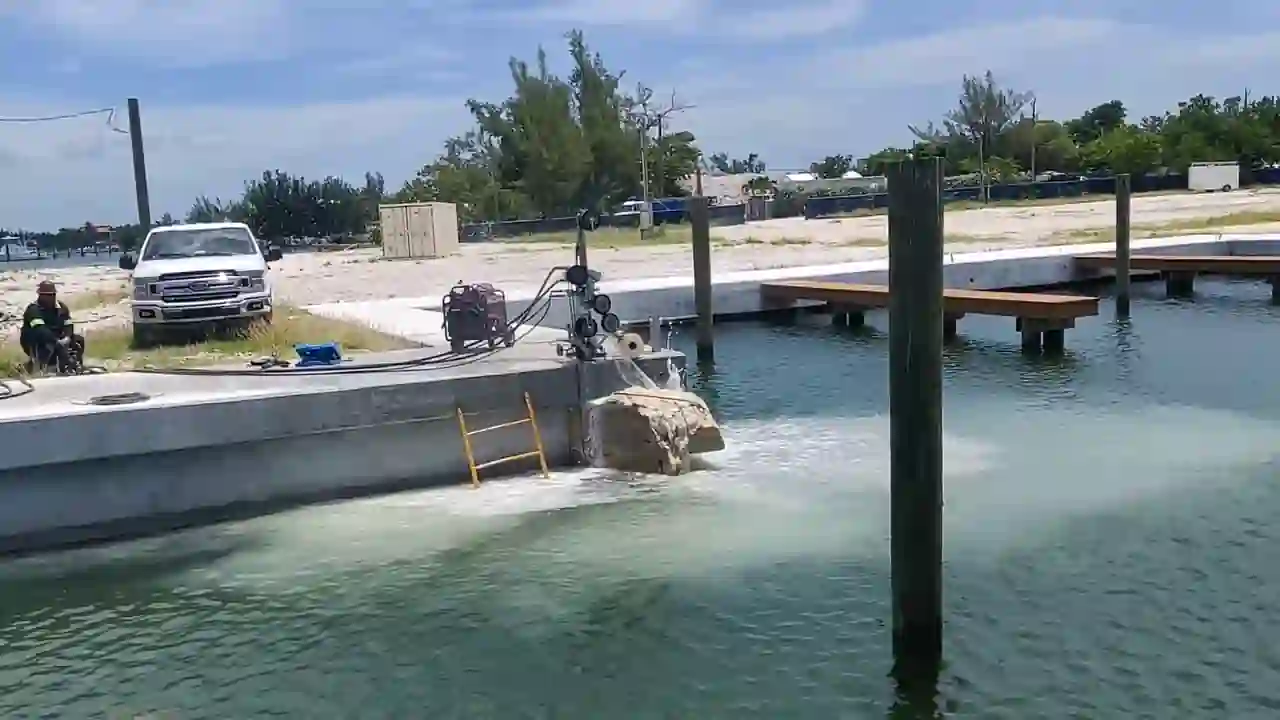
For projects extending beyond Kendall West into other South Florida jurisdictions, the technical standards and contractor requirements discussed in Florida Keys concrete cutting projects illustrate how site-specific conditions continue to drive method selection across the region.
The Real Cost of Getting Concrete Removal Wrong in Kendall West
Underestimating a concrete removal project in Kendall West doesn’t just inflate the invoice — it can damage adjacent structures, trigger stop-work orders, create environmental liability, and delay every subsequent trade. The property owners and project managers who navigate this process cleanly are the ones who invest time in pre-demolition assessment, select the right removal method for their specific slab conditions, and work with licensed contractors who know Miami-Dade’s regulatory environment. Every technical decision in concrete removal is a downstream decision — get the front end right, and the rest of the project follows.