Why Concrete Hole Saw Operations Demand a Dedicated Safety Framework
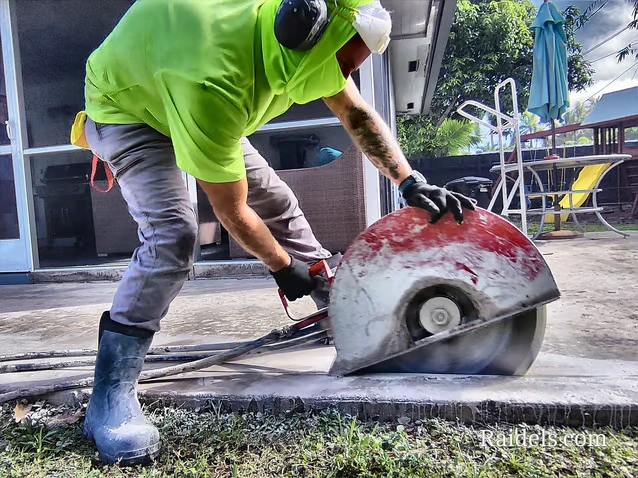
Whether you’re working on a commercial build in Auckland or a residential renovation in Christchurch, using a concrete hole saw in NZ conditions introduces a specific cluster of hazards that general drilling protocols simply don’t address. Reinforced slabs, post-tension decks, and aggregate-dense concrete all behave differently under a diamond-tipped or carbide hole saw, and the consequences of an uncontrolled cut — blade seizure, rebar strike, silica cloud — can be catastrophic. At Concrete Cutting Miami, LLC, our senior consultants have standardized safety frameworks that translate across jurisdictions, and the core principles apply directly to NZ job sites operating under both WorkSafe NZ guidelines and internationally recognized OSHA standards.
Pre-Drill Hazard Assessment — The Non-Negotiable First Step
Before a hole saw makes contact with any concrete surface, a structured pre-drill hazard assessment must be completed and documented. This isn’t a walkthrough — it’s a formal written evaluation that identifies structural risks, utility conflicts, and environmental conditions specific to that pour location.
Scanning for Embedded Utilities and Post-Tension Cables
Striking a post-tension cable with a concrete hole saw is not just a tool failure event — it’s a lethal release of stored tensile energy. In NZ construction, post-tensioned slabs are common in multi-story residential and commercial builds. Before any hole saw operation, ground-penetrating radar (GPR) or a calibrated rebar/conduit scanner must be used to map the substrate to a minimum depth of 150mm beyond the intended cut depth. Never rely on architectural drawings alone — as-built conditions routinely deviate from design documentation by 20–40mm in reinforcement placement.
Embedded electrical conduit, hydraulic lines, and plumbing runs also require positive identification. The scan data should be transferred to a marked-up slab diagram that every crew member on the drill team reviews before work begins. This is a core requirement under OSHA 29 CFR 1926.651 and aligns with WorkSafe NZ’s Health and Safety at Work Act 2015 obligations around hazard identification.
Structural Load Path Verification Before Core Removal
Removing a core — even a 100mm diameter penetration — from a load-bearing slab can compromise shear capacity if the cut intersects a critical reinforcement zone. Structural engineers must be consulted when hole saw operations target slabs thicker than 200mm or any slab identified as a transfer plate. This step is frequently skipped on fast-track job sites, and it represents one of the most under-regulated hazards in concrete cutting operations. If your project involves enlarging existing openings in structural walls or slabs, the same load path analysis applies before the first cut.
Silica Dust Control — OSHA Table 1 Compliance for Hole Saw Drilling
Respirable crystalline silica (RCS) is generated in significant concentrations during concrete hole saw operations. OSHA’s Table 1 (29 CFR 1926.1153) mandates specific engineering controls for rotary drilling in concrete, and these requirements are not optional — they carry citation penalties that can reach $15,625 per violation per day.
Wet Drilling vs. On-Tool Vacuum Extraction Systems
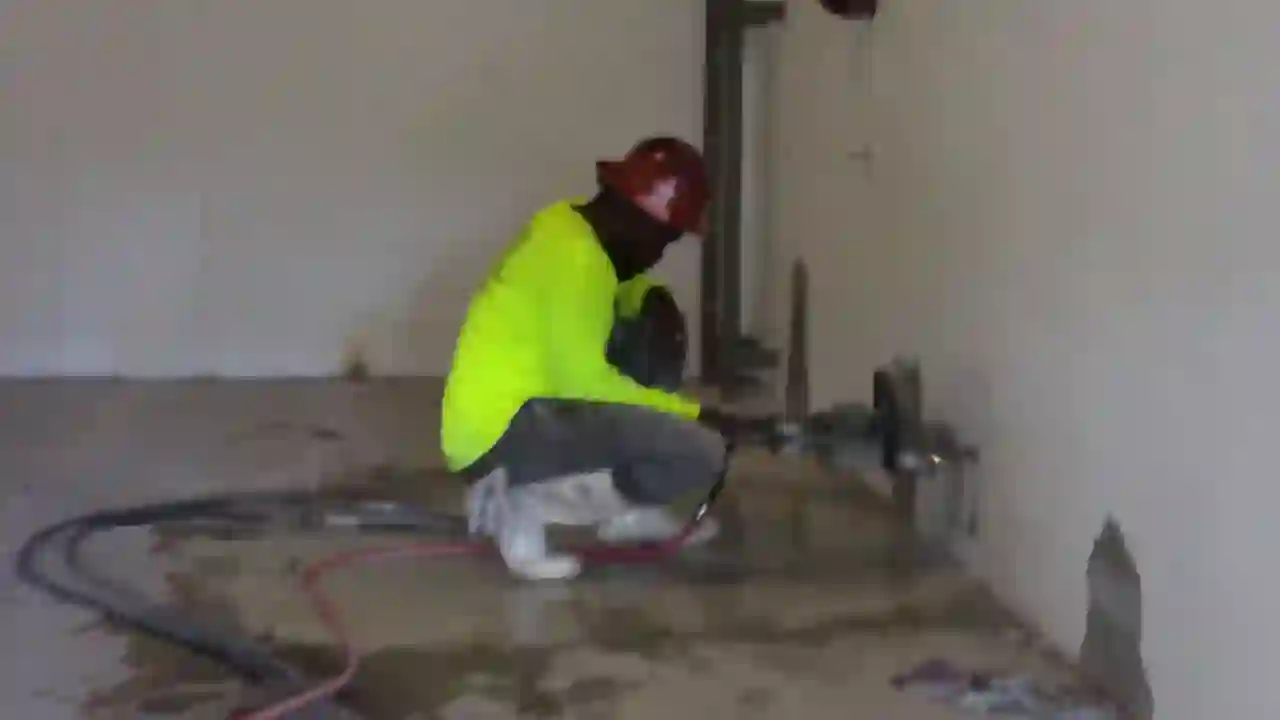
For concrete hole saw operations, two primary dust control methods are OSHA-compliant: wet drilling with continuous water feed and on-tool vacuum extraction with a HEPA-filtered shroud. Wet drilling is generally preferred for larger diameter cuts (75mm and above) because water cooling also extends blade life and reduces the thermal stress that causes segment delamination. The water flow rate must be sufficient to suppress dust at the cutting face — a minimum of 0.5 liters per minute is the accepted industry benchmark.
Vacuum extraction systems must use a vacuum rated at a minimum of 25 air watts of suction at the tool head, with a HEPA filter capturing particles down to 0.3 microns. Filters must be checked and replaced according to manufacturer intervals — a clogged filter on a vacuum system provides essentially zero silica protection and creates a false sense of compliance. Operators working without adequate dust controls should be aware that silica exposure accumulates invisibly and irreversibly, leading to silicosis, lung cancer, and COPD.
Understanding the full cost structure of compliant concrete cutting operations — including dust control equipment, PPE, and engineering assessments — is something our team addresses in detail at our concrete cutting costs resource.
PPE Requirements Specific to Hole Saw Drilling Operations
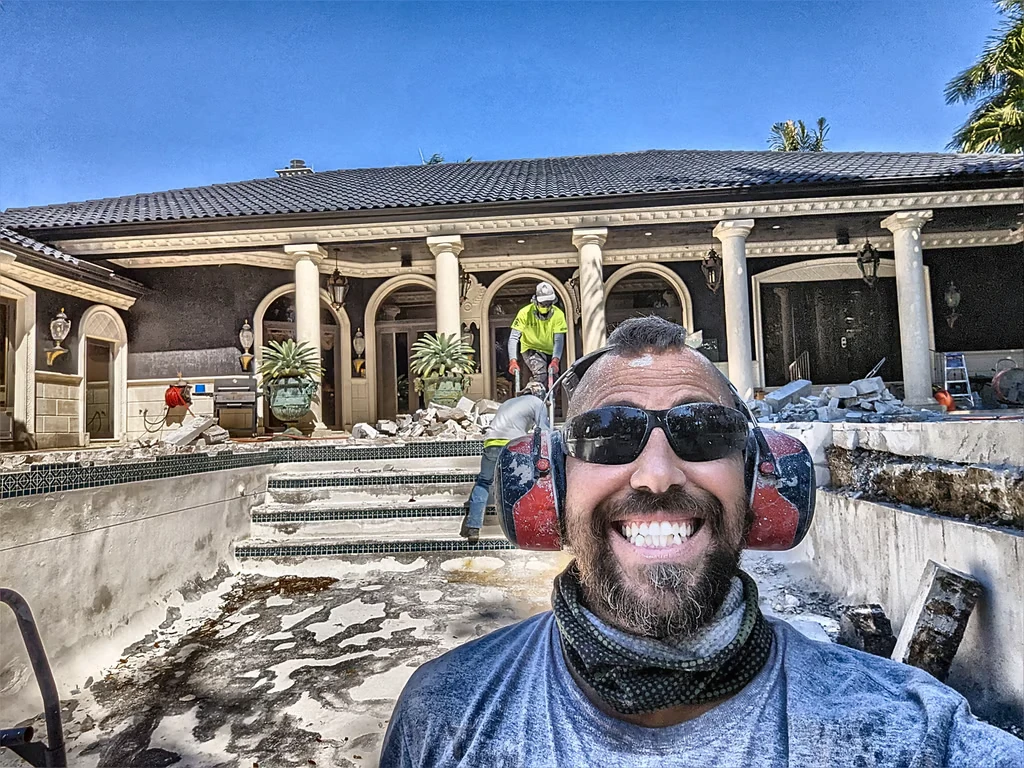
Personal protective equipment for concrete hole saw work goes beyond a hard hat and safety glasses. The following PPE stack is required for OSHA compliance and represents the minimum standard for any professional drilling operation:
- Respiratory Protection: A NIOSH-approved N95 respirator is the minimum for short-duration tasks with engineering controls in place. For extended drilling or inadequate ventilation, a half-face respirator with P100 filters is required. Fit testing must be documented annually.
- Eye and Face Protection: Safety glasses alone are insufficient. A full-face shield rated to ANSI Z87.1 must be worn during active drilling to protect against concrete fragment ejection and slurry splash.
- Hearing Protection: Rotary hammer drills and core drilling rigs operating in enclosed spaces routinely exceed 90 dB(A). Earplugs or earmuffs rated to NRR 25 or higher are mandatory for exposures exceeding 85 dB(A) over an 8-hour TWA.
- Hand and Arm Protection: Anti-vibration gloves rated to ISO 10819 reduce hand-arm vibration syndrome (HAVS) risk during prolonged drilling. HAVS is a recognized occupational disease in NZ and the UK, and it is irreversible once developed.
- Foot Protection: Steel-toed, puncture-resistant boots are required. Core slugs ejected from wet drilling operations are dense, unpredictable projectiles.
Blade Selection, Mounting Integrity, and Kickback Prevention
Matching Diamond Segment Specification to Concrete Hardness
Using the wrong diamond bond hardness for the concrete being cut is one of the leading causes of hole saw blade failure and operator injury. Soft-bond segments are designed for hard, abrasive aggregate concrete — they expose fresh diamonds quickly as the bond wears. Hard-bond segments are engineered for soft, green, or low-aggregate concrete. Mismatching these specifications causes glazing (in soft bond on soft concrete) or rapid segment loss (in hard bond on hard concrete), both of which create unpredictable blade behavior including seizure and kickback.
In NZ, concrete mixes vary significantly between regions due to local aggregate sources. Pumice-heavy mixes in volcanic zones behave very differently from greywacke-aggregate mixes in Canterbury. Always request the concrete specification from the structural engineer or site supervisor before selecting your hole saw segment type.
Torque Reaction and Drill Rig Anchoring Protocols
Handheld hole saw drilling in diameters above 50mm creates torque reaction forces that can cause severe wrist and forearm injuries if the blade binds. OSHA and industry best practice require that any hole saw operation above 65mm diameter be performed with a drill rig anchored to the work surface using a vacuum base or mechanical anchor system. The anchor must be rated to withstand the maximum stall torque of the drill motor — this specification is available in the tool’s technical data sheet.
Torque reaction injuries are underreported in the concrete cutting industry but represent a significant proportion of acute job-site injuries. If you’re managing moisture-related structural concerns alongside your drilling program — particularly in coastal NZ environments — our team’s resources on hydrostatic pressure and weatherproofing provide relevant context for why penetration placement and sealing matter beyond the cut itself.
Post-Cut Procedures — Slurry Containment and Structural Verification
The work doesn’t end when the core clears the slab. Wet drilling generates concrete slurry that is alkaline, abrasive, and classified as a controlled waste in most NZ regional council jurisdictions. Slurry must be contained using berms or vacuum recovery systems — it cannot be discharged to stormwater drains. Disposal must comply with local council trade waste bylaws.
Once the core is removed, the penetration edges must be inspected for micro-cracking, which can propagate under cyclic loading. Any cracking beyond 0.3mm width should be reported to the structural engineer of record. Penetration sleeves, fire collars, and waterproofing membranes must be installed per specification before the opening is put into service. For projects involving broader concrete services, our team can coordinate the full scope from cutting through to penetration sealing and structural remediation.
Building a Safety Culture Around Concrete Hole Saw Operations
Technical protocols are only as effective as the culture that enforces them. Every crew member involved in hole saw drilling — from the operator to the laborer holding the vacuum hose — must receive documented task-specific training before the job begins. Toolbox talks should cover the specific hazards identified in the pre-drill assessment, not generic safety reminders. Stop-work authority must be explicitly granted to every worker on the team, with zero tolerance for retaliation against anyone who raises a safety concern.
Incident reporting — including near-misses — must be treated as intelligence, not liability. The near-miss where a blade seized and the drill rig shifted six inches is the warning that prevents the next incident from being a fatality. Build your safety management system around learning from those events, and your concrete hole saw operations will consistently meet and exceed both OSHA and WorkSafe NZ standards.