Technical Overview of Cutting Concrete Slab with Rebar
When you’re staring down a 6-inch slab with a #4 rebar grid on 12-inch centers, you’re not just cutting concrete. You’re asking a diamond blade to chew through high-tensile steel. Most operators get this wrong. They grab a general-purpose blade, drop the head too fast, and end up with a glazed segment and a burned-out motor. Cutting concrete slab with rebar demands a completely different approach to tooling, feed pressure, and cooling. Let’s walk through the exact variables that make or break this job.
The first thing to understand is the metallurgical difference between cutting aggregate and cutting steel. Concrete is abrasive; it wears the bond matrix of a diamond segment to expose fresh diamonds. Steel is ductile; it smears and generates extreme heat. A blade designed for plain concrete will have a soft bond that wears too fast in steel, or a hard bond that glazes over when it hits rebar. For cutting concrete slab with rebar, you need a blade with a medium-to-hard bond matrix and a higher diamond concentration. This allows the segments to withstand the impact of the steel without losing their cutting edge.
Diamond Blade Selection for Reinforced Concrete
Not all diamond blades are created equal. For a slab with heavy rebar, you should be looking at a blade specifically rated for “reinforced concrete” or “rebar cutting.” The segment design matters. Look for a blade with a multi-layer or “step” segment profile. These segments have a softer initial layer that breaks down quickly to expose the diamond, and a harder backing layer that holds up against the steel. A standard flat segment will often polish out on the first rebar encounter, leaving you with a useless blade.
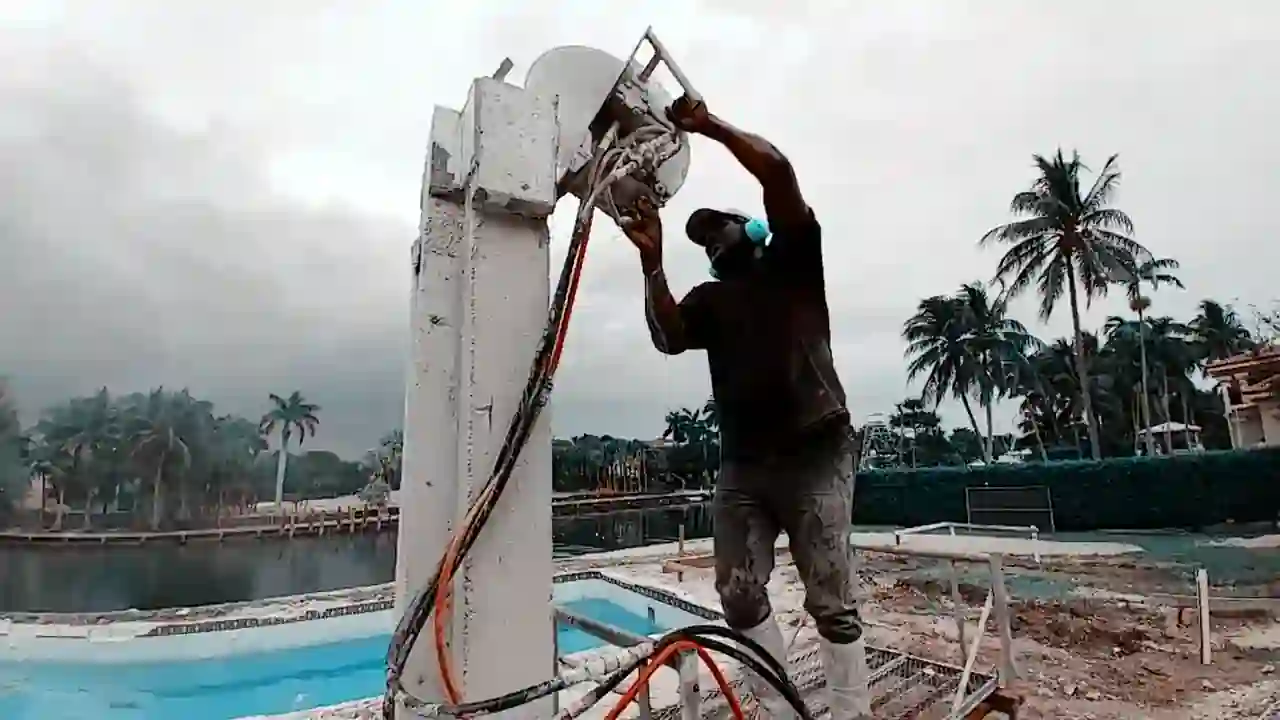
Blade diameter is another critical factor. For flat sawing a slab, you typically use a 14-inch to 48-inch blade. The larger the blade, the more linear feet of cutting edge you have per revolution, which reduces heat buildup. However, larger blades also require more horsepower. If you’re running a 20-hp flat saw, a 36-inch blade is the sweet spot for cutting concrete slab with rebar. Going to a 48-inch blade on that same saw will bog the motor down in heavy steel.
Segment Bond Hardness and Coolant Flow
Water is not optional here. Dry cutting through rebar generates temperatures that can anneal the steel, making it harder to cut, and can actually melt the diamond segments off the blade core. You need a consistent, high-volume water flow directed at both sides of the blade. A single water line is insufficient. Use a dual-port water manifold that hits the blade entry and exit points. The water also flushes the steel swarf out of the cut, preventing the blade from loading up with metal shavings.
For the bond hardness, if you’re cutting a slab with a high aggregate hardness (like limestone or trap rock) and heavy rebar, you want a bond that is slightly softer than what you’d use for the aggregate alone. This might sound counterintuitive, but the steel wears the bond faster, so a softer bond allows the diamonds to release before they become dull. If you use a hard bond, the diamonds will be pulled out of the matrix by the steel without ever being fully utilized.

Step-Cutting Method for Deep Slabs with Rebar
When the slab depth exceeds the blade’s cutting radius, you cannot simply plunge through. You have to step cut. This is where most novices fail. They try to cut the full depth in one pass, which overloads the blade and motor. For cutting concrete slab with rebar deeper than 6 inches, use a three-pass method. First pass: cut to a depth of 1.5 inches. This scores the concrete and exposes the top layer of rebar. Second pass: cut to 3.5 inches. This cuts through the top rebar mat and partially into the bottom mat. Third pass: full depth. By the third pass, the blade is only removing a small amount of concrete and the bottom rebar.
This step-cutting approach reduces the instantaneous load on each diamond segment. It also allows the water to penetrate deeper into the cut, keeping the blade cool. If you try to cut 8 inches in one pass, the blade will be buried in concrete and steel, with no way for water to reach the cutting interface. The result is a glazed blade and a stalled saw.
Feed Pressure and RPM Management
Feed pressure is the most misunderstood variable in cutting concrete slab with rebar. Too little pressure and the blade polishes. Too much pressure and you bend the arbor or break segments. The correct feed pressure is one where you can feel a consistent vibration through the handles. If the saw starts to bounce, you’re pushing too hard. If the blade sounds like it’s grinding without making progress, you’re not pushing hard enough.
RPM is equally critical. A diamond blade has a rated maximum operating speed. For a 14-inch blade, that’s typically around 4,400 RPM. For a 36-inch blade, it’s around 2,200 RPM. Running a blade too fast generates excessive heat and accelerates wear. Running it too slow causes the segments to load up with steel. Always match the blade diameter to the saw’s pulley system to achieve the correct rim speed. A good rule of thumb is to maintain a rim speed of 9,000 to 10,000 surface feet per minute (SFPM) for reinforced concrete.
Core Drilling Through Rebar-Dense Slabs
Sometimes you don’t need a full cut; you need a hole. Core drilling through a slab with rebar is a different beast. Standard diamond core bits are designed for concrete, not steel. When the bit hits rebar, the diamonds can be ripped out of the matrix, and the steel barrel can overheat and warp. For cutting concrete slab with rebar in a core drilling application, you need a bit with a “rebar cutting” segment. These segments have a higher diamond concentration and a softer bond, allowing them to abrade through the steel rather than trying to cut it.
Another trick is to use a core bit with a segmented rim. The gaps between the segments allow water to flow and swarf to escape. A continuous rim bit will clog almost immediately on rebar. Also, reduce your feed pressure by about 30% when you feel the bit hit steel. Let the bit do the work. If you force it, you’ll snap the bit or damage the anchor system. Many concrete drilling contractors in Miami use a two-step process: first, a small pilot bit to clear the rebar, then the full-size core bit to finish the hole.
Handling Post-Tensioned Slabs
If the slab is post-tensioned, you have a completely different risk profile. Cutting through a post-tensioning cable can cause the tendon to snap with explosive force. Before any cutting begins, you must use a ground-penetrating radar (GPR) scan to map the cable locations. For cutting concrete slab with rebar in a post-tensioned slab, you cut only in the “dead zones” between cables. The step-cutting method is still valid, but you never cut deeper than the concrete cover over the cables. If you hit a cable, stop immediately and reassess. This is not a job for a novice. Always consult with a structural engineer before cutting any post-tensioned slab.
Equipment Maintenance After Cutting Rebar
Cutting through rebar is hard on equipment. After every job involving cutting concrete slab with rebar, inspect the blade for segment loss, cracks, and undercutting. Undercutting occurs when the steel core wears faster than the segments, causing the segments to become loose. This is a sign that the blade bond is too hard for the application, or the water flow is insufficient. Replace the blade immediately if you see any segment movement.
Also, check the saw’s arbor and bearings. The vibration from cutting rebar can loosen the arbor nut and damage the bearings. Torque the arbor nut to the manufacturer’s specification after every blade change. For the water pump, clean the filter and check for debris. Steel swarf can clog the water lines and reduce coolant flow. A simple inline filter can save you from a ruined blade.
Safety Protocols for Reinforced Concrete Cutting
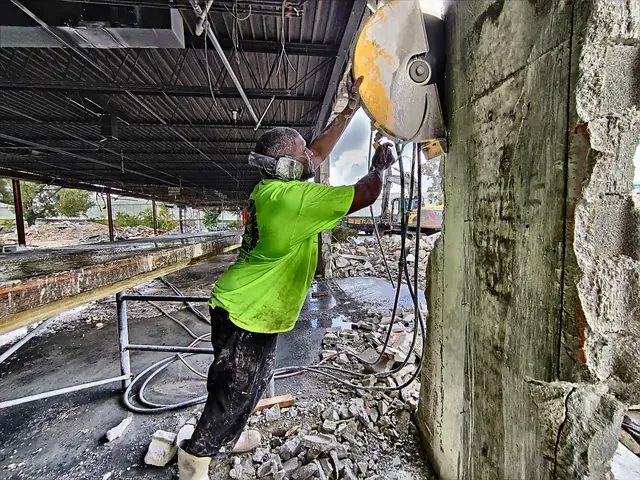
The primary hazard in cutting concrete slab with rebar is kickback. When the blade grabs a piece of rebar, it can violently kick the saw back toward the operator. Always maintain a firm two-handed grip on the saw, and stand to the side of the cutting line, never directly behind the blade. Use a saw with a clutch system that disengages the blade on sudden load spikes. Wear a full-face shield, not just safety glasses. Steel fragments can fly at high velocity when a segment breaks.
Dust control is another issue. Even with water, some silica dust can become airborne. Use a wet-cutting setup with a vacuum attachment if possible. For dry cutting, which is rarely recommended for rebar, use a HEPA vacuum and a respirator with a P100 filter. Silicosis is a real risk in this trade, and cutting through rebar generates more fine particulate than plain concrete because the steel acts as a grinding agent on the diamond segments.
For projects along the coast, where saltwater exposure can accelerate corrosion in the rebar, extra care is needed. The coastal living environment in Miami means that many slabs have epoxy-coated rebar. This coating can gum up a diamond blade faster than bare steel. For epoxy-coated rebar, increase your water flow and reduce your feed pressure by 20%. The epoxy melts at high temperatures and can clog the segment gullets. Some operators use a blade with a wider gullet spacing to accommodate the sticky residue.
Finally, always have a fire extinguisher nearby. The friction from cutting steel can ignite nearby combustibles, especially if you’re cutting near wood forms or insulation. This is a standard safety practice for any demolition methods involving reinforced concrete. The combination of heat, steel, and combustible materials is a recipe for a job-site fire.