Why Most Property Owners Get Concrete Cutting Service Wrong Before the Job Even Starts
The single biggest mistake made when hiring a concrete cutting service isn’t picking the wrong contractor — it’s walking into the conversation without understanding what you actually need. Concrete cutting is not a monolithic trade. It encompasses at least six distinct methods, each suited to specific substrate conditions, structural requirements, and access constraints. When a property owner or general contractor conflates flat sawing with wall sawing, or assumes a core drill can handle a 14-inch post-tensioned slab, the project derails fast. This guide is built to close that knowledge gap so you can communicate precisely with your cutting crew, scope the job accurately, and avoid the costly surprises that plague uninformed clients across Miami-Dade and Broward every single week.
Matching the Cutting Method to Your Specific Substrate Conditions
Before any equipment is staged, a qualified concrete cutting service will assess four primary variables: slab thickness, aggregate hardness, reinforcement type, and the presence of post-tensioning cables. Each of these dictates blade segment geometry, motor horsepower, water flow rate, and cutting depth per pass. Getting this assessment wrong doesn’t just slow the job — it destroys tooling and can compromise structural integrity.
Flat Sawing for Horizontal Slab Work and Pavement Cuts
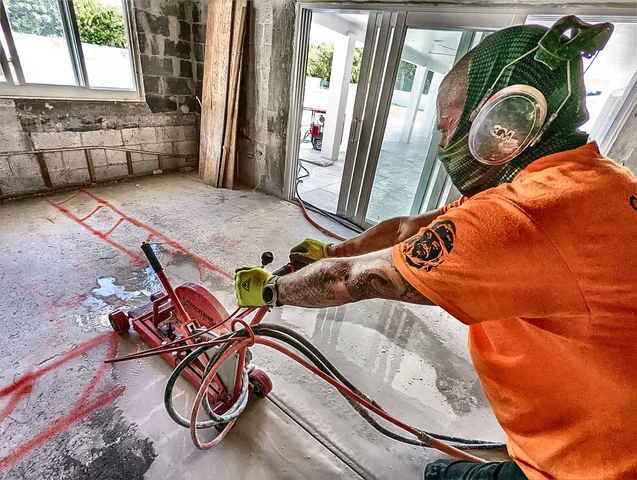
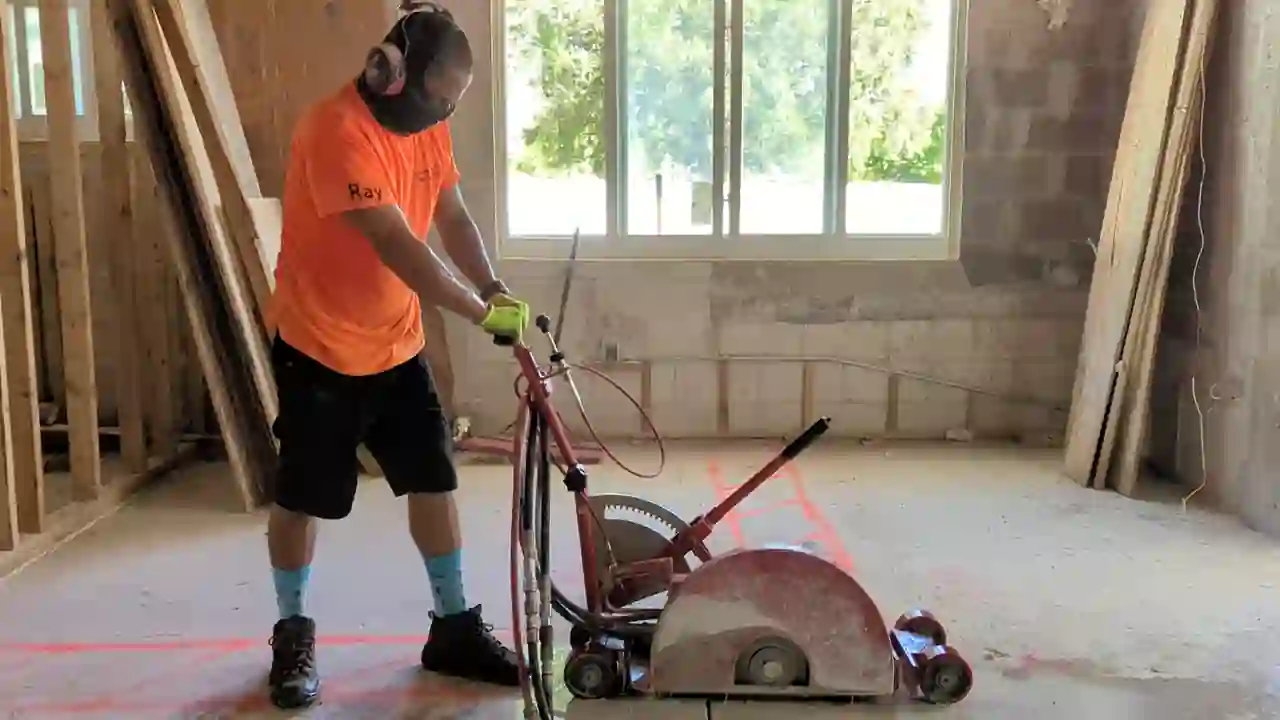
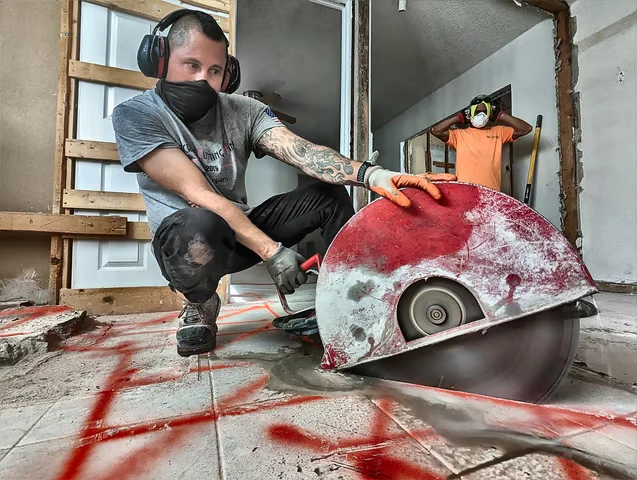
Flat sawing — also called slab sawing — is the most common method deployed for horizontal surfaces. A walk-behind or ride-on saw mounts a diamond blade on a horizontal arbor and cuts vertically into the slab. Standard residential slabs in Miami typically run 4 to 6 inches thick, but commercial pours and parking decks regularly hit 10 to 14 inches. For those deeper cuts, your crew needs a high-horsepower machine (typically 65 HP or above) running 14-inch to 60-inch diameter blades. Water cooling is non-negotiable — dry cutting at depth generates heat that glazes the diamond segments and renders the blade useless within minutes. If you’re working on a slab with embedded radiant heating or electrical conduit, GPR scanning must precede any flat saw work.
Wall Sawing for Vertical Cuts and Door Openings
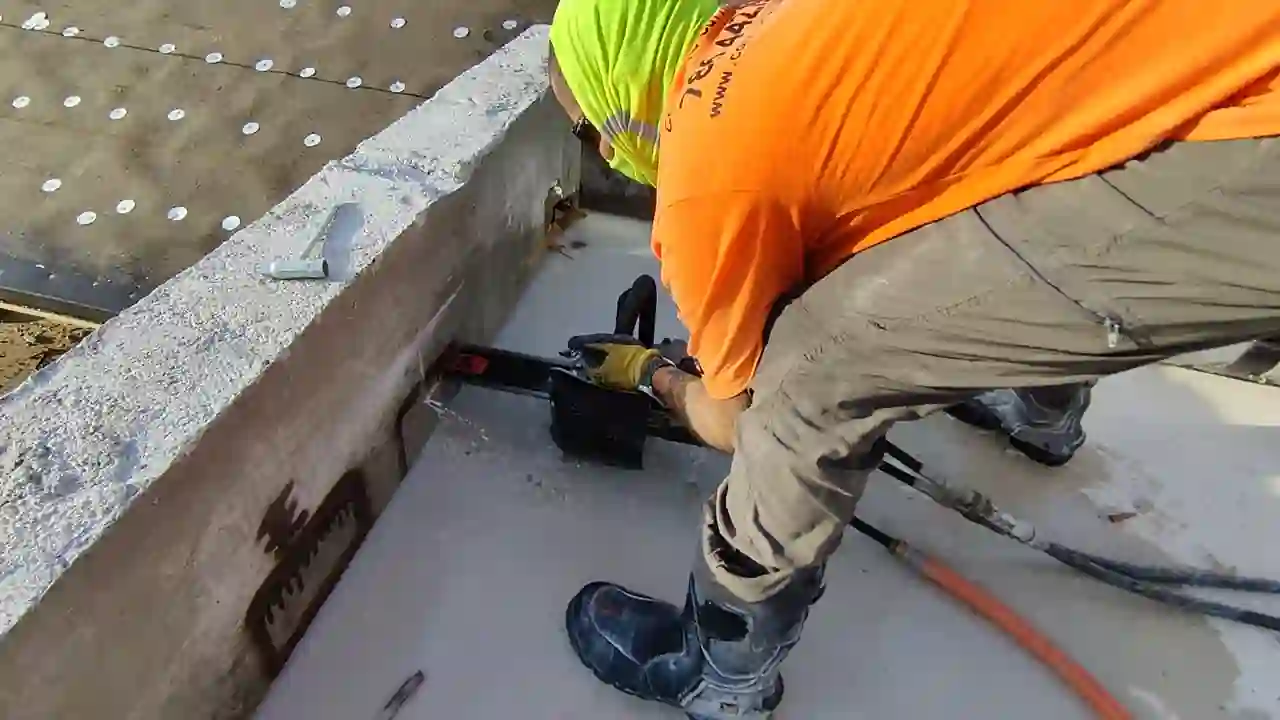
Wall sawing uses a track-mounted circular blade that rides along a rail anchored to the vertical surface. This method is ideal for creating door openings, window penetrations, and utility chases in concrete block or poured walls. The hydraulic or electric motor drives the blade at controlled feed rates, which is critical when cutting near structural columns or shear walls. Depth capacity on a wall saw typically reaches 24 to 30 inches per side, meaning walls up to 60 inches thick can be cut by flipping the track and completing the pass from the opposite face. Always verify rebar spacing and depth before committing to blade diameter selection — hitting unexpected #8 rebar mid-cut without adequate segment height will stall the motor and risk blade binding.
Core Drilling for Circular Penetrations in Structural Concrete
Core drilling produces clean, circular holes ranging from ½ inch to 60 inches in diameter. It’s the method of choice for plumbing sleeves, HVAC penetrations, electrical conduit runs, and anchor bolt installations. The drill rig mounts to the surface via vacuum base or anchor bolt, and a hollow diamond-impregnated core barrel rotates under water pressure to extract a cylindrical plug. On coastal Miami projects, saltwater corrosion in concrete can cause rebar to be significantly larger in effective diameter than original specs due to rust expansion — this is a hidden hazard that increases torque demand and can seize a core barrel mid-drill. Always request a visual inspection of the extracted core to assess rebar condition and chloride penetration depth.
How to Read a Concrete Cutting Quote Without Getting Burned
A legitimate concrete cutting service quote will itemize several line items that less experienced operators roll into a single flat rate. Understanding these components lets you compare bids accurately and spot underbidding that will resurface as change orders.
- Mobilization fee — covers equipment transport, staging, and setup time. In Miami traffic, this is a real cost and should be transparently listed.
- Linear footage or square footage rate — the core pricing unit for flat and wall sawing. Verify whether this rate assumes a single pass at a specified depth or multiple passes.
- Per-hole drilling rate — core drilling is typically priced per hole, with diameter and depth as the key variables. A 4-inch core at 6 inches depth is not the same cost as a 4-inch core at 24 inches depth.
- Slurry removal and containment — wet cutting produces a silica-laden slurry that must be contained and disposed of per EPA and OSHA guidelines. If this isn’t listed, you’re either paying for it hidden in the markup or the contractor is leaving it for you to handle.
- GPR scanning — ground-penetrating radar is a separate scope item, often subcontracted. Never allow cutting to proceed without it on any slab with unknown internal conditions.
- Saw-cut joint sealing — control joints opened for utility work or expansion purposes may require backer rod and polyurethane sealant after the cut. Confirm whether this is in scope.
Post-Tensioned Slabs Demand a Completely Different Protocol
Post-tensioned concrete is one of the most common structural systems in South Florida high-rise and mid-rise construction, and it represents the highest-risk scenario for any concrete cutting service. PT cables run under tension — typically between 26,000 and 33,000 psi — and severing one without a proper de-tensioning plan can cause explosive cable recoil, slab deformation, and in severe cases, progressive structural failure. Before any cutting begins on a PT slab, the following protocol must be executed without exception.
- Obtain original structural drawings — PT tendon layout, anchorage locations, and banded versus distributed tendon patterns must be confirmed against as-built conditions.
- Conduct GPR scanning — even with drawings in hand, field deviations from design are common. GPR maps actual tendon position in real time.
- Engage the engineer of record — any penetration or cut in a PT slab requires written approval from a licensed structural engineer. This is non-negotiable and legally required in Florida.
- Plan for tendon de-tensioning or avoidance — depending on the cut location, tendons may need to be de-stressed prior to cutting. This is a specialized operation involving hydraulic jacking equipment at the anchorage end.
If a concrete cutting service tells you they can cut a PT slab without GPR or engineering review, walk away. That conversation is your quality filter. For a full breakdown of cutting scenarios and project types we handle, visit our complete service links page.
Rebar Encounter Strategies During Active Cuts
Rebar is not the enemy — unplanned rebar encounters are. On older Miami construction, particularly pre-1980 pours, rebar placement was often inconsistent and documentation is sparse. When a flat saw or core drill hits unexpected reinforcement, the operator must make a real-time decision: push through with adequate blade segment height, adjust feed rate, or stop and re-assess. Attempting to cut rebar with inadequate tooling is how blades get pinched, motors get burned, and cuts go off-line. For smaller-scale rebar cutting tasks adjacent to the primary cut zone, understanding cutting rebar with a hacksaw as a supplemental technique can save time on exposure work before the saw crew takes over.
Diamond Blade Segment Specification for High-Rebar Density Slabs
In high-rebar density applications, blade selection shifts toward a softer bond matrix. A softer bond allows the diamond crystals to shed and re-expose fresh cutting edges faster as the blade contacts hard steel. Hard bond blades, designed for soft aggregate like Miami’s oolitic limestone, will glaze over almost immediately when hitting dense rebar mats. Segment height also matters — a minimum of 15mm segment height is recommended for cuts exceeding 10 inches in depth to ensure adequate cooling and cutting life through reinforced sections.
Silica Dust Control Is Not Optional on Any Commercial Job Site
OSHA’s silica standard (29 CFR 1926.1153) establishes a permissible exposure limit of 50 micrograms per cubic meter of air as an 8-hour time-weighted average. Dry cutting concrete without engineering controls will exceed this limit within minutes. Every professional concrete cutting service operating on a commercial job site in Miami must deploy one of the following control methods: continuous water delivery to the blade, local exhaust ventilation with HEPA filtration, or a combination of both. Wet cutting is the standard for flat and wall sawing. Core drilling uses internal water delivery through the barrel. Operators must wear NIOSH-approved N95 or P100 respirators regardless of wet cutting status, as residual slurry drying on surrounding surfaces becomes an aerosolization hazard. Site supervisors should verify that the cutting contractor has a written exposure control plan on file before work begins.
Scheduling Your Concrete Cutting Service Around Structural Load Conditions
Timing matters more than most clients realize. Cutting a slab that is carrying active live load — machinery, stored materials, vehicle traffic — without temporary shoring introduces deflection into the cut zone that can bind blades and alter joint geometry. For any cut that removes more than 20% of the cross-sectional area of a structural member, temporary shoring must be installed prior to cutting and maintained until the structural repair or penetration sleeve is in place. In Miami’s commercial renovation market, this coordination with the general contractor’s shoring subcontractor is one of the most frequently skipped steps, and it’s one of the most consequential. Build it into your pre-construction meeting agenda and confirm it in writing before your cutting crew is ever dispatched to site.