What a demolition company actually does — and what it does not do
When Miami property owners search for a demolition company Miami, they are often surprised to learn that demolition is not one thing — it is a family of services ranging from full structural teardown to surgical interior demolition where 90 percent of the building stays intact. A licensed demolition company handles structural assessment, utility disconnection, hazardous material abatement, controlled demolition, debris segregation and disposal, and site restoration. The scope varies enormously, but the licensing, insurance, and methodology requirements do not — and in Miami-Dade County, those requirements are among the strictest in the country.
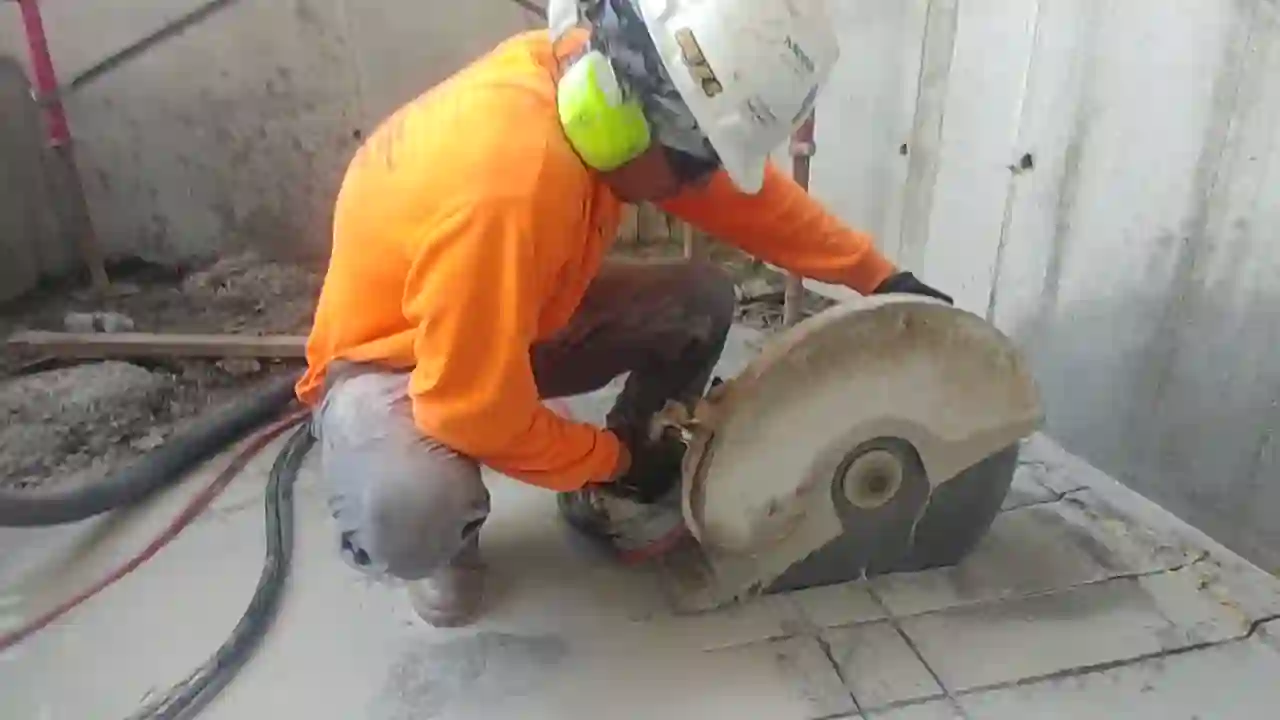
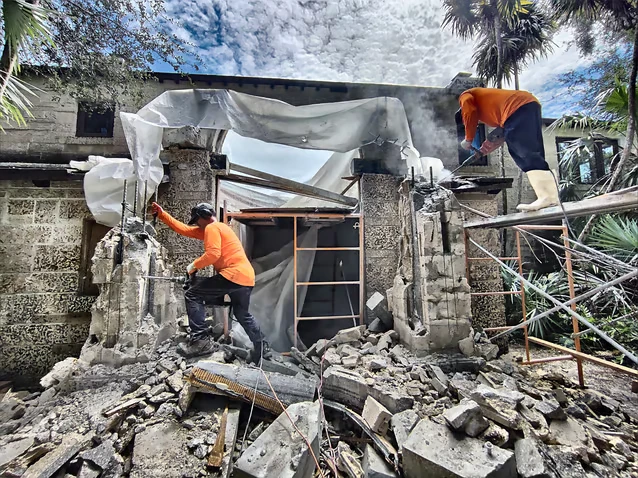
In Miami, the distinction between a demolition contractor and a concrete cutting contractor is particularly important. Many jobs that property owners call demolition are actually concrete cutting jobs — removing a section of slab, cutting an opening in a wall, demolishing a pool deck while preserving the pool. A full-service demolition company in Miami offers both: the surgical precision of concrete cutting for work adjacent to structures being preserved, and the heavy demolition capability for structures being fully removed. This combination matters because jobs frequently start as one and become the other — a pool deck removal that reveals foundation issues, an interior renovation that uncovers structural problems in the slab.
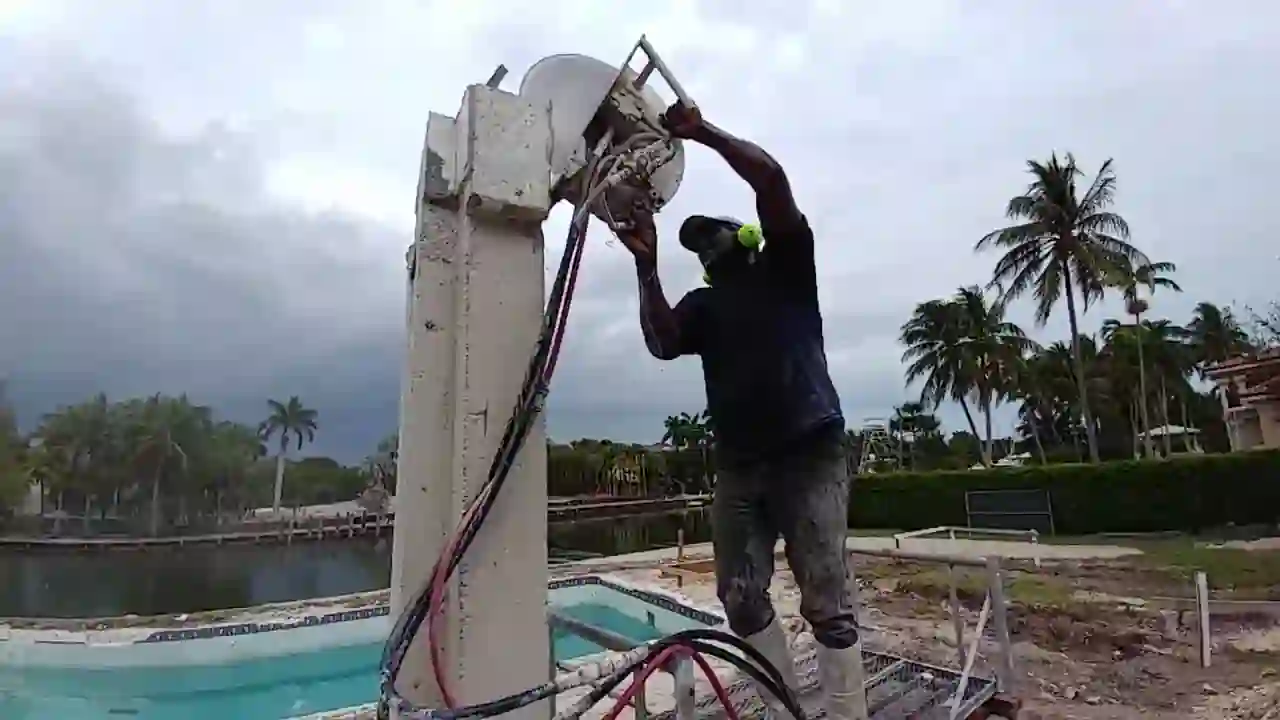
We have been doing demolition and concrete cutting in Miami-Dade County for years. We have seen properties where an unlicensed crew knocked down a carport and took out the adjacent electrical service, where a handyman demolished a bathroom and severed the main drain line in the slab, where a pool removal crew broke the pool shell into the hole without cutting it first and created a sinkhole risk that cost five figures to remediate. A legitimate Miami demolition company prevents these outcomes before the first hammer swings.
Licensing and insurance — the non-negotiable baseline
In Florida, demolition contractors must hold a Certified General Contractor license (CGC) or a Certified Building Contractor license (CBC) issued by the Florida Department of Business and Professional Regulation. Some specialty demolition work may fall under other license categories, but structural demolition — removing load-bearing elements of a building — requires a CGC. Additionally, Miami-Dade County has its own contractor licensing and permitting requirements layered on top of state requirements.
Insurance is equally critical. A legitimate Miami demolition company carries:
- General liability insurance: Covers property damage and bodily injury arising from demolition work. Typical coverage is one million dollars or more per occurrence. For commercial demolition, higher limits are standard.
- Workers compensation insurance: Required by Florida law for any construction company with employees. Protects workers injured on the job and protects the property owner from liability for worker injuries.
- Pollution liability or contractor’s pollution liability: Covers environmental contamination from demolition activities — lead dust, asbestos release, silica exposure, fuel spills from equipment. This coverage is particularly important in Miami where demolition near waterways triggers additional environmental regulations.
- Auto liability: Covers dump trucks, equipment trailers, and service vehicles used in demolition work.
Ask to see the certificates. Any legitimate demolition company in Miami will provide them without hesitation. A company that cannot or will not is not insured — and if something goes wrong on your property, you are liable.
What Miami-Dade demolition permits require
Miami-Dade County requires permits for most demolition work beyond cosmetic interior demolition. The permit process involves:
- Notice of commencement: Filed with the county before work begins. Records the property owner, contractor, surety, and project description.
- Utility disconnect verification: Confirmation that electric, gas, water, and sewer services have been properly disconnected or isolated before demolition begins.
- Asbestos survey: Florida law requires an asbestos survey for any commercial demolition and any residential demolition of structures built before 1981. A licensed asbestos consultant must perform the survey.
- Structural engineering review (if partial demolition): When demolishing part of a structure while preserving the rest, a structural engineer must review and stamp the demolition plan to confirm the remaining structure will be stable and code-compliant.
- Erosion and sediment control plan: Required for exterior demolition to prevent debris, dust, and sediment from leaving the site and entering storm drains or waterways.
- Waste management plan: Identifies how debris will be segregated, where recyclable materials will go, and which permitted C&D disposal facility will receive the non-recyclable waste.
A professional demolition company handles this paperwork as part of the project. If a contractor tells you permits are not needed, or suggests doing the work without permits to save time, walk away. Miami-Dade code enforcement takes unpermitted demolition seriously, and the fines can exceed the cost of the demolition itself.
Demolition services a Miami company should offer
A full-service demolition company in Miami should provide these core services, either in-house or through established subcontractor relationships:
- Structural demolition: Complete teardown of buildings, including concrete structure, steel framing, and foundations.
- Interior demolition (selective demo): Removal of interior walls, ceilings, floors, and mechanical systems while preserving the building envelope.
- Concrete cutting and removal: Surgical concrete cutting for partial slab removal, wall openings, trenching, and core drilling — the precision complement to heavy demolition.
- Pool demolition and removal: Full or partial swimming pool demolition with proper compaction backfill and drainage management, critical in Miami’s high water table environment.
- Site clearing and preparation: Removal of existing structures, pavement, vegetation, and debris to prepare a site for new construction.
- Debris hauling and disposal: Proper segregation and transport of C&D debris to permitted facilities, with recycling of concrete, metal, and wood where possible.
Questions to ask before hiring a demolition company in Miami
- “May I see your Florida contractor license and certificates of insurance?” The only acceptable answer is immediate production of current documents. Verify the license number on the DBPR website.
- “Who handles the permit process?” The demolition company should handle it. If they ask you to pull permits, they may not have the license required to pull them themselves.
- “How do you handle concrete cutting adjacent to areas being preserved?” They should describe saw-cutting before breaking — separating concrete to be removed from concrete to be kept with diamond blades, then removing the separated sections without vibration transfer.
- “What is your plan for dust control?” They should describe water suppression, vacuum systems, or both. In Miami-Dade, dust control is not optional — it is enforced by code compliance.
- “Where does the debris go?” They should name a specific C&D disposal facility and describe their recycling practices. Concrete should be crushed and recycled, not landfilled.
- “Have you done demolition work in Miami-Dade County specifically?” Miami-Dade codes are unique. Experience elsewhere in Florida does not automatically translate to Miami-Dade compliance.
Hiring a demolition company in Miami is a decision that affects your property value, your liability exposure, and your project timeline. Choose based on licensing, insurance, and demonstrated Miami-specific experience — not on price alone. The cheapest quote tells you who is cheapest. The most detailed quote tells you who will still be on site, insured, and accountable when the job is done.