What is diamond saw cutting and why does it matter in Miami
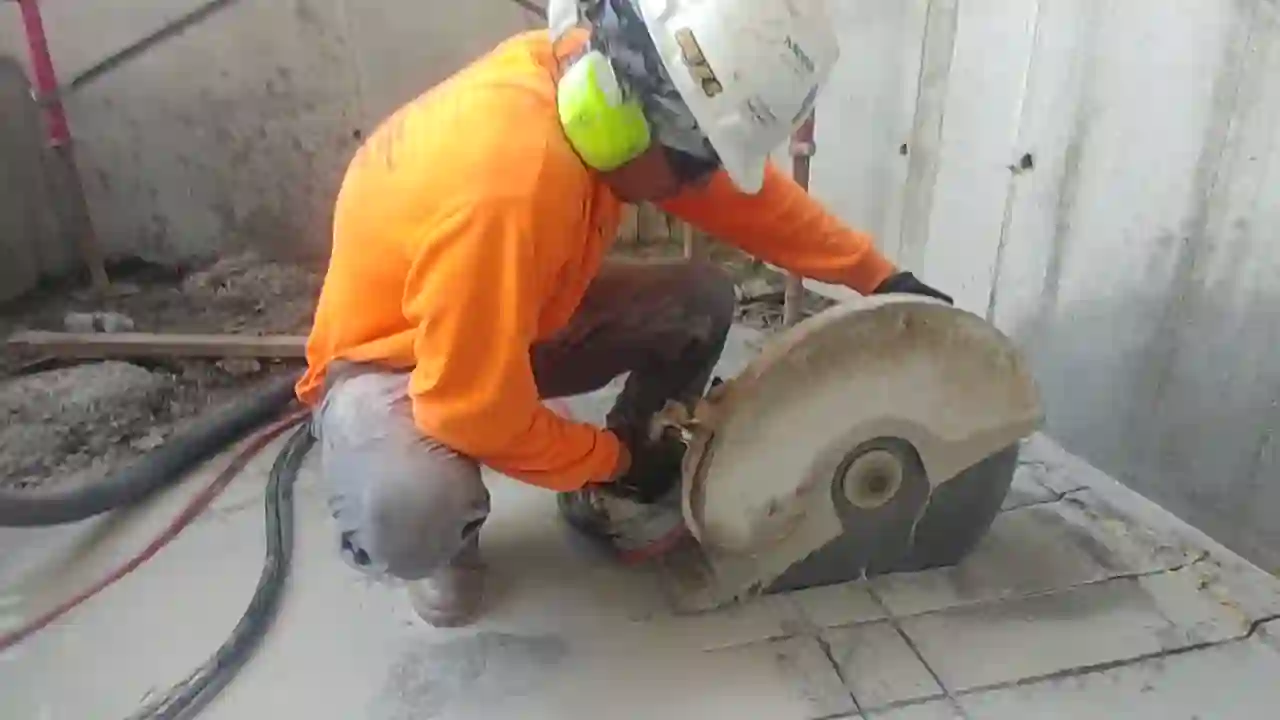
Diamond saw cutting is the process of cutting concrete, asphalt, masonry, and reinforced materials using a circular blade with diamond-impregnated segments bonded to its cutting edge. The diamonds — industrial-grade synthetic particles, not gemstones — are embedded in a metal matrix that wears away as the blade spins, continuously exposing fresh diamond edges. This is what allows a diamond blade to cut through concrete, steel rebar, and aggregate in a single pass without dulling or stopping. In Miami, where almost every slab and wall contains steel reinforcement, diamond saw cutting is not optional — it is the only cutting method that handles both concrete and rebar efficiently.
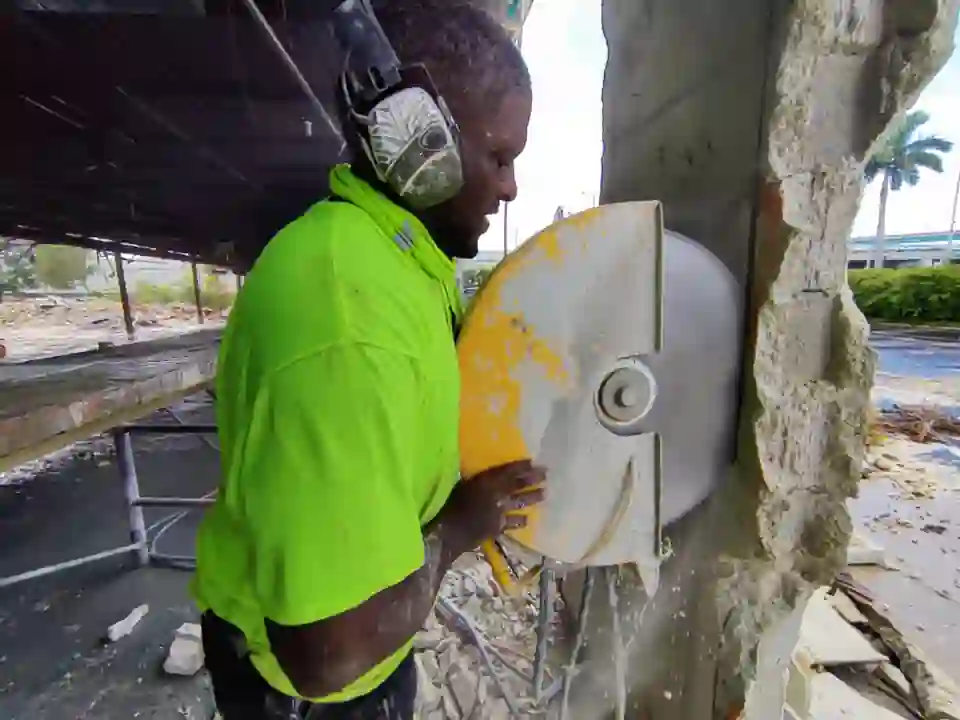
The difference between diamond saw cutting and any other approach is night and day. Abrasive blades grind concrete through friction and wear down fast — a blade that might last through one 4-inch cut would be nearly consumed. Carbide-tipped blades can handle concrete but fail immediately on rebar. Only diamond blades provide the hardness, heat resistance, and controlled wear rate needed for professional concrete cutting. When you see a contractor on a Miami job site making a clean, straight cut through an 8-inch reinforced wall, water flowing over the blade, the cut progressing at a steady inch per second — that is diamond saw cutting done correctly.
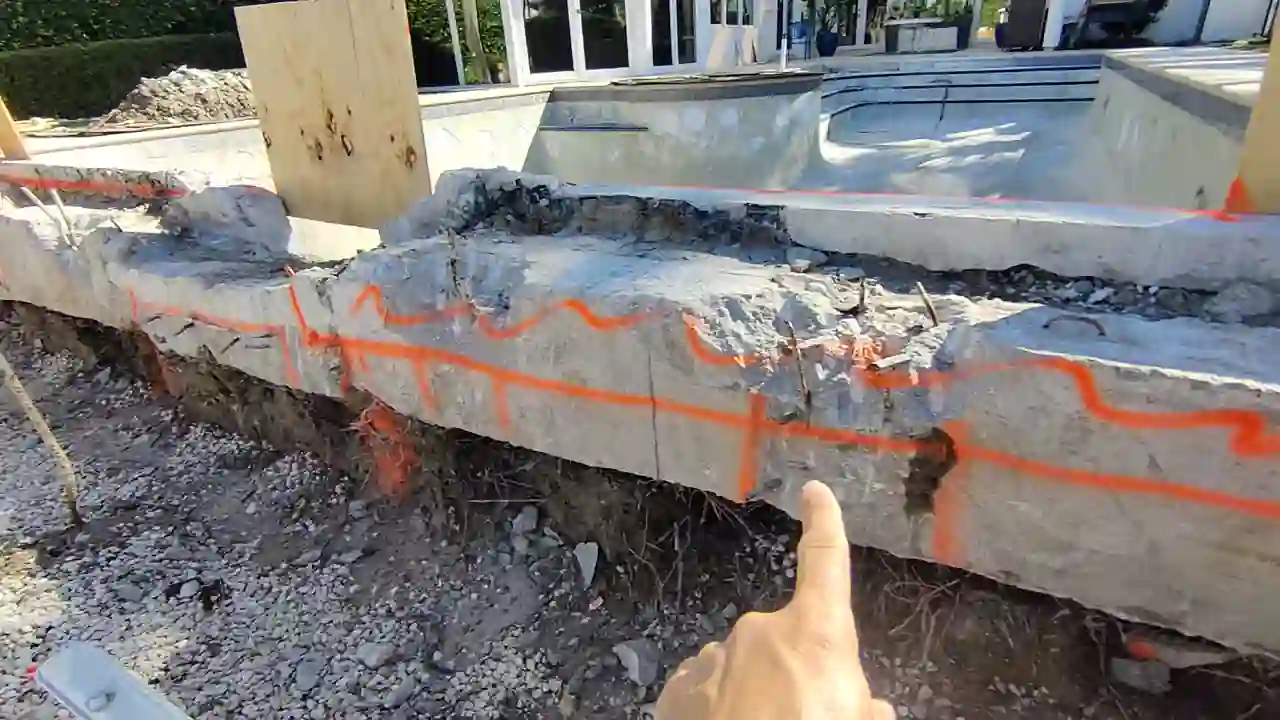
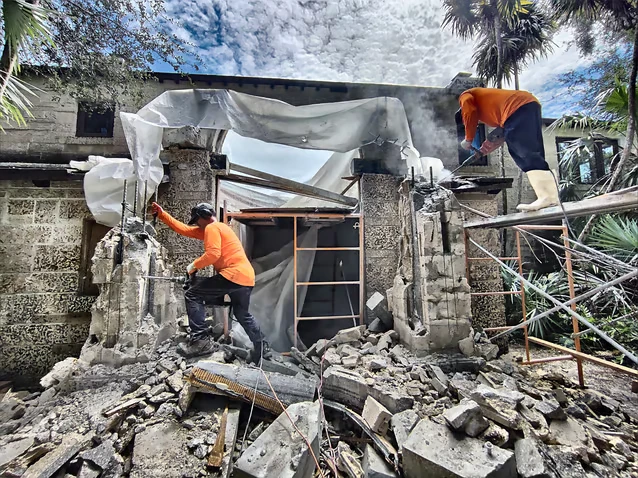
We use diamond blades on every job we run in Miami-Dade County. The blade spec changes depending on what is being cut — a different diamond matrix for a 4-inch unreinforced patio slab versus an 8-inch structural wall with double-mat rebar — but the principle is the same. Diamond saw cutting gives us the precision, speed, and versatility to handle everything from a small residential core hole to a large commercial wall opening. The blade technology is the foundation of everything we do.
How diamond saw blades actually work
The science behind diamond saw cutting is deceptively simple. The blade does not cut like a wood saw — it grinds. Each diamond particle exposed at the segment surface acts as a microscopic cutting point, abrading the concrete matrix and aggregate as the blade rotates. The metal bond holding the diamonds wears at a rate calibrated to the material being cut. When the bond wears faster than the diamonds, the blade has a short life. When the bond wears slower than the diamonds, the blade glazes — the diamonds become dull and the blade stops cutting. The right bond hardness for the material being cut is what separates a blade that cuts all day from one that fails in an hour.
Wet cutting is the standard for diamond saw cutting in professional applications. Water serves three functions simultaneously: it cools the blade, suppressing the heat generated by friction against concrete and steel; it suppresses airborne silica dust, which is a serious respiratory hazard regulated by OSHA; and it lubricates the cut, reducing blade drag and extending blade life. In Miami, where summer ambient temperatures push 95 degrees and concrete surfaces can hit 130, the cooling effect of water is not optional — it is essential for blade life and operator safety.
Dry cutting vs wet cutting
Dry diamond cutting exists but comes with significant tradeoffs. Without water cooling, blade temperatures rise rapidly, shortening blade life. Dry cutting also produces large volumes of airborne silica dust — a known carcinogen that causes silicosis with prolonged exposure. Some handheld saws and quick-cut applications use dry cutting for convenience, but the operator must wear appropriate respiratory protection, and the work area must be isolated. For any cut deeper than two inches, or any cut through reinforced concrete, wet cutting is the professional standard. We wet-cut every job unless site conditions make it impossible, and even then we use vacuum dust extraction to keep the air clean.
Types of diamond saw cutting equipment
Diamond saw cutting encompasses a family of equipment, each designed for specific cutting applications:
- Flat saws (walk-behind saws): Used for horizontal surfaces — slabs, pavements, floors, driveways. The saw rides on the concrete surface, and the operator walks behind it. Diamond blades range from 12 to 36 inches in diameter. Flat saws are the workhorses of slab cutting and control joint cutting.
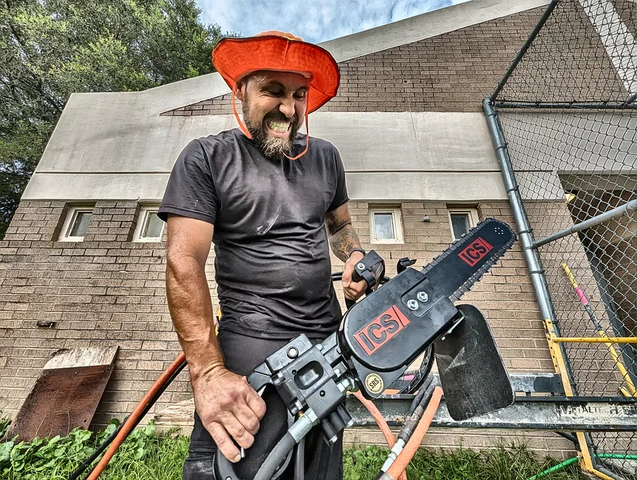
- Wall saws (track saws): Used for vertical and overhead surfaces. The saw mounts to a track system bolted or vacuum-anchored to the wall. Hydraulic power units drive the blade. Wall saws are used for door openings, window openings, and HVAC penetrations through structural walls. Diamond blades range from 18 to 48 inches.
- Hand saws (cut-off saws): Portable, handheld saws for small cuts, corner work, and areas where larger equipment cannot reach. Gas-powered or electric, with 12 to 16-inch blades. Used for detail work, pipe cutting, and small openings.
- Wire saws: For cutting massive concrete structures — bridge piers, thick foundation walls, large columns. A diamond-impregnated wire cable runs on a pulley system and cuts through the structure. Used when the concrete thickness exceeds what any circular blade can reach.
- Core drills: Diamond core bits, not blades, but the same diamond cutting principle. Used for circular penetrations through walls and slabs for plumbing, electrical, and HVAC. Core bits are hollow cylinders with diamond segments on the cutting edge.
Why Miami concrete demands specific diamond blade selection
Miami concrete presents specific challenges for diamond saw cutting. South Florida aggregate is predominantly limestone — softer than the granite or river rock used in other regions. This sounds like good news for cutting, and in some ways it is. Limestone aggregate cuts faster than harder aggregates, which means faster production rates. But the soft aggregate creates a specific problem: the cement matrix wears diamond segments differently than the aggregate does, and blade manufacturers must formulate the bond hardness and diamond concentration specifically for limestone aggregate mixes. A blade designed for granite aggregate in New England concrete will wear at the wrong rate in Miami concrete — either too fast because the soft limestone does not erode the bond enough to expose fresh diamonds, or unevenly because the cement wears differently than the aggregate.
Rebar is the other Miami variable. Almost all structural concrete in Miami-Dade County contains steel reinforcement — single mat or double mat depending on the application. Diamond blades for cutting reinforced concrete use a higher diamond concentration and a medium-hard bond that handles the concrete-to-steel-to-concrete transition without glazing. Blades not rated for metal will skate on the rebar, overheat, and stop cutting. We match every blade to the specific material conditions confirmed by GPR scanning before the cut begins.
Questions to ask about diamond saw cutting
- “Are your blades rated for cutting through rebar?” If the answer is not an immediate yes with a specific blade specification, they are not prepared for Miami concrete.
- “What diamond bond hardness do you use for Miami limestone aggregate?” This question identifies whether the contractor understands the difference between cutting concrete in Miami versus cutting concrete in other regions.
- “Do you wet-cut all structural cuts?” Wet cutting protects blades, operators, and the surrounding area from silica dust. A contractor who dry-cuts structural concrete as standard practice is cutting corners.
- “How do you determine blade selection for a specific job?” The answer should reference concrete thickness, rebar density, aggregate type, and cut geometry — not just blade diameter.
Diamond saw cutting is the foundation of professional concrete cutting. The blade is the single most important variable on every job. Choose a contractor who treats blade selection as an engineering decision, not an afterthought.