Why a damaged bollard is a liability, not just a cosmetic problem
Bollards serve a critical function on commercial and residential properties across Miami-Dade County. They protect building corners from vehicle strikes. They shield gas meters, electrical panels, and HVAC equipment from parking lot impacts. They define pedestrian walkways and prevent vehicles from entering protected areas. When a bollard is hit and damaged — bent, cracked at the base, or knocked partially out of its concrete foundation — it stops doing its job. The next vehicle impact applies force directly to whatever the bollard was protecting. In Miami, where parking lots are tight and drivers are navigating unfamiliar commercial properties daily, a missing or damaged bollard creates a real risk of property damage, injury, and liability.
Bollard repair in Miami is not as simple as pulling out the damaged bollard and pouring a new one. The existing concrete foundation must be cut and removed, the sub-grade assessed for damage from the impact, any embedded utilities identified and protected, new steel reinforcement tied into the surrounding slab, and the replacement bollard set to the correct embedment depth with proper concrete encasement. Cutting corners on any of these steps produces a bollard that looks fixed but will fail the next time it is hit — possibly more catastrophically than the first time because the foundation was compromised.
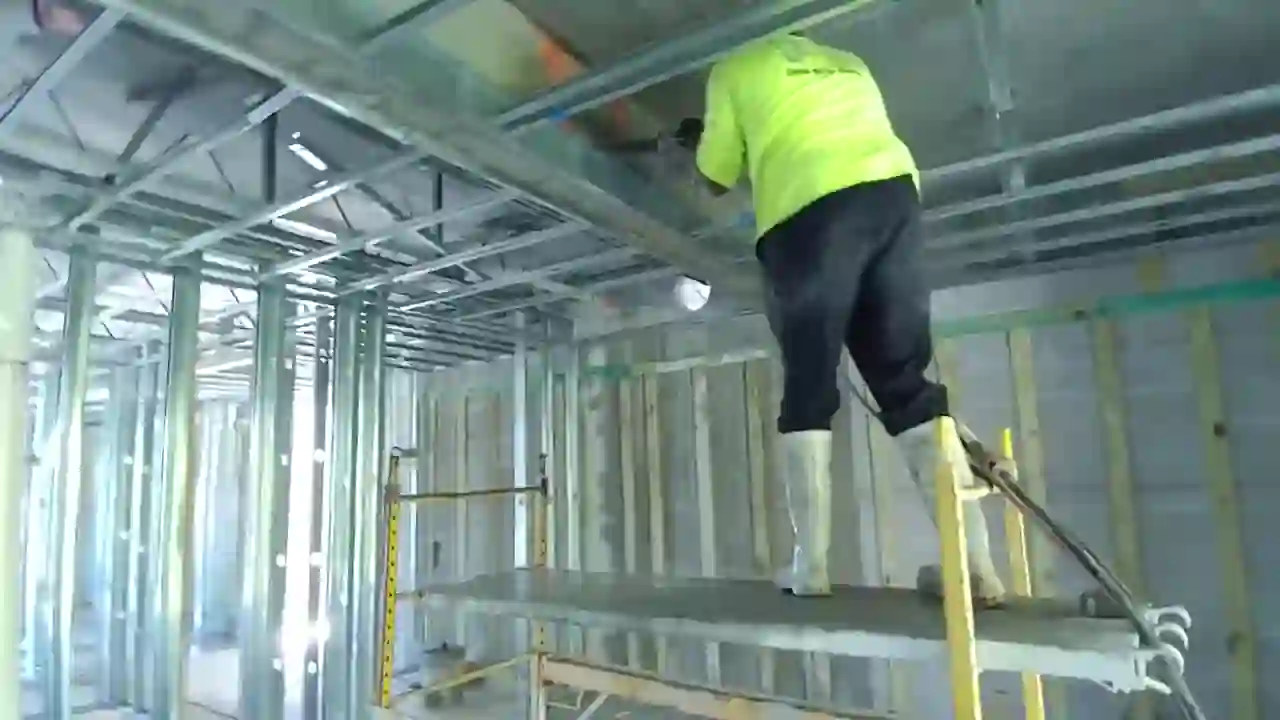
We repair bollards across Miami-Dade, from storefront protection in Coral Gables to warehouse dock bollards in Medley to residential driveway bollards in Pinecrest. The process is consistent: concrete cutting to expose the damage, steel assessment, engineered repair, and restoration that meets or exceeds the original installation strength.
How bollard damage happens and what it means structurally
Bollard damage occurs in several common patterns, each requiring a different repair approach:
- Bent bollard without foundation failure: The steel pipe is deformed from a vehicle impact, but the concrete foundation is intact — no cracking, no displacement. The bollard can be cut off at the base, the foundation core-drilled for the replacement pipe, and a new bollard set in the existing foundation. This is the simplest repair scenario.
- Bollard knocked out of foundation: The impact was severe enough to separate the bollard from its concrete footing. The bollard may be bent or straight, but the foundation is compromised — cracked, displaced, or crumbled around the bollard embedment. The entire foundation must be cut out and replaced.
- Foundation cracked with bollard intact: The impact force transferred through the bollard into the concrete foundation, cracking the slab around the bollard. The bollard looks straight, but it is no longer properly anchored. The cracked concrete must be cut out around the bollard, the bollard removed, the sub-grade assessed, and a new foundation poured with proper embedment.
- Multiple bollard damage (vehicle struck a row): When a vehicle hits multiple bollards, the damage patterns interact. A bollard that was pushed sideways may have transferred force to adjacent bollards through the connecting slab. The entire row needs assessment, not just the directly impacted bollards.
The bollard repair process: concrete cutting and restoration
Proper bollard repair in Miami follows a structured process:
Step 1: Site assessment and marking
The damaged bollard and surrounding area are assessed. The extent of concrete cracking is mapped. Underground utilities are marked — many bollards are near gas lines, electrical conduits, or plumbing that must be avoided during concrete cutting. GPR scanning identifies what is below the slab surface before any blade touches concrete.
Step 2: Concrete cutting for foundation removal
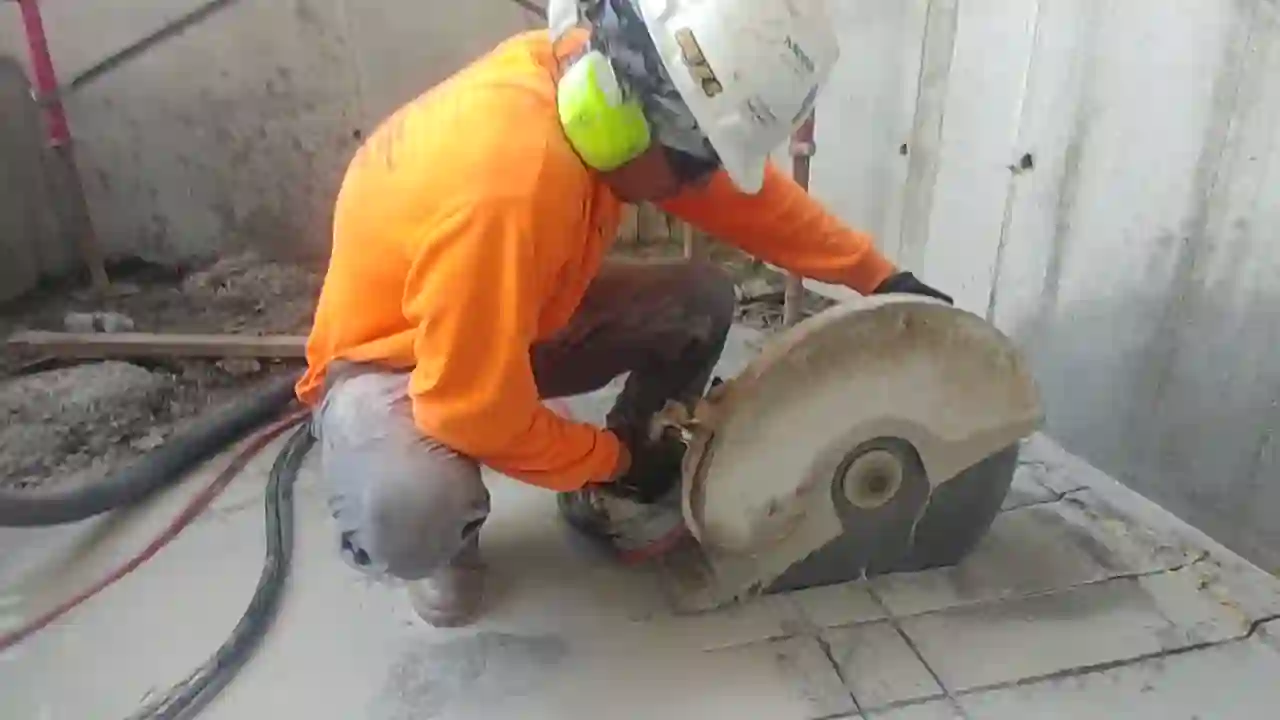
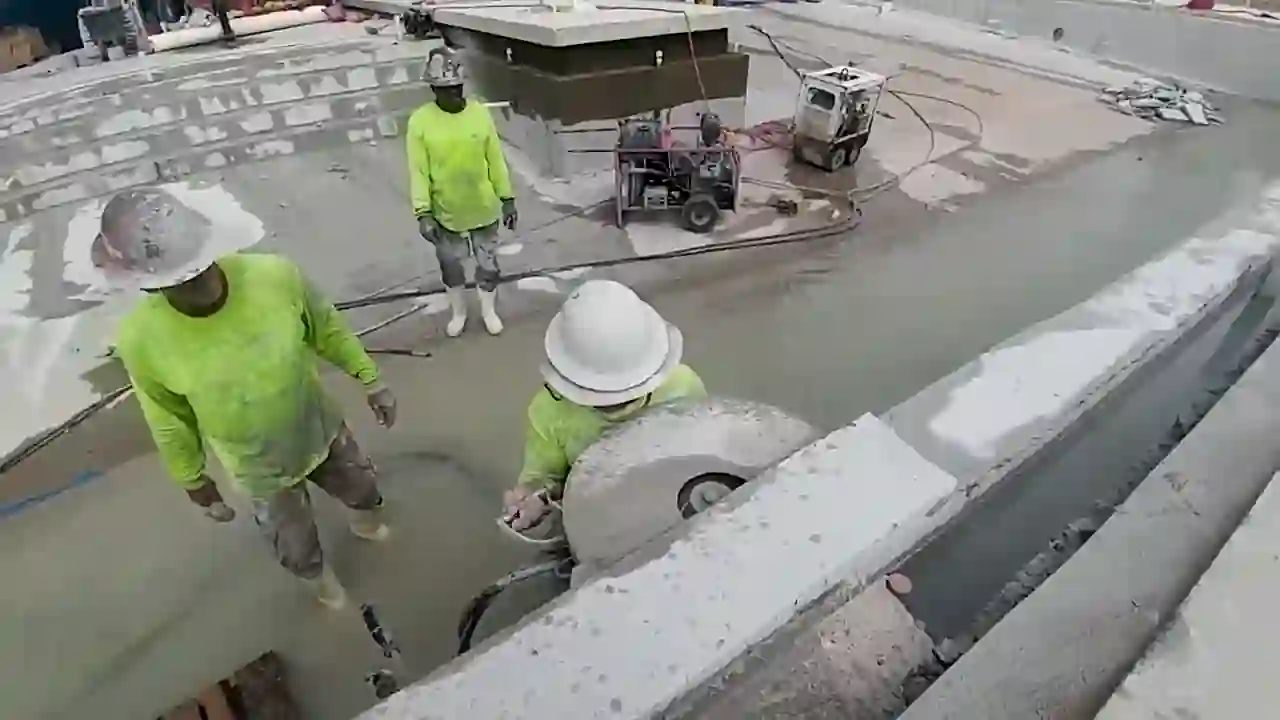
The damaged concrete around the bollard is saw-cut on a perimeter that encompasses all visible cracking plus a margin for sound concrete tie-in. Flat saws cut the perimeter lines. The concrete is then broken into manageable sections and removed. The saw-cut edges provide a clean bonding surface for the new concrete pour.
Step 3: Sub-grade preparation and steel installation
Once the damaged concrete is removed, the sub-grade (the soil or aggregate below the slab) is inspected. If the impact force compacted or displaced the sub-grade, it is re-compacted or replaced. New rebar is doweled into the existing slab edges — typically #4 or #5 bars epoxy-set into drilled holes in the saw-cut slab edge. The replacement bollard is positioned and braced, with the correct embedment depth verified. For commercial bollards protecting building corners or utilities, embedment depth is typically 18 to 24 inches below the slab surface, with a concrete footing extending at least 6 inches beyond the bollard diameter on all sides.
Step 4: Concrete pour and curing
The excavation is poured with concrete matching or exceeding the strength of the existing slab — typically 3,000 to 4,000 PSI for commercial applications. The concrete is vibrated to eliminate voids around the bollard embedment. The surface is finished to match the surrounding slab. Curing time depends on weather — in Miami’s heat, concrete reaches design strength faster, but rapid drying must be managed with proper curing methods to prevent surface cracking.
Step 5: Bollard finishing and protection
The replacement bollard is painted or coated to match existing bollards on the property. High-visibility safety yellow is standard for commercial bollards, but many Miami properties use colors matching their building trim or brand palette. Reflective tape or sleeves improve visibility at night.
Why Miami bollards fail differently than in other regions
Miami’s environment subjects bollards to conditions that accelerate deterioration beyond the damage from vehicle impacts. The combination of salt air near the coast, high humidity, and frequent heavy rain creates aggressive corrosion conditions for steel bollards — especially at the base, where water pools around the bollard-to-concrete interface. Over years, a steel bollard that looks fine on the outside can be rusted paper-thin where it enters the concrete, ready to shear off on the next impact.
Additionally, Miami’s high water table means that bollard foundations are frequently in contact with groundwater, which can undermine the sub-grade over time. A bollard that was properly embedded in dry soil when installed may be sitting in saturated fill a decade later. The concrete foundation may be intact, but the soil supporting it has changed. Bollard repair in Miami must account for drainage conditions — installing a bollard in a foundation that will be underwater half the year guarantees a short service life.
Bollard repair vs replacement: when to decide
The decision to repair or replace a bollard depends on three factors:
- Steel condition: If the bollard pipe is bent but structurally sound, it can be straightened or cut and sleeved. If the steel is severely deformed, cracked, or corroded, replacement is the only safe option.
- Foundation condition: If the concrete foundation has minor surface cracking but the embedment is sound, the bollard can be repaired in place. If the foundation is cracked through, displaced, or undermined, full foundation replacement is required.
- Code compliance: If the original bollard does not meet current Miami-Dade code for embedment depth, diameter, or concrete strength, repair may not be possible — replacement to current code may be required, particularly for commercial properties where insurance carriers or code enforcement may have requirements.
A professional bollard repair in Miami restores the protective function — not just the appearance. The bollard should be as strong after the repair as the day it was installed, and ideally stronger. If the repair cannot achieve that standard, replacement is the correct answer.