Why a concrete patio in Miami is different from anywhere else
A concrete patio in Miami faces conditions that patios in most of the country never see. The sun beats down on it 300 days a year — surface temperatures on an unshaded Miami patio can hit 140 degrees in July. The rain comes in tropical downpours that drop two inches of water in an hour, saturating the ground beneath the slab. The humidity is relentless, preventing concrete from drying naturally the way it does in arid climates. The soil underneath is Miami’s characteristic sandy limestone — loose, porous, and prone to settlement. And if you are within a few miles of the coast, salt spray adds a corrosion factor for any steel reinforcement or embedded features.
These conditions mean Miami concrete patio work — whether cutting an existing patio for drainage, removing a failed patio, or installing a new one — requires different techniques and materials than patio work in most of Florida, let alone the rest of the country. The concrete mix design matters. The reinforcement schedule matters. The drainage plan matters more in Miami than almost anywhere else because standing water on a patio in Miami’s climate breeds mold, attracts mosquitoes, and deteriorates the concrete surface faster than UV alone ever could.
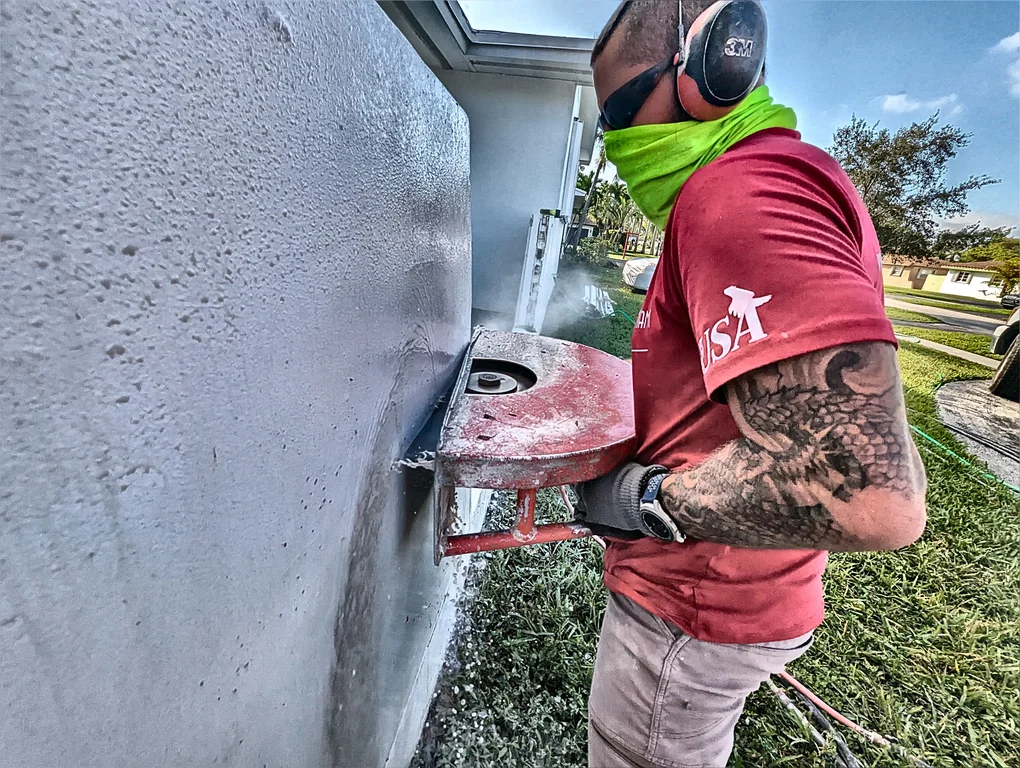
We work on concrete patios throughout Miami-Dade County — from small courtyard patios in Coconut Grove to large pool deck patios in Pinecrest to commercial restaurant patios in Brickell. Every job starts with an assessment of the existing concrete condition, the drainage situation, and what the homeowner actually needs the patio to do.
Concrete patio cutting services in Miami
Not every concrete patio needs to be removed. Many Miami patios are structurally sound but have specific problems that concrete cutting can solve without the cost and disruption of full removal and replacement.
Saw cutting for drainage
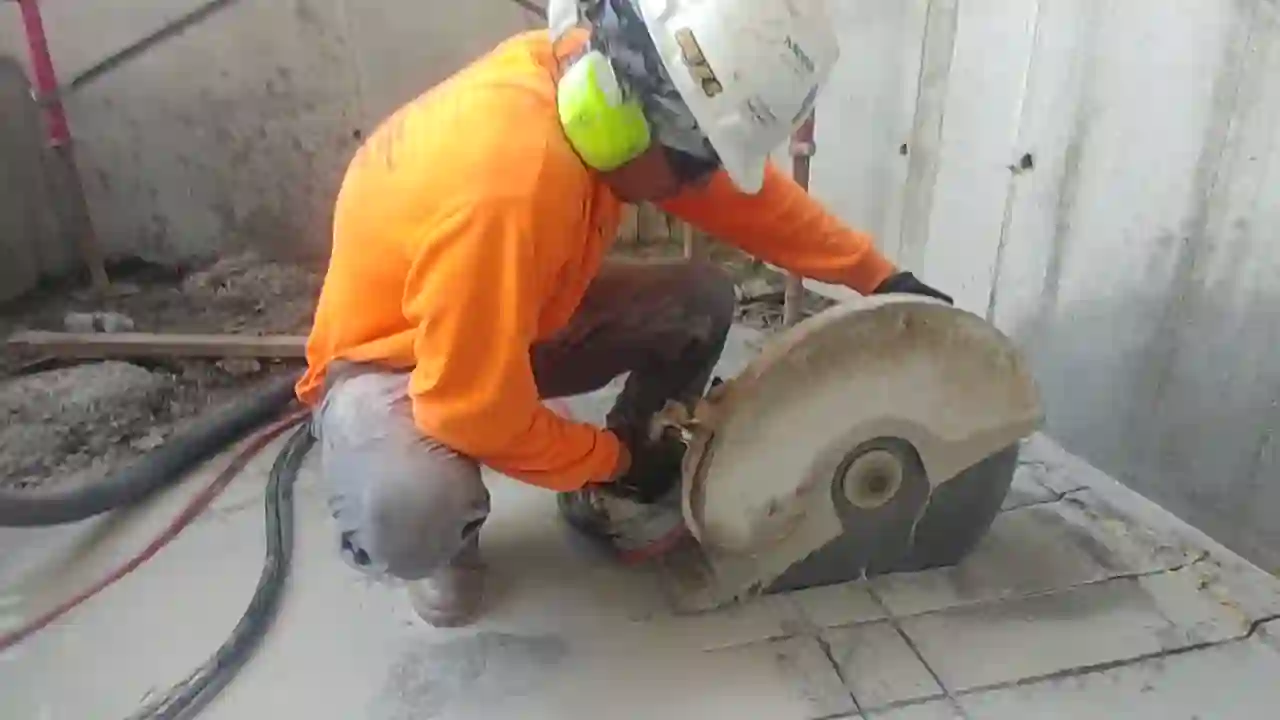
The most common patio problem in Miami is standing water. A patio that was poured without the proper slope, or that has settled unevenly over years, develops low spots where water pools after every rain. In a dry climate, this is an annoyance. In Miami, it is a breeding ground for mosquitoes, a slipping hazard, and a stain source on the concrete surface. The solution is saw-cutting drainage channels — shallow saw cuts that direct water off the patio surface and into a drainage system or landscaped area. The cuts are typically 1/4 to 1/2 inch wide and 1 to 2 inches deep, cut with a diamond flat saw, positioned to follow the natural low points and direct water to the patio edge. This is a fraction of the cost of patio replacement and solves the drainage problem permanently.
Patio sectioning for partial removal
Sometimes only part of a patio needs to come out — a cracked section, a section that settled and separated from the rest, a section being reconfigured for a pool addition or landscaping. Concrete cutting separates the section to be removed from the section to be kept, with clean saw-cut edges that create a straight separation line. The removed section is replaced with new concrete, pavers, decking, or landscaping. The saw-cut edge provides a clean bonding surface for the new concrete and a straight visual line if the section is being replaced with a different material.
Expansion joint cutting
Concrete expands and contracts with temperature changes. In Miami, where the temperature swing between a July afternoon and a January morning is 40-50 degrees, that expansion and contraction is significant. Patios without properly spaced expansion joints crack randomly as the concrete moves. Saw-cutting expansion joints into an unjointed patio — cutting controlled, straight lines that give the concrete a designated place to crack — prevents random cracking and extends the patio’s service life. Joints are cut at intervals of 8-12 feet depending on slab thickness, to a depth of at least one-quarter of the slab thickness.
Concrete patio removal in Miami
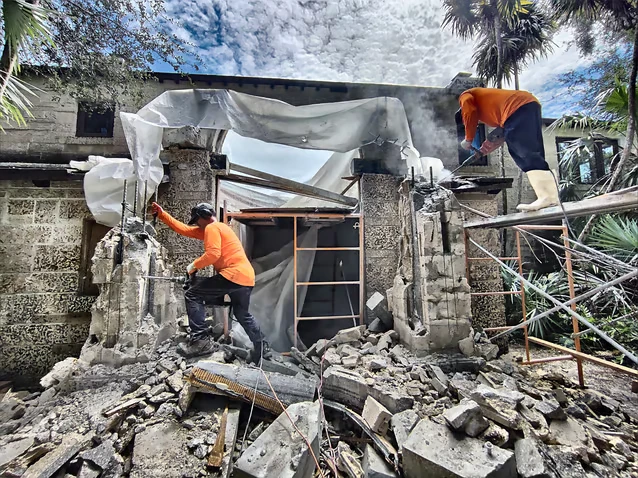
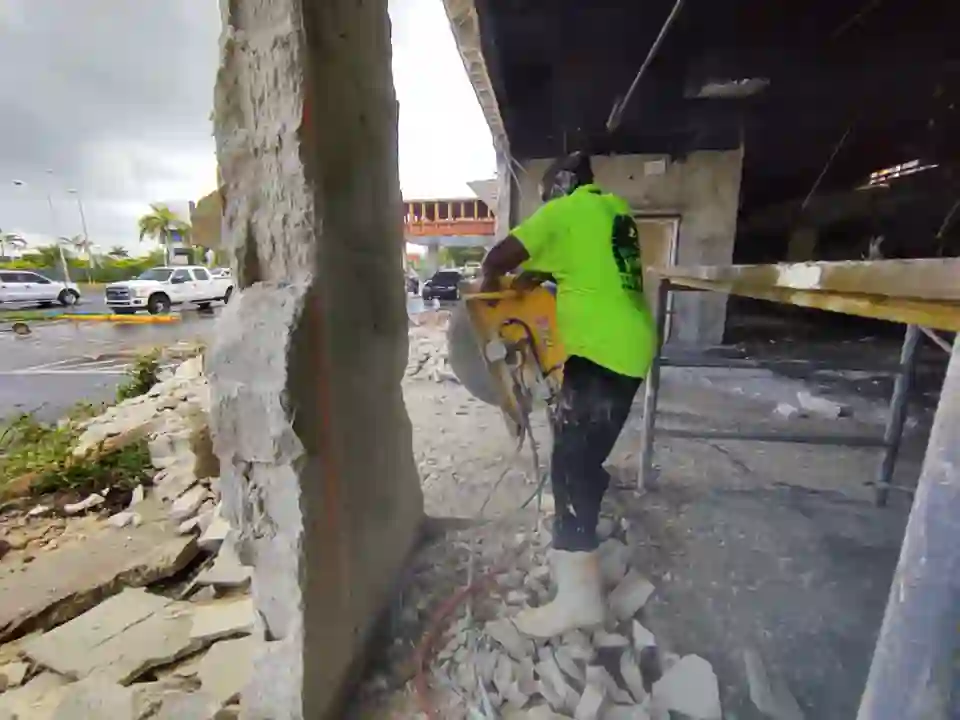
When a patio is beyond repair — extensively cracked, heaved by tree roots, deteriorated from salt exposure, or simply in the wrong place for a new landscape design — removal is the answer. Patio removal starts with concrete cutting around the perimeter and across the slab to section it for removal. This is the step that amateur removal skips and that causes damage to adjacent structures. A sledgehammer breaking the patio edge transfers vibration into the house slab, the pool deck, the walkway — wherever the concrete connects. A saw-cut separation line isolates the patio from everything else before any breaking force is applied.
Once sectioned, the concrete is broken into manageable pieces, loaded, and hauled to a C&D recycling facility. The sub-grade is inspected and prepared for whatever comes next — new concrete, pavers, turf, or decking. If the sub-grade has settled or eroded, it is re-compacted or replaced before the new surface is installed.
New concrete patio installation in Miami
For new patio installation, the Miami-specific factors that determine long-term performance include:
- Concrete mix design: A minimum of 3,500 PSI with air entrainment for Miami’s rain exposure. Fiber reinforcement in addition to rebar or wire mesh reduces surface cracking from thermal cycling.
- Slab thickness: A minimum of 4 inches for pedestrian-only patios, 5-6 inches if the patio will support a hot tub, outdoor kitchen, or heavy planters. Miami’s sandy soil requires thicker slabs than clay soil regions because the base is less rigid.
- Slope and drainage: A consistent 1/4 inch per foot slope away from the house and toward a drainage system or landscaped area. Flat patios without slope are a guaranteed problem in Miami’s rainfall environment.
- Control joints: Saw-cut within 24 hours of pouring, at intervals of 8-10 feet maximum, to a depth of 1/4 the slab thickness. These joints give the concrete a designated place to crack as it cures and as it thermally cycles.
- Curing method: In Miami’s heat and humidity, concrete cures faster — sometimes too fast. Proper curing means keeping the surface moist for 7 days, either through water curing, curing compound, or plastic sheeting. Concrete that dries too quickly develops surface cracking and reduced strength.
- Surface finish: Broom finish is standard for outdoor patios — it provides slip resistance when wet. Smooth trowel finishes are dangerously slippery on Miami patios where daily rain is a reality. Stamped concrete or exposed aggregate finishes add cost and aesthetic appeal but require more maintenance in Miami’s climate.
Miami patio maintenance for longevity
A concrete patio in Miami that receives basic maintenance can last 25-30 years. The maintenance requirements in this climate:
- Sealing every 2-3 years: A penetrating concrete sealer protects against water intrusion, salt damage (near the coast), and UV degradation. In Miami’s intense sun, sealers break down faster than in northern climates — more frequent reapplication is necessary.
- Keeping control joints filled: The saw-cut joints that control cracking must be kept sealed with flexible joint sealant. Water entering the joints erodes the sub-base, and unsealed joints become entry points for weeds and ants — both of which worsen the problem.
- Addressing settlement early: If a section of the patio begins to settle — visible as a lip at a control joint where one side is lower than the other — address it promptly. Mudjacking or polyurethane foam injection can raise and stabilize settled slabs before the settlement becomes severe enough to require replacement.
- Cleaning organic growth: Miami’s humidity promotes mold, mildew, and algae growth on shaded patio surfaces. Pressure washing at 2,500-3,000 PSI once or twice a year removes organic growth and restores the surface appearance without damaging the concrete.
Whether cutting, removing, or installing, a concrete patio in Miami is an investment in outdoor living space. Do it right for this climate, and it performs for decades. Do it to generic standards designed for other regions, and you will be cutting or replacing it sooner than you expected.