Why “Concrete Cutting Near Me” Searches Send Homeowners to the Wrong Contractor Nine Times Out of Ten
When a property owner in Miami types concrete cutting near me into Google, what they are really asking is “who can get here fast with the right equipment and not turn my project into a regulatory nightmare.” That search query conceals about six layers of due diligence that most people skip entirely — and I have watched the consequences of that skipped research play out across Miami-Dade County job sites for years. Proximity is not competence. A contractor being ten minutes from your job site in Kendall does not tell you whether they understand the structural load path through a post-tensioned slab on the 12th floor of a Brickell high-rise, or whether they know that concrete slurry generated in Coral Gables requires a completely different containment protocol than slurry generated in unincorporated Dade County. Local matters enormously — but local knowledge matters more than local distance.
What a “Concrete Cutting Near Me” Search Should Actually Deliver — But Usually Doesn’t
When I talk to property owners and general contractors who found us through a local search, they almost always describe the same hiring sequence: they called the first three names that appeared in the map pack, got three wildly different prices with no technical explanation behind any of them, and couldn’t tell which bid was actually compliant. A legitimate local concrete cutting operation should be able to answer specific questions before they ever dispatch a crew to your address.
Here is what separates a real local concrete cutting service from a general contractor who owns a demo saw and decided to bid concrete work this month:
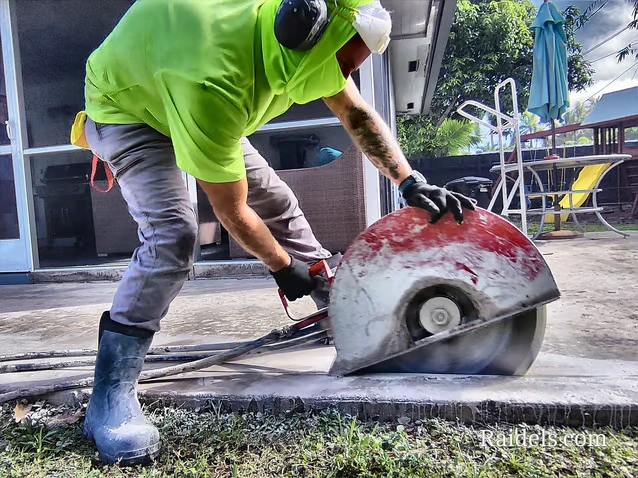
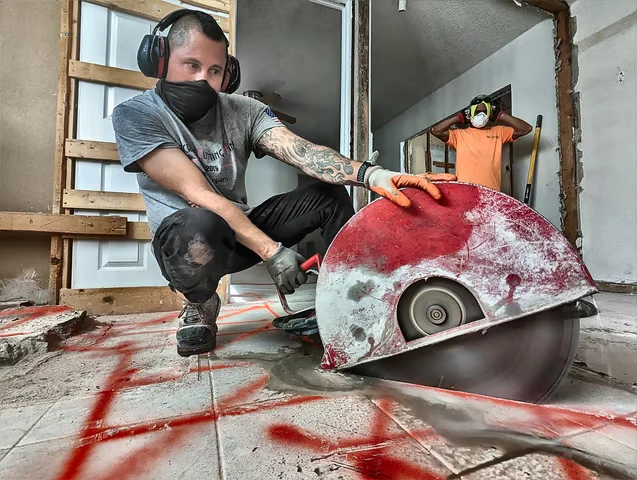
- Equipment inventory matched to job scope: A wall saw for vertical openings, a wire saw for mass concrete removal, a hand saw for slab work, and core drills in diameters from half an inch to 24 inches. If the company cannot describe which machine they intend to use on your specific cut, they are guessing — and guessing with diamond tooling gets expensive fast.
- Slurry management plan as a line item, not an afterthought: Any wet cutting operation in Miami-Dade generates concrete slurry regulated under the Clean Water Act. A compliant contractor specifies containment method, disposal pathway, and pH testing protocol in the bid. A non-compliant contractor pretends slurry evaporates.
- Proof of Miami-Dade County local business tax receipt and certificate of insurance: Not a COI from three years ago. A current, project-specific certificate with your property address or project name listed as additionally insured.
- GPR (ground-penetrating radar) capability or a subcontracted GPR operator: Cutting into a slab without scanning for post-tension cables, electrical conduits, or plumbing is the fastest way to turn a $2,000 cutting job into a $20,000 repair. Local concrete cutting firms that do not offer scanning are not doing you a favor by being cheaper — they are transferring catastrophic risk onto your property.
- References from projects within five miles of your site: A concrete cutter who did great work in Homestead does not automatically understand the access constraints of a Coconut Grove property with a zero-lot-line easement and an HOA that prohibits equipment staging on the street before 8 AM.
Most “concrete cutting near me” searches produce calls to companies that fail at least three of these five criteria. Understanding how to choose the right concrete cutting method for your specific project is the first step toward not becoming someone else’s expensive learning experience.
South Florida Geography Changes Everything About Concrete Cutting — And National Search Results Won’t Tell You That
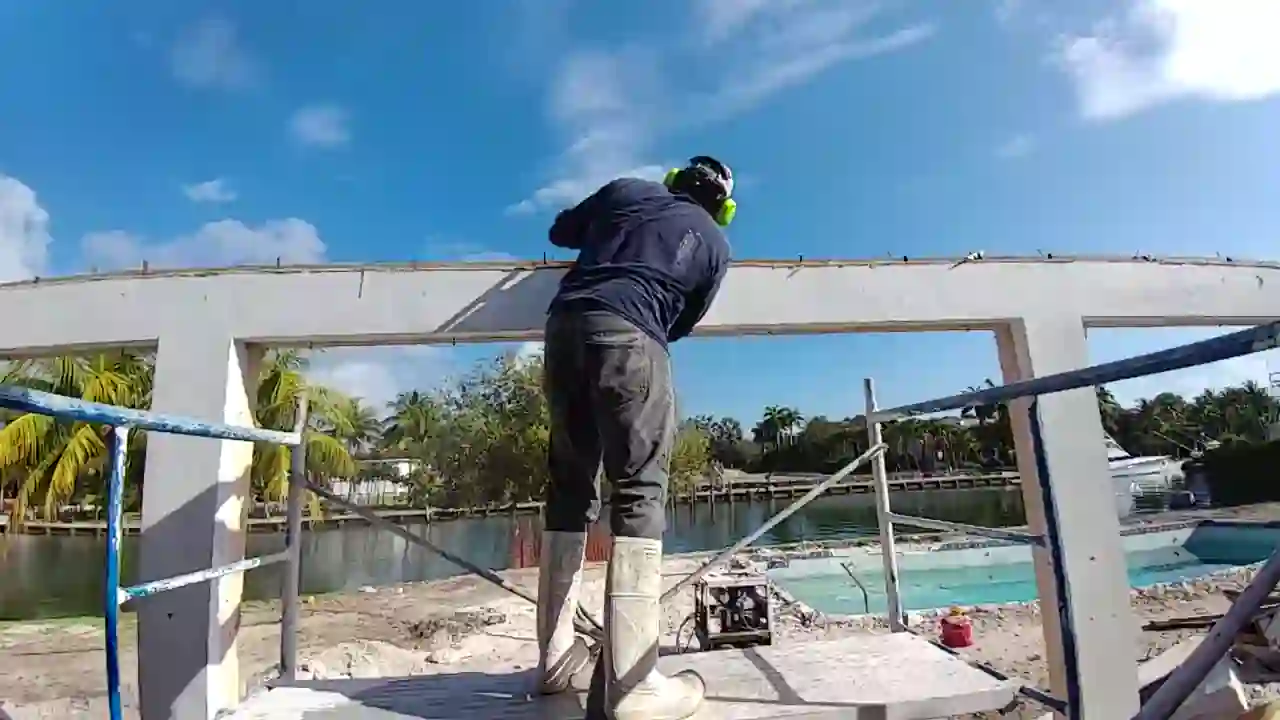
A Google search for concrete cutting advice pulls up generic content written by national marketing agencies that have never cut a single linear foot of concrete in their existence. That content does not mention the Biscayne Aquifer, does not mention Miami-Dade’s 100-foot wetland buffer zones, and certainly does not explain why cutting a concrete seawall cap in Key Biscayne requires a hydraulic chainsaw with diamond-segment bar and chain rather than a conventional wall saw — because saltwater-saturated concrete from marine environments cuts completely differently than the interior slab in a Doral warehouse.
Local concrete conditions vary block by block in South Florida. The limestone-based aggregate in concrete poured in 1960s-era Miami Shores behaves differently under a diamond blade than the granite-aggregate mix specified in current Miami-Dade building code for coastal construction. The water table depth — which directly affects slurry migration risk during wet cutting — ranges from 18 inches below grade in parts of Sweetwater to over 6 feet in western Kendall. A concrete cutter working across South Florida adjusts their approach based on these variables. A national advice article has no variables at all.
What Miami’s Proximity to the Water Table Means for Every Concrete Cut
South Florida’s seasonal high water table sits within 12 to 24 inches of finish grade across broad swaths of Miami-Dade, Broward, and Collier counties. When a wet saw blade penetrates through a 4-inch residential slab and the subgrade is saturated, cement-laden slurry does not pool on the surface — it migrates directly into groundwater pathways through the saw kerf. This is the single most common environmental compliance failure on residential concrete cutting jobs in Miami, and it happens because out-of-town contractors do not account for subsurface conditions that they have never encountered in their home markets.
The corrective action for a groundwater alkalinity impact — triggered when slurry pH above 8.5 infiltrates the water table — starts with a Notice of Violation from FDEP and escalates through soil sampling, groundwater monitoring well installation, and remediation reporting that routinely costs $15,000 to $25,000. A contractor who charges $200 less for the cutting work but creates a $20,000 environmental liability is not cheaper. The math is not complicated once you actually do it. Contractors following proper site foreman protocols for saw cuts account for subsurface conditions before the blade ever contacts concrete.
How to Vet a Local Concrete Cutting Company in Four Minutes Before They Show Up
I have developed a short pre-qualification checklist over years of watching property owners get burned by contractors who showed up with the wrong blade, the wrong insurance, and no slurry containment plan. Run through these verification steps while the company is still on the phone:
- Ask whether they carry a current Miami-Dade Certificate of Use (CU) for concrete cutting: Most property owners do not know this document exists. Every legitimate contractor operating in Miami-Dade County holds one. A contractor who hesitates on this question or claims it does not apply to them is either unlicensed or operating without local business tax registration — neither of which ends well for your project.
- Ask what blade diameter they will use and why: This is not a trivia question. The blade diameter determines cut depth, which determines whether they can complete your job in one pass or need to return with different equipment. A 14-inch blade cuts approximately 5 inches deep in a single pass. A 20-inch blade cuts approximately 8 inches. If your slab is 6 inches thick and they show up with a 14-inch blade, they are doing a two-pass cut — doubling the labor time and the slurry volume.
- Ask for the name of their slurry disposal facility: Concrete slurry is solid waste in Florida. It must be disposed of at a licensed facility. A contractor who says they “let it dry and throw it in the dumpster” is admitting to unpermitted disposal, and you are legally responsible as the property owner under joint and several liability provisions in Florida environmental statutes.
- Check their Google Business Profile for photos of actual work: Not stock photos of construction equipment. Actual job-site photos that show slurry containment, vacuum-assisted cutting, cut quality, and job-site condition. A concrete sawing contractor who photographs their containment setup is signaling that compliance is part of their workflow, not an optional add-on.
- Verify that their insurance certificate lists “concrete cutting” as a covered classification: General liability policies have classification codes. Concrete cutting (NCCI code 5022 for masonry, which typically covers concrete sawing and drilling) is distinct from general construction. A general contractor’s umbrella policy may not cover claims arising from diamond blade cutting operations — and you will not discover that gap until after the incident.
None of these questions requires technical knowledge to ask. All of them separate legitimate operators from price-shopping middlemen who subcontract your job to whoever answers their phone that morning. Understanding what it takes to run a concrete saw the right way gives you a framework for recognizing when a contractor is cutting corners on process and not just on price.
Why “Near Me” Actually Means “Near My Specific Geological and Regulatory Context”
The search term “concrete cutting near me” is a proxy for about twelve unspoken requirements that most homeowners cannot articulate but desperately need. Proximity is the surface-level ask. What they actually need is a contractor who knows that concrete poured in 1970s Hialeah contains different aggregate than concrete poured in 2020s Doral, that the City of Miami requires a separate right-of-way permit for any cutting operation that extends onto a public sidewalk or alley, and that cutting a slab within 100 feet of Biscayne Bay triggers Coastal Construction Control Line review that adds weeks to the permitting timeline.
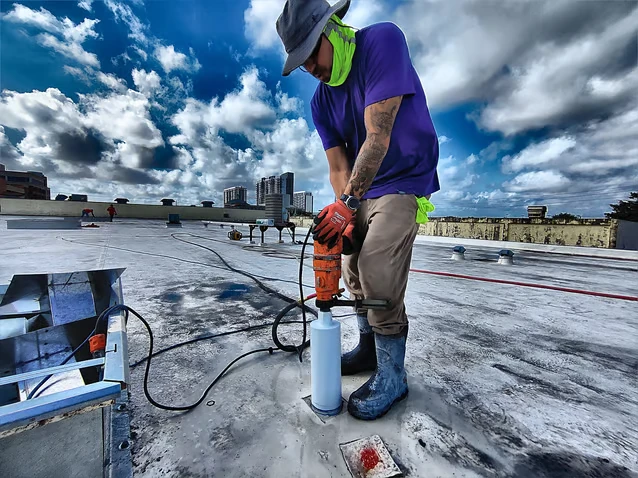
This is what local concrete cutting expertise actually means. It means knowing that Miami-Dade building codes specify different reinforcement requirements for slabs within the High Velocity Hurricane Zone than for slabs outside it. It means understanding that concrete cutting near a canal in western Miami-Dade requires turbidity barrier deployment under DERM jurisdiction, while the same cut performed in a Little Havana commercial space may only require a vacuum-assisted wet saw and standard containment. It means showing up with the right blade, the right containment system, and the right documentation for the specific address — not just the right GPS coordinates. Concrete cutting near me is a technical specification wrapped in a consumer search term, and the contractors who treat it that way are the ones who finish jobs without incident, without violations, and without phone calls from the building department six months after the invoice was paid.
What a Compliant Local Concrete Cutting Bid Looks Like — Line by Line
If you take one thing from this article, make it this. When you receive a bid for local concrete cutting work, these line items should be individually stated and priced. A lump-sum number with no technical breakdown is a bet against your inexperience:
- Mobilization and site assessment: Including GPR scanning if required, utility locating via Sunshine 811, and access path verification for equipment staging.
- Cutting method specification: Wall saw, wire saw, hand saw, flat saw, core drill, or hydraulic chainsaw — with blade diameter, cut depth, and estimated linear feet clearly stated.
- Slurry management system: Containment method (vacuum-assisted, berm, or full containment), disposal pathway (licensed facility name), and pH testing protocol.
- Permitting: Municipal permit fees if the cut triggers a structural review or right-of-way permit. Permit number and issuing jurisdiction stated.
- Waste disposal: Volume estimate, facility name, and disposal cost per unit.
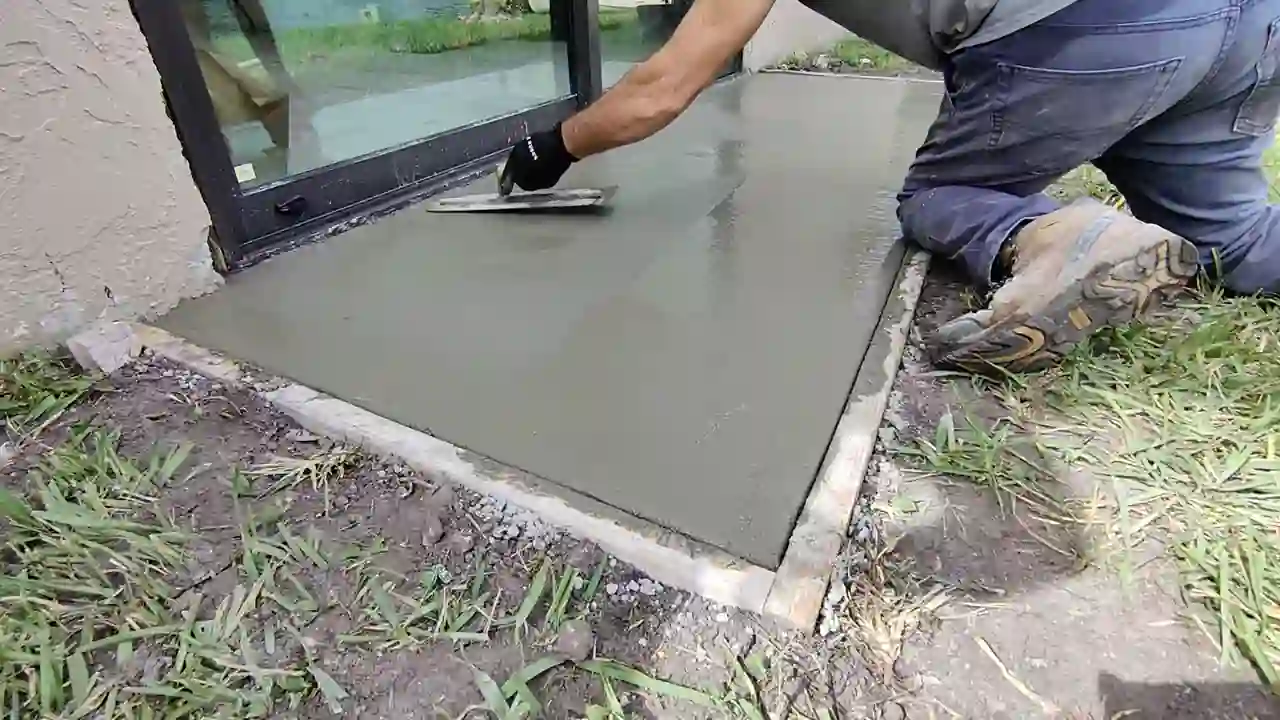
- Site restoration: Post-cut cleaning, slurry residue removal, and surface restoration to pre-work condition.
- Certificate of Insurance: Project-specific COI naming the property owner or GC as additionally insured, with concrete cutting classification explicitly listed.
Contractors who bid concrete cutting as “cut wall, $800” are not cheaper — they are hiding the cost of compliance inside your future liability. Every serious operator I know in Ft. Lauderdale and Miami-Dade construction bids line items because line items protect both parties. A contractor who refuses to break down their bid is signaling that they either do not understand the scope components or do not want you to understand them — and neither of those scenarios benefits the person signing the check. Real concrete cutting near me is not about who can get a truck to your driveway fastest. It is about who can perform the work without leaving behind a trail of regulatory violations, structural questions, and insurance gaps that surface months after the dust settles and the saw goes silent.