Why Rebar Cutting Demands a Completely Different Tooling Strategy Than Standard Concrete Sawing
Most contractors make the same mistake when they first encounter embedded steel rebar during a concrete cutting operation — they assume the blade doing the concrete work will handle the rebar too. That assumption destroys diamond segments in minutes and puts operators at serious risk. Steel rebar is a fundamentally different material than hardened concrete aggregate, and the physics of how a diamond blade interacts with it are almost entirely reversed. Understanding those mechanics at a technical level is the only way to select the right equipment, extend blade life, and maintain safe cutting speeds on any project where rebar is present — whether you’re doing slab removal, wall sawing, or core drilling through reinforced structural members.
The Metallurgical Problem — What Steel Does to a Diamond Segment at High RPM
Diamond blades cut through concrete by exposing fresh diamond crystals as the bond matrix wears away against abrasive aggregate. Steel rebar doesn’t abrade the bond — it smears it. When a rotating diamond segment contacts steel at cutting speed, the heat generated from metal-on-metal friction exceeds 900°F at the contact zone almost instantly. That thermal spike causes two critical failures: it glazes the diamond crystals by fusing a thin layer of iron oxide over the cutting face, and it work-hardens the bond matrix so that new diamonds can’t be exposed through normal wear. The result is a blade that looks intact but cuts nothing. This is called segment glazing, and it’s the number-one blade failure mode in rebar-intensive cutting environments.
For South Florida contractors dealing with heavily reinforced slabs — particularly in coastal construction where rebar spacing can be as tight as 6 inches on center — this isn’t a theoretical problem. It’s a daily operational reality. Understanding how to spec your tooling before the blade hits steel is what separates efficient crews from ones burning through $400 blades every other day. If you’re also managing environmental compliance on your removal site, reviewing the technical guidance at what West Miami property owners must know about environmentally compliant concrete removal will help you coordinate blade coolant and slurry containment requirements at the same time.
Diamond Blade Bond Hardness Ratings and the Correct Specification for Steel Rebar Contact
Bond hardness in diamond tooling is rated on a scale from soft (A–D) to hard (M–Z), depending on the manufacturer’s system, but the underlying principle is universal — softer bonds release diamond crystals faster, and harder bonds hold them longer. For pure concrete cutting, you match bond hardness inversely to aggregate hardness: hard aggregate like flint or quartz gets a soft bond blade so the matrix wears fast enough to keep exposing fresh diamonds. For rebar, the logic shifts dramatically.
When your blade will encounter significant steel, you need a medium-to-hard bond (typically rated H–K in most ISO-aligned systems) combined with a high diamond concentration — typically 40–50 concentration rating. The harder bond resists the smearing effect of steel contact, and the higher diamond concentration means more cutting points are available at any given moment, distributing heat load across a larger surface area. Segment height also matters: for rebar-heavy applications, specify segments no shorter than 10mm in height, with a minimum segment width of 3.5mm to maintain structural integrity through repeated steel impacts.
Laser-welded segments are non-negotiable in rebar cutting. Sintered or silver-brazed segments can delaminate under the thermal shock of steel contact, creating a catastrophic blade failure at operating speed. Always verify the welding method before purchasing blades for any job with confirmed rebar presence.
Machine Selection — RPM Ranges, Horsepower Requirements, and Arbor Compatibility for Rebar Cutting
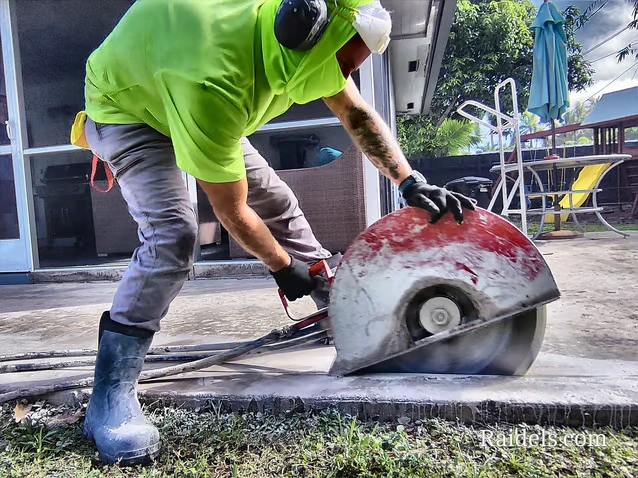
Equipment specification is just as critical as blade selection. The two most common platforms for cutting rebar-embedded concrete are flat saws (walk-behind slab saws) and wall saws, with core drills handling cylindrical penetrations. Each has specific operating parameters that must be matched to the blade spec.
- Flat saws for rebar-reinforced slabs: Require a minimum of 25 HP for blades in the 14–18 inch diameter range. Operating RPM for a 14-inch rebar blade should be maintained between 2,800–3,200 RPM at the spindle. Peripheral speed — the speed at the blade’s outer edge — should target 4,500–5,500 surface feet per minute (SFPM) for optimal rebar cutting without segment overheating.
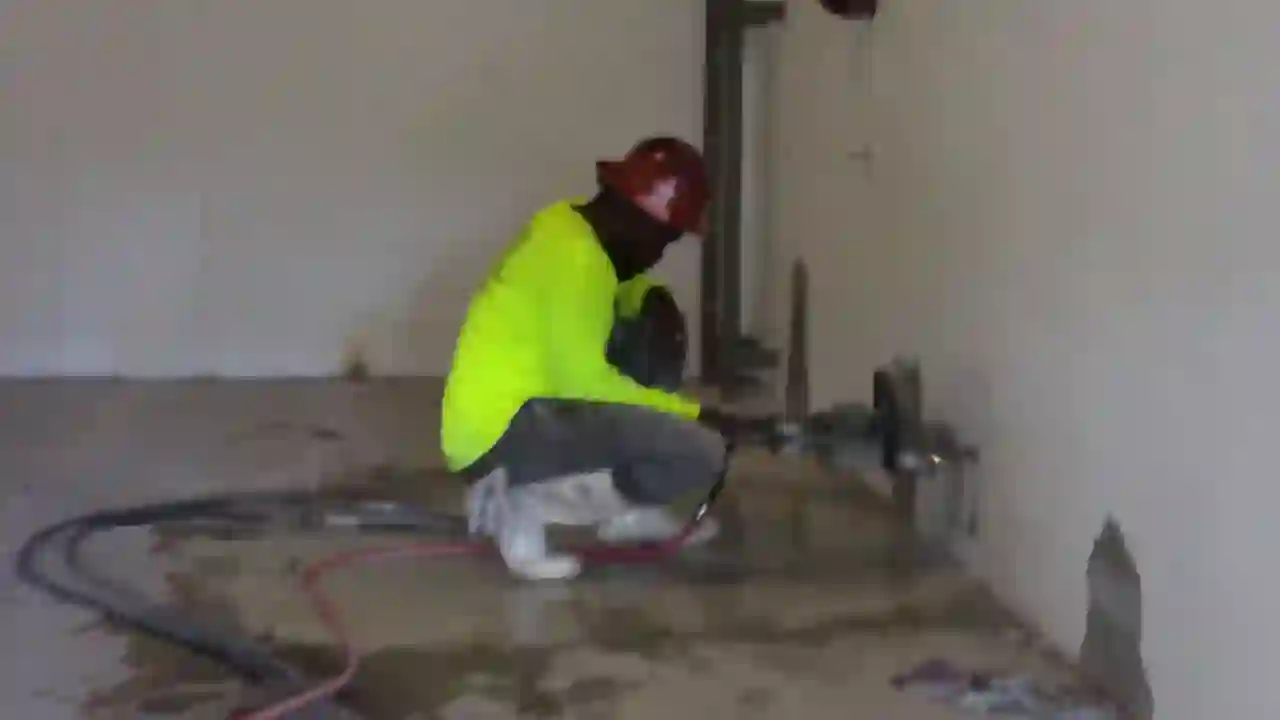
- Wall saws for vertical rebar cuts: Hydraulic wall saws operating at 20–30 GPM hydraulic flow are preferred for wall and elevated slab cuts with dense rebar. Blade diameter in wall saw applications typically ranges from 24–60 inches, and peripheral speed targets remain the same — 4,500–5,500 SFPM — but RPM drops significantly with larger blade diameters to maintain that surface speed.
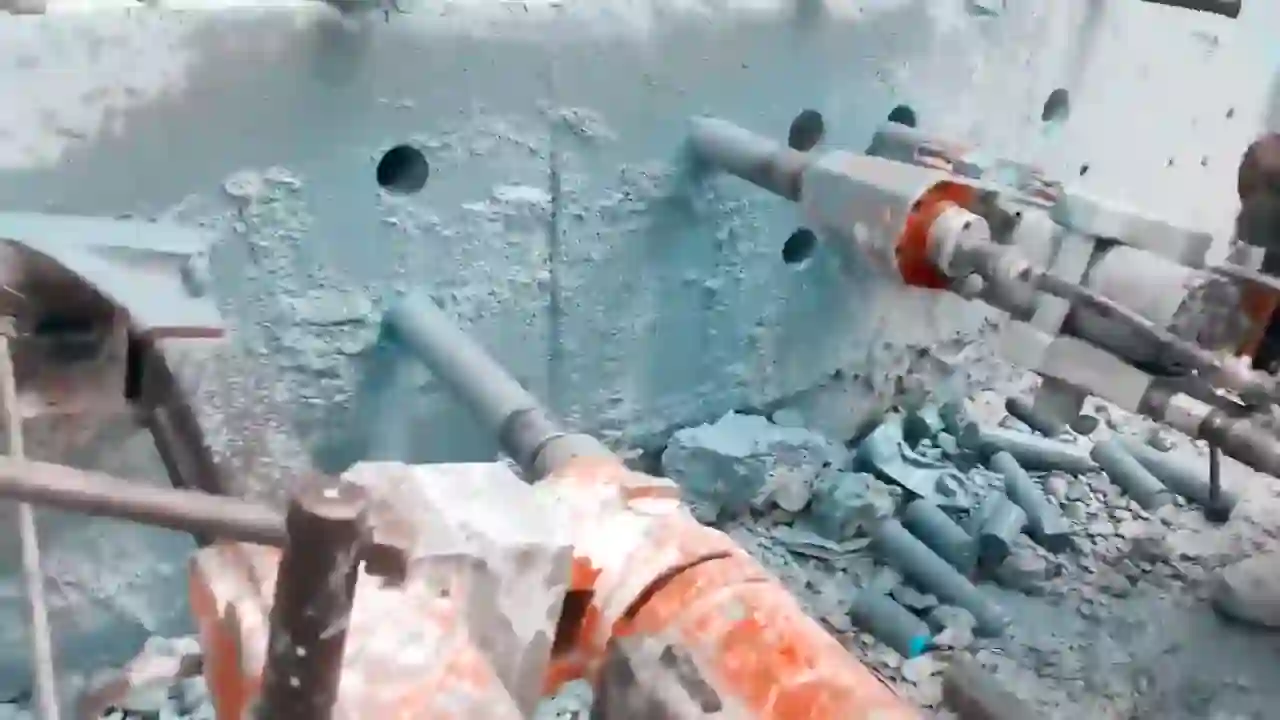
- Core drills for rebar penetration: Diamond core bits for rebar-embedded concrete should use a wet drilling configuration at 300–600 RPM for bits 4 inches and larger. Dry core bits are not appropriate for rebar-heavy applications due to the thermal load on the bit crown.
Arbor compatibility is a frequently overlooked specification point. Confirm that the blade’s arbor bore matches your saw’s spindle diameter exactly — common sizes are 1 inch, 20mm, and 25.4mm — and that the blade’s maximum RPM rating exceeds your machine’s operating speed by at least 20%. Running a blade at its rated maximum RPM during rebar contact is a recipe for segment stress fracture.
Water Cooling Flow Rates During Steel Rebar Cutting Operations
Wet cutting is mandatory when rebar is present in any significant quantity. The minimum water flow rate for a 14-inch blade cutting rebar-reinforced concrete is 1.0–1.5 gallons per minute delivered directly to both sides of the blade. For blades 18 inches and above, increase flow to 2.0–2.5 GPM per side. Water delivery nozzles should be positioned at the 10 o’clock and 2 o’clock positions relative to blade rotation, angled toward the segment-concrete interface rather than the blade body. This positioning ensures coolant reaches the cutting zone before the segment exits the kerf, not after. For a full review of equipment standards and flow rate specifications used on commercial projects, the technical specifications and equipment standards resource page provides detailed reference data.
Blade Geometry Specifications That Actually Matter When Rebar Is in the Cut Path
Segment geometry — the shape of the diamond-impregnated cutting block welded to the blade core — directly affects how the blade transitions between concrete and steel. For rebar cutting, two geometries outperform all others in field conditions:
- Turbo segment geometry: The angled, wave-cut profile increases the surface area of each segment contact, distributing thermal load and improving self-sharpening even when steel smearing occurs. Best for intermittent rebar contact in slabs with moderate reinforcement (rebar spacing greater than 12 inches).
- Segmented continuous rim with gullets: The gullets (gaps between segments) act as heat dissipation channels and allow slurry — the mix of water, concrete fines, and iron particles — to evacuate the kerf efficiently. Critical in dense rebar environments where slurry buildup can hydraulically lock the blade mid-cut.
Avoid sandwich-style or multi-layer diamond segment configurations for rebar work. While effective in pure concrete, the layered structure creates stress concentration points at the weld interface that fail under repeated steel impact loading. If you’re planning a project and want to understand how blade selection affects your overall project cost, reviewing information on concrete saw cutting costs can help you build a realistic budget before mobilization.
Blade Diameter Versus Cutting Depth for Rebar-Embedded Structural Slabs
A common field error is selecting blade diameter based on slab thickness alone without accounting for rebar position. In a 6-inch slab with two mats of rebar — one at 1.5 inches from the top and one at 1.5 inches from the bottom — a blade cutting to full depth will contact steel twice per pass. Each steel contact event requires the blade to be rated for that impact. As a rule, blade diameter should provide at least 1.5 inches of cutting depth beyond the deepest rebar mat, and the blade’s segment count should be sufficient to maintain continuous cutting contact through the transition zones. For a 6-inch slab, a 14-inch diameter blade provides approximately 5.5 inches of effective cutting depth on a standard flat saw — sufficient for most residential and light commercial reinforced slabs. For deeper structural members, 18-inch or larger blades mounted on high-horsepower saws are required.
Proper site preparation before cutting operations also significantly affects blade performance and operator safety. Reviewing the checklist at how to prepare your home for concrete cutting and demolition services ensures that rebar location is mapped, utilities are marked, and the work surface is stable before the first cut is made. For crews operating in the Country Walk area, local project specifics around reinforced slab removal are covered at concrete removal in Country Walk.
Matching Every Variable Before the Blade Touches the Slab
Cutting steel rebar successfully isn’t a matter of forcing a standard concrete blade through embedded steel and hoping for the best. It requires a disciplined pre-job specification process — confirming rebar size and spacing from structural drawings, selecting a blade with the correct bond hardness and diamond concentration for the steel contact frequency, verifying machine RPM and horsepower against blade peripheral speed requirements, and setting water flow rates before the first cut begins. Every one of those variables has a direct impact on blade life, cut quality, and operator safety. For contractors who want to go deeper on the full equipment ecosystem used in commercial reinforced concrete cutting, the tools and equipment resource section covers platform-specific specifications across the full range of cutting applications. The difference between a job that runs on schedule and one that burns through tooling and time almost always traces back to decisions made before the saw ever leaves the truck.