Concrete cutting contractors and general contractors are not the same thing — here is why that distinction costs real money
Every general contractor in Miami has a concrete saw somewhere in their inventory or knows where to rent one. That does not make them concrete cutting contractors any more than owning a stethoscope makes someone a cardiologist. Concrete cutting is a specialized trade with specialized equipment, and the contractor you hire to cut a wall opening, core-drill a foundation, or trench a slab should be a concrete cutting specialist — not a general contractor who is willing to include cutting in their scope because they sub it out or figure it out on site.
We are a concrete cutting company. We do not pour concrete, frame walls, hang drywall, or install roofing. We cut concrete — walls, slabs, pipes, columns, foundations, decks. That narrow focus means the equipment on our trucks is specific to cutting. The training our crews receive is specific to cutting. The liability insurance we carry is specific to cutting. When you hire specialized concrete cutting contractors, you are hiring a company that has done your exact type of work hundreds of times. When you hire a general contractor to cut concrete, you are hiring someone who may have done it a few times, may sub it to someone you never vetted, or may be about to learn something on your property at your expense.
The specialization checklist — what real concrete cutting contractors bring to every job
Wall saw systems with hydraulic power units
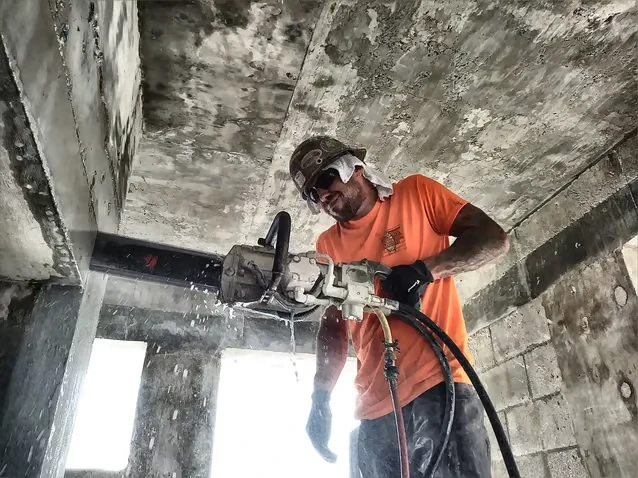
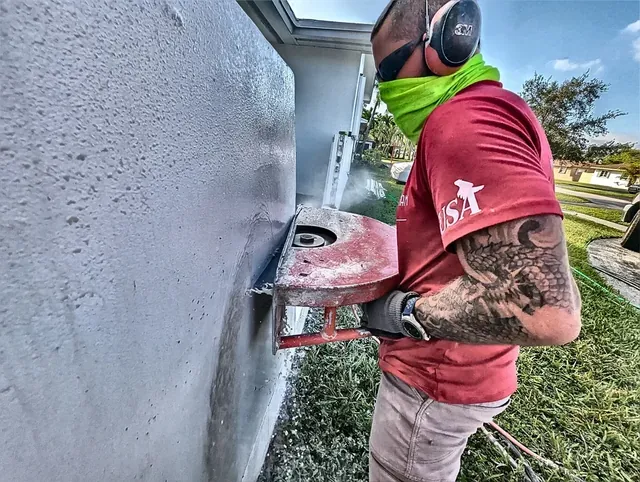
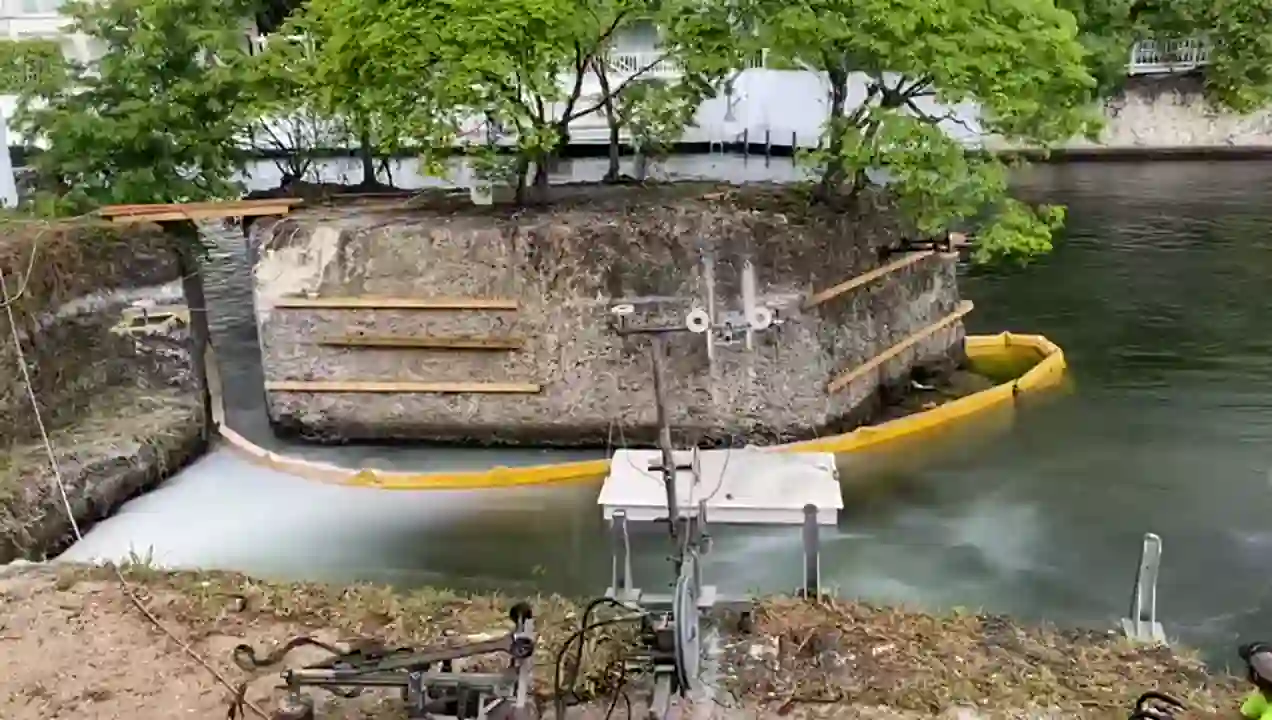
A wall saw is a track-mounted saw that cuts vertical and overhead concrete surfaces. The track is bolted or vacuum-anchored to the wall, and the saw head travels along it, cutting incrementally deeper with each pass. A hydraulic power unit — a standalone diesel or electric motor driving a hydraulic pump — powers the saw through hydraulic hoses. General contractors do not own wall saws. They are specialized equipment with specialized training requirements, and the companies who own them are concrete cutting contractors by definition.
Ground-penetrating radar (GPR) units
Before cutting any concrete that might contain post-tension cables, electrical conduits, or embedded utilities, a professional cutting contractor scans the concrete with GPR. The scanner produces a real-time image of what is inside the concrete — rebar pattern, PT cable locations, conduit runs, slab thickness variations. A contractor who cuts concrete without scanning is gambling, and in Miami, where post-tension slabs are common, that gamble carries consequences measured in structural damage and six-figure repair costs.
Diamond blades rated for reinforced concrete
The blades used by professional concrete cutting contractors are engineered for the specific material they will encounter — cured concrete with limestone aggregate and embedded steel rebar. These are not the general-purpose blades sold at home improvement stores. The blade selection alone is a professional decision that general contractors are not equipped to make.
Slurry containment and vacuum systems
Wet cutting produces slurry — a mixture of water and concrete dust that is classified as construction waste in Miami-Dade County. Professional cutting contractors bring vacuum systems, berms, and pumps to contain and collect slurry. They do not wash it into storm drains or let it soak into the soil. Slurry management is a standard part of every cutting job, and a contractor who does not include it in their quote is a contractor who plans to let the slurry go wherever gravity takes it.
How to verify concrete cutting contractors in Miami-Dade County
Check their website for cutting-specific content
A general contractor’s website lists concrete cutting as one service among dozens — alongside painting, roofing, flooring, and remodeling. A concrete cutting contractor’s website is about cutting. It discusses wall sawing, slab sawing, core drilling, wire sawing, GPR scanning, and demolition cutting. Specialized concrete cutting services are not one line on a long list — they are the entire list.
Ask what equipment they own vs what they rent
Professional concrete cutting contractors own their saws, power units, and scanning equipment. This is an expensive inventory — a single hydraulic wall saw system with a power unit costs more than a new pickup truck. A contractor who rents a saw per job is a contractor who cuts concrete occasionally, not professionally.
Request project photos of your specific cut type
Ask to see photos of jobs matching your scope. If you need a 6-foot wall opening for a commercial door, ask for photos of wall openings they have cut — not core drills, not slab sawing, not demolition. The contractor should be able to show you recent examples of the exact work you need.
The subcontractor problem — who is actually cutting your concrete
Many general contractors who list concrete cutting as a service do not actually perform the cutting. They subcontract it to a concrete cutting company — which is fine, as long as you know who that company is. Ask these questions before signing: “Who is the concrete cutting subcontractor?” Get the company name and verify them independently. “Can I see the subcontractor’s insurance certificate?” The cutting sub should carry their own liability insurance. “Will the sub perform GPR scanning before cutting?” If the GC says scanning is not necessary, they are not working with a professional cutting sub. “Who is responsible if the sub damages the structure?” The answer should be clear and in writing.
In many cases, hiring the concrete cutting contractor directly is simpler and safer than hiring a GC who adds a markup to sub the cutting out. You get direct communication with the company doing the work, no markup on the cutting scope, and a contractual relationship with the company whose blade is touching your concrete.
Questions that identify a real concrete cutting contractor
- “What type of blade are you using for this job?” A specialist names a specific blade type, bond hardness, and manufacturer. A generalist says “diamond blade” and cannot go deeper.
- “How do you handle the corners on wall openings?” A specialist describes overcutting and corner finishing. A generalist may not know that a circular blade cannot cut a square inside corner.
- “What is your approach when you hit unexpected rebar?” A specialist adjusts cutting speed and blade selection but continues the cut. A generalist stops and switches tools.
- “Can you provide a COI with my property named as additionally insured?” A specialist provides it within hours. A generalist may push back or provide a certificate that does not cover structural modification liability.
Hiring concrete cutting contractors who specialize in cutting is not about getting a lower price — it is about getting the job done correctly the first time. The cost of a bad cut dwarfs any savings from hiring a general contractor who was willing to give it a try. When your concrete needs cutting, hire the company that does nothing else.