Chipping concrete is precision work disguised as brute force
Most people think chipping concrete is the simplest thing you can do to a concrete surface — just hit it with something heavy until pieces come off. At the most basic level, that is what concrete chipping is: removing small pieces of concrete from a larger mass using impact force. But the difference between chipping done right and chipping done wrong is the difference between a surface ready for its next step and a surface that needs repair before anything else can happen.
In Miami construction, concrete chipping serves dozens of purposes. An electrician chips a channel for conduit. A plumber chips around a pipe penetration. A GC chips out a spalled section before patching. Each of these requires a different tool, different technique, and different level of precision. Using a 60-pound pneumatic breaker to chip a quarter-inch high spot will get the high spot down, and it will also crack the slab six inches past it.
The tool spectrum — from hand chisel to pneumatic hammer
Hand tools — cold chisels and hand sledges
For very small chipping jobs — removing a small lump, squaring off a rough edge — a cold chisel and a 3-pound hand sledge are the right tools. Hand chipping puts exactly the right amount of force in exactly the right place with no excess energy radiating through the concrete. The downside is speed. Hand tools are for precision work on small areas.
Electric chipping hammers and rotary hammers
An electric chipping hammer uses an electric motor to drive a piston that strikes the chisel bit, delivering hundreds of blows per minute without the operator swinging a hammer. For most chipping concrete work in residential and light commercial settings, an electric chipping hammer in the 10-15 pound range covers the majority of applications.
Pneumatic chipping hammers and jackhammers
For heavy chipping work, pneumatic tools powered by an air compressor provide more impact energy than electric tools. A 30-pound pneumatic chipping hammer delivers blows that an electric tool cannot match. The tradeoff is that pneumatic tools are less precise — professional contractors use pneumatic tools for bulk removal and switch to electric or hand tools for finishing near edges.
Chipping technique — how to remove concrete without damaging what stays
Angle of attack
The chisel should strike concrete at approximately a 45-degree angle to the surface. Too steep and the impact energy drives into the concrete, cracking it below the chipping zone. Too shallow and the chisel skates without biting. The 45-degree angle directs energy partially downward to break and partially outward to eject the chip.
Working from the edge inward
Concrete is strongest in the middle of a mass and weakest at edges. Always start at a free edge and work inward. The concrete at the edge has a place to break toward. Concrete in the middle has nowhere to go, so impact energy must create new fractures entirely within the material.
Controlled depth chipping
When chipping to a specific depth, the chisel angle is shallowed as the target depth is approached. This is the hardest chipping technique to master and the most common source of over-chipping damage.
When chipping is not enough — knowing when to switch to saw cutting
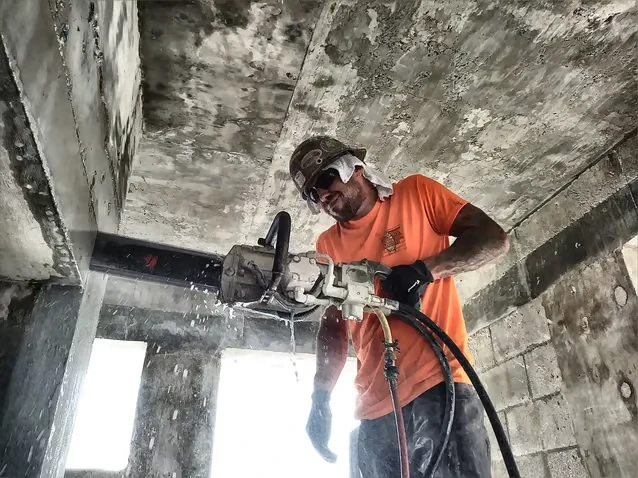
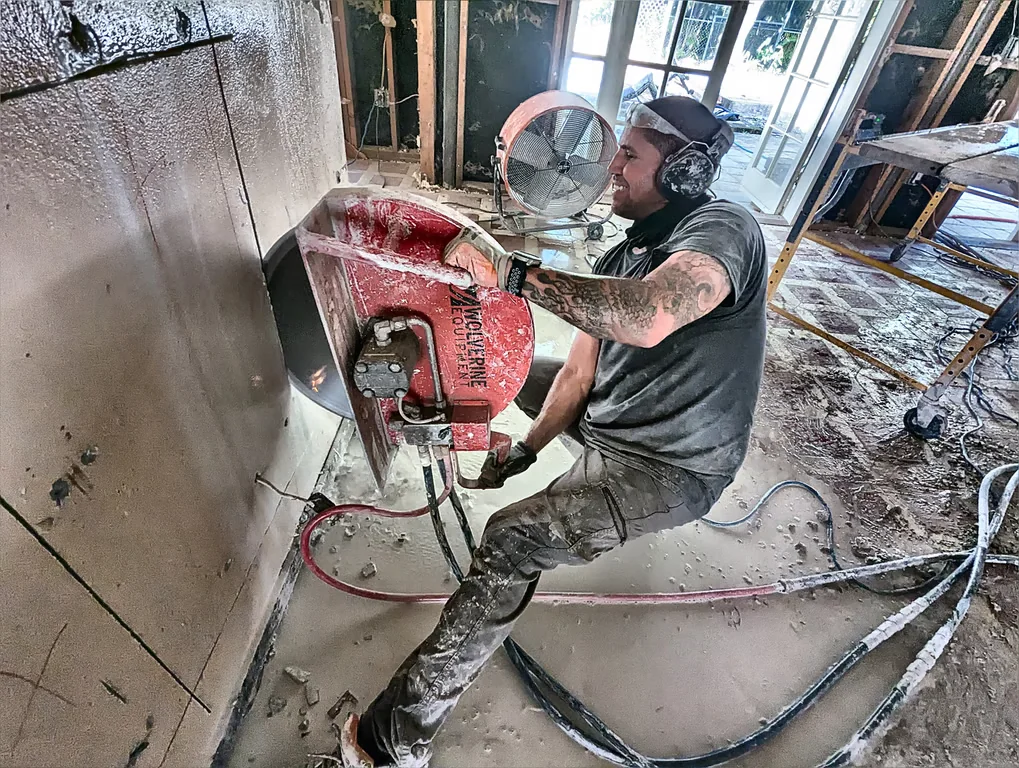
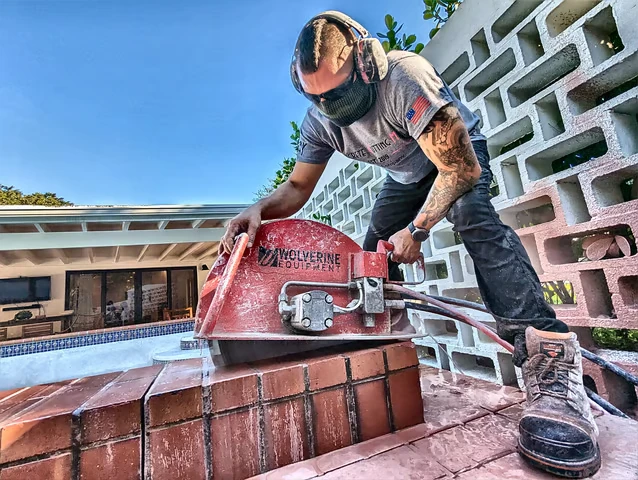
When concrete is heavily reinforced, chipping becomes slow because rebar holds the concrete together even after it is fractured. When the area is large, saw cutting the perimeter first produces cleaner edges. Slab sawing services handle the cutting step so chipping only deals with already-separated concrete.
Chipping safety
- Eye protection: Chipping concrete produces high-velocity fragments. Safety glasses are mandatory, face shields are better.
- Hearing protection: Pneumatic chipping hammers produce noise levels that cause permanent hearing damage. Earplugs or earmuffs are not optional.
- Respiratory protection: Dry chipping produces respirable silica dust. An N95 respirator is the minimum.
- Vibration management: Extended use of chipping hammers causes hand-arm vibration syndrome. Professional operators rotate tasks and use anti-vibration gloves.
- Rebar awareness: Exposed rebar creates a laceration hazard. Steel ends should be bent over or capped.
Chipping concrete looks like unskilled labor, but the difference between a professional chipping job and a bad one is immediately obvious in the result. Clean edges, controlled depth, no collateral cracking, and a surface ready for its next step — that is what chipping should produce.