Why Fort Lauderdale Door Widening Projects Live or Die on Slurry Protocol
When a structural engineer in Fort Lauderdale, FL signs off on widening a door opening — whether in a concrete masonry unit (CMU) wall, a tilt-up panel, or a reinforced concrete bearing wall — the conversation almost immediately shifts to load redistribution, header beam sizing, and temporary shoring. What rarely gets enough attention at the planning table is the environmental liability that begins the second a wet-cutting diamond blade touches that wall. Broward County sits within a highly sensitive drainage basin that feeds directly into the Intracoastal Waterway and Everglades buffer zones. That means concrete slurry — the alkaline, heavy-metal-laden byproduct of diamond blade cutting — is not a jobsite nuisance. It is a regulated waste stream, and mishandling it carries real consequences including stop-work orders, EPA fines, and contractor license actions. Understanding the full technical picture of slurry generation, containment, and disposal is non-negotiable for any crew widening a door opening in this market.
The Engineering Baseline — What the Structural Plan Actually Requires
Before a single containment dam gets staged, the structural engineer’s drawings must be reviewed for wall composition, reinforcement schedule, and existing load paths. In Fort Lauderdale’s commercial and mixed-use building stock, you’ll encounter everything from 8-inch CMU with bond beams to 12-inch poured concrete walls with #6 rebar on 12-inch centers. Each wall type dictates blade selection, cutting depth sequencing, and — critically — water volume requirements for blade cooling. A higher-reinforcement wall demands more aggressive blade segments, longer blade contact time, and higher water flow rates. More water flow means more slurry generation per linear foot of cut. A 36-inch wide door opening expansion in a 12-inch thick reinforced wall can generate 15 to 25 gallons of slurry depending on aggregate hardness and rebar density. That volume must be accounted for in the containment plan before the job starts.
Engineers specifying this work for commercial door cutouts in Miami and Fort Lauderdale increasingly include slurry management notes directly in the project specifications — and for good reason. When the general contractor or building owner faces an environmental citation, it rolls uphill fast.
Diamond Blade Wet Cutting Physics and Slurry Composition in South Florida Concrete
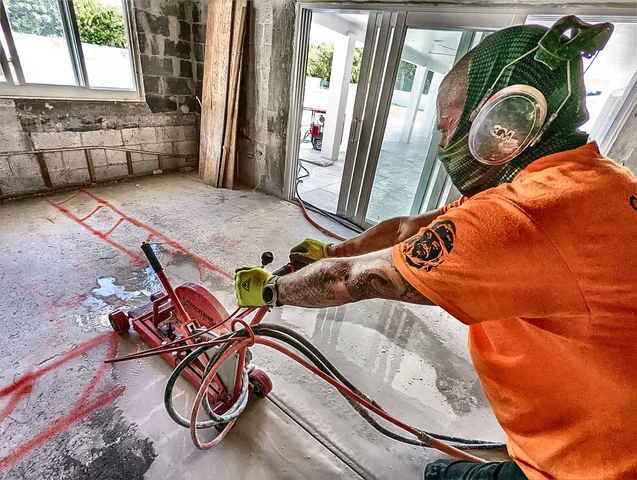
Wet cutting is mandatory for any door opening expansion exceeding 4 inches in depth in an occupied or semi-occupied structure. The water serves two functions: it cools the diamond segments to prevent thermal glazing and segment loss, and it suppresses respirable crystalline silica dust — a serious OSHA compliance issue under the 29 CFR 1926.1153 silica standard. In Fort Lauderdale’s climate, ambient temperatures regularly exceed 90°F, which accelerates blade heating and demands higher water flow rates than you’d use in a northern market. Expect minimum flow rates of 1.5 to 2.5 gallons per minute for wall saw applications on reinforced concrete.
The resulting slurry is not benign water. It carries pulverized Portland cement paste, calcium hydroxide (which drives pH above 11), silica fines, and trace heavy metals including chromium and lead from older painted surfaces. Discharging this material into storm drains, swales, or ground surfaces violates the Clean Water Act Section 402 NPDES permit framework and Broward County’s local stormwater ordinances simultaneously. The pH alone — consistently alkaline enough to damage aquatic ecosystems — is sufficient for a citation. This is why crews working on home improvement and residential renovation projects in Fort Lauderdale need the same containment discipline as commercial operators.

Physical Containment Systems for Vertical Wall Cutting in Tight Door Openings
Containing slurry during a vertical wall cut is mechanically more demanding than floor or slab cutting because gravity works against you. The slurry runs down the wall face in multiple directions simultaneously, especially at the saw entry and exit points. The following containment system components are standard for a compliant door opening expansion in Fort Lauderdale:
- Perimeter berms using hydraulic putty or foam backer rod: Applied at the base of the wall on both faces to create a contained channel before cutting begins. These must be rated for alkaline contact and set fully before water flow starts.
- Polyethylene sheeting with taped seams: Minimum 6-mil poly laid on both sides of the wall extending at least 4 feet from the cut face. Taped seams prevent slurry migration under the sheet and into adjacent flooring or soil.
- Wet-dry vacuum with slurry collection tank: A dedicated industrial vacuum rated for liquid collection runs continuously during cutting, drawing slurry from the containment berm into a sealed 55-gallon drum or purpose-built slurry tank. This is not optional — passive collection alone is insufficient for cuts exceeding 6 inches in depth.
- Secondary containment for the collection vessel: The drum or tank itself must sit inside a secondary containment tray sized for 110% of the vessel volume, per standard spill containment protocol.
- Wall saw track sealing: The track mounting system creates gaps at anchor points. These must be foam-sealed before water is introduced to prevent slurry wicking behind the track and reaching unprotected surfaces.
For projects that also involve foundation-adjacent cuts, the containment complexity increases substantially. Crews familiar with concrete cutting for foundation repair in Miami understand that slurry near grade-level penetrations can migrate into soil and reach groundwater — a Broward County enforcement priority.
Slurry Dewatering and Legal Disposal Pathways in Broward County
Once collected, slurry cannot simply be hauled to a dumpster. The liquid fraction requires pH adjustment before disposal. On-site treatment using citric acid or carbon dioxide injection (preferred for its neutralization precision) brings the pH from 11–12.5 down to the 6–9 range required for sanitary sewer discharge under most local pretreatment ordinances. The solid fraction — dewatered cement paste and aggregate fines — can typically be disposed of as non-hazardous solid waste once pH is confirmed, provided the source concrete is not from a pre-1980 structure with potential lead paint or asbestos-containing materials. If either is suspected, a pre-demolition hazardous materials survey is required before cutting begins.
Crews who also handle drainage-related cutting work understand these disposal pathways well. The same pH management principles that apply to cutting concrete for drainage or plumbing repairs apply directly to door opening expansion work — the slurry chemistry is identical regardless of the cut geometry.
Temporary Shoring Integration with Containment Planning
One of the most common field errors on Fort Lauderdale door widening projects is staging temporary shoring systems in a way that conflicts with slurry containment. Hydraulic shores and strongback assemblies placed directly on polyethylene sheeting create puncture risks and can shift the containment berm. The correct sequencing is to install shoring first on clean, unprotected floor, then build containment around the shoring base plates using foam backer rod and additional poly lapped over the plate edges. Shoring removal after header installation must also be coordinated with containment removal to prevent residual slurry from migrating during the transition. This level of sequencing detail is what separates a compliant crew from one that generates a Broward County environmental complaint mid-project.
For commercial operators managing multiple door cutout projects across South Florida, the commercial door cutout planning resources available from experienced concrete cutting contractors provide the operational frameworks that keep these projects on schedule and in compliance simultaneously.
Window and Adjacent Opening Coordination for Multi-Phase Compliance
Fort Lauderdale renovation projects frequently involve widening door openings as part of a broader scope that includes window enlargements and interior reconfiguration. When multiple openings are cut in sequence, slurry volumes compound and containment systems must be reset between cuts. Crews experienced in window opening enlargement in Miami apply the same reset protocol — full slurry extraction, berm inspection, and poly replacement — between each discrete cut sequence. Reusing saturated containment materials from a previous cut is a common compliance failure point that experienced supervisors catch during pre-task safety and environmental briefings.
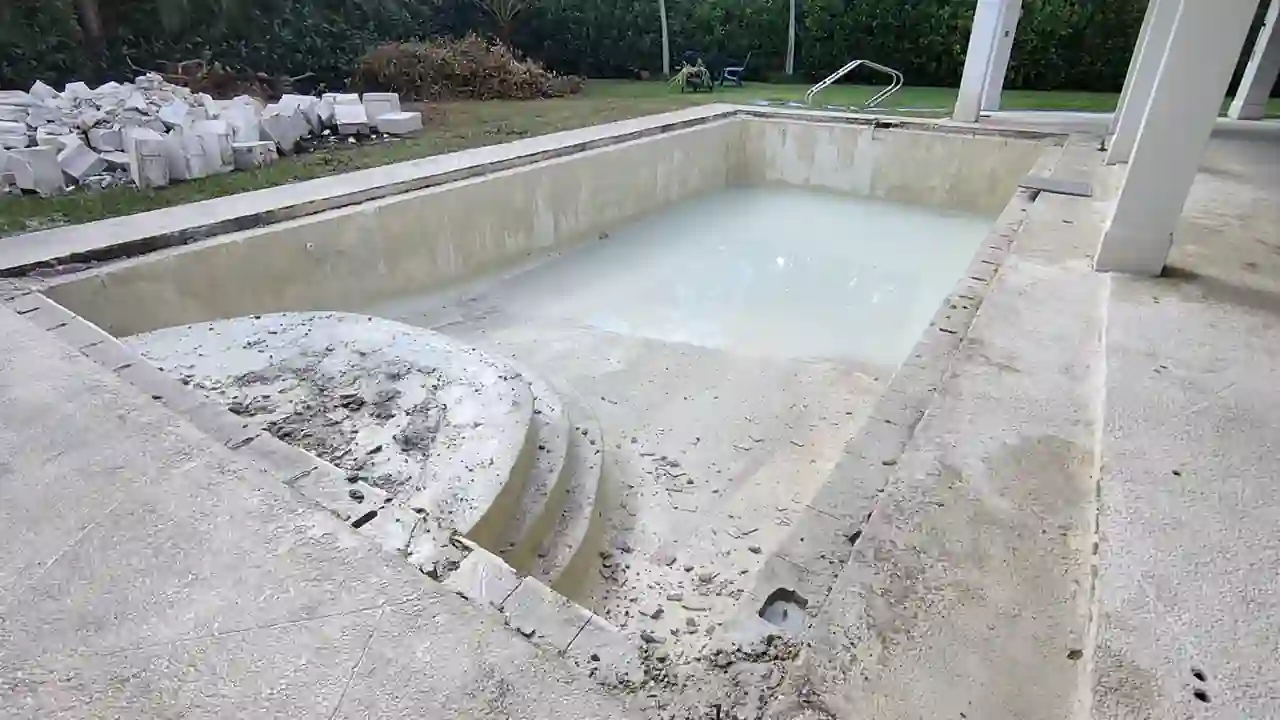
Projects involving pool-adjacent structures or outdoor entertainment spaces add another layer of complexity. Slurry near pool decks or drainage features that connect to pool systems requires additional isolation. The pool fill and pool-adjacent concrete work discipline reinforces the same principle: water and slurry management are site-specific, not generic.

What Fort Lauderdale Engineers and General Contractors Should Demand from Their Cutting Subcontractor
If you are a structural engineer or GC managing a door opening widening project in Fort Lauderdale, FL, the following documentation should be required from your concrete cutting subcontractor before work begins:
- Written slurry management plan specific to the project site, wall type, and cutting equipment to be used
- Proof of NPDES awareness training for all crew members who will be on-site during wet cutting operations
- Equipment manifest confirming vacuum capacity, secondary containment vessel sizing, and pH adjustment materials on hand
- Disposal documentation pathway identifying the licensed facility or sewer discharge permit under which slurry will be disposed
- Pre-task hazmat screening confirmation for any structure built before 1980
A subcontractor who cannot produce these items before mobilization is not ready to work in Broward County’s regulatory environment. The structural work of widening a door opening is technically demanding — the environmental compliance work surrounding it is equally demanding and equally non-negotiable. Fort Lauderdale’s proximity to sensitive water resources means that every gallon of slurry generated on a job site is a liability that must be managed with the same rigor as the load transfer calculations on the engineer’s drawings.