What Makes Virginia Gardens a Technically Demanding Concrete Removal Zone
Virginia Gardens is one of Miami-Dade County’s smallest incorporated municipalities — roughly 0.3 square miles of densely packed residential and light commercial properties sitting directly adjacent to Miami International Airport’s operational boundaries. That geographic reality creates a layered set of site logistics challenges that most general contractors aren’t equipped to handle. When a concrete removal project lands in Virginia Gardens, you’re not just dealing with a slab or a driveway. You’re dealing with compressed lot sizes, shared property walls, underground utility corridors that haven’t been updated in decades, and in some cases, airspace and vibration restrictions tied to proximity to active flight paths. Every one of those factors changes how you plan, stage, and execute a concrete removal job.
Access Limitations That Dictate Equipment Selection Before Day One
The first conversation on any Virginia Gardens concrete removal project isn’t about the slab itself — it’s about how you’re getting equipment to it. Gate widths on residential properties in this area typically range from 36 to 48 inches, which immediately eliminates full-size skid steers and standard-track excavators from your equipment list. Mini excavators in the 1.5- to 2.5-ton class become the default workhorse, but even those require careful measurement against gate clearances, overhead utility lines, and any existing hardscape that can’t be disturbed.
When mechanical access is fully blocked — and in Virginia Gardens, it happens more often than contractors expect — the job shifts to a manual-mechanical hybrid approach. That means deploying electric demolition hammers in the 30- to 70-pound class, hydraulic breakers mounted on compact carriers, and in some cases, specialized demolition equipment designed specifically for confined residential environments. The key is pre-qualifying every piece of gear against the actual site dimensions before mobilization. Showing up with the wrong machine costs a day and a client’s trust.
Staging Zones in Sub-Quarter-Acre Lots
Debris staging is the logistical problem that kills timelines on Virginia Gardens jobs. With lot sizes often under 5,000 square feet and no alley access in most residential blocks, you have to engineer your debris flow from the point of break to the point of load with zero room for error. The standard approach is sequential breaking — work in 4-by-4-foot sections, load each section into a debris cart or wheelbarrow, and transfer directly to a roll-off positioned at the street. This eliminates the need for a secondary staging area entirely, but it demands a disciplined crew rotation to keep the chain moving without bottlenecks.
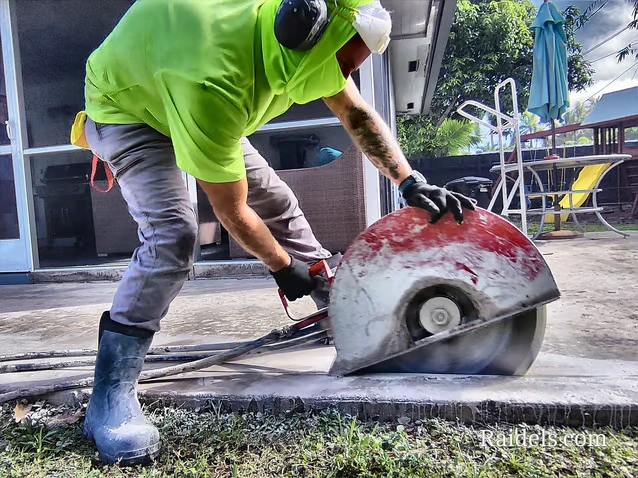
For larger slabs — anything over 400 square feet — we typically pre-score the concrete using a systematic slab-cutting approach that divides the pour into manageable panels before any breaking begins. This isn’t just about debris management. Pre-scoring controls crack propagation and prevents unintended damage to adjacent flatwork, foundations, or utility conduits that may be running beneath or alongside the slab.
Confined Space Protocol for Below-Grade and Interior Concrete Removal
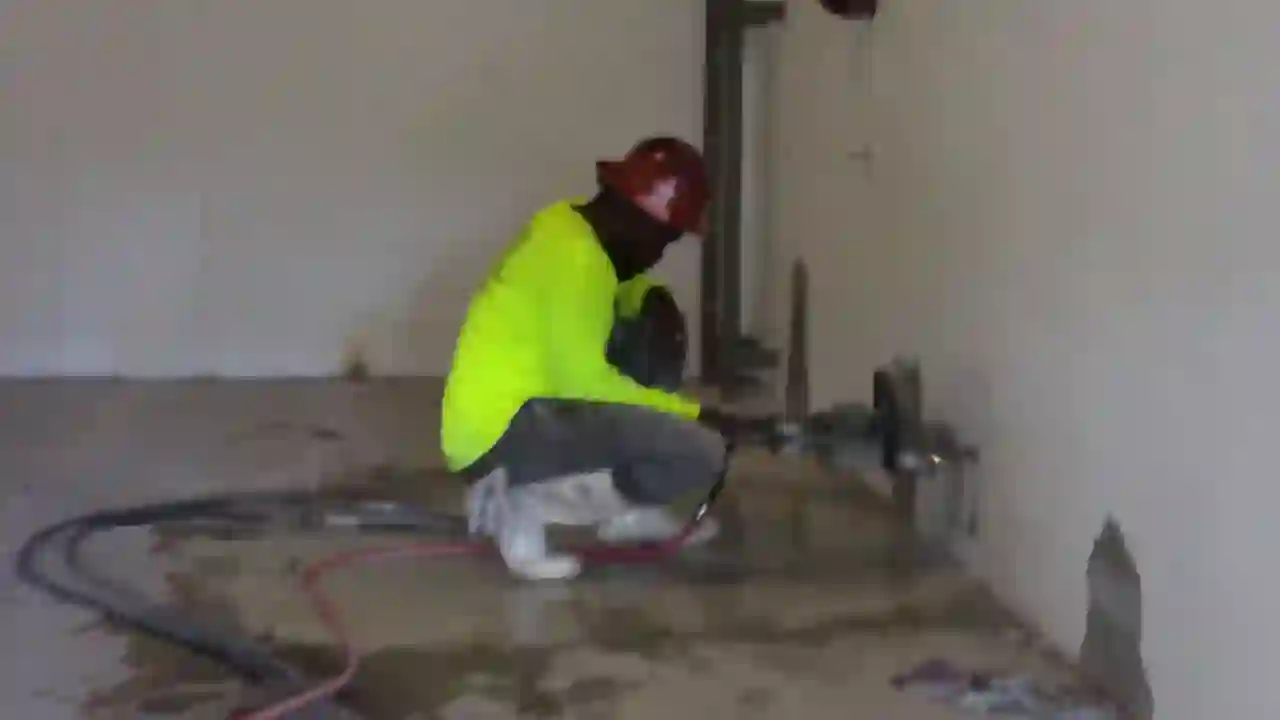
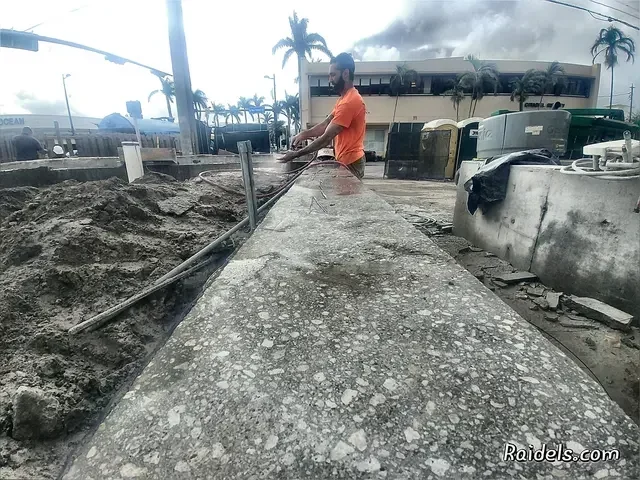
Virginia Gardens has a significant inventory of mid-century residential construction, and that means a lot of concrete removal work happens in below-grade utility rooms, crawl spaces, and interior mechanical areas where ventilation is poor and egress is limited. These environments require a formal confined space protocol before any cutting or breaking begins — not as a bureaucratic formality, but as a genuine operational necessity.
Silica dust generation in confined spaces reaches dangerous concentrations within minutes of starting a pneumatic breaker or angle grinder without proper controls. OSHA’s Table 1 under 29 CFR 1926.1153 mandates specific engineering controls for concrete demolition tasks, and in a space with limited air exchange, those controls must be amplified. Our standard protocol for confined-space concrete removal in Virginia Gardens includes:
- Continuous forced-air ventilation using a minimum 1,000 CFM blower positioned to create positive pressure at the work face
- Wet suppression at the cut point using a slurry management system to capture waste water before it migrates to adjacent areas
- Half-face or full-face respirators rated P100 for all personnel within the confined zone, not just the operator
- Atmospheric monitoring for oxygen levels and combustible gases prior to entry, especially in spaces adjacent to gas service lines
- A designated attendant outside the confined space with direct communication to the interior crew at all times
Skipping any one of these steps in a Virginia Gardens interior removal job isn’t just a safety violation — it’s a liability exposure that no project margin can justify.
Underground Utility Conflicts and Pre-Demolition Scanning Requirements
Virginia Gardens sits on infrastructure that was largely installed between the 1940s and 1970s, and as-built documentation for that era is notoriously incomplete. Before any breaking begins on an exterior slab or driveway, a ground-penetrating radar (GPR) scan is non-negotiable. GPR at 400 MHz or 900 MHz frequency provides subsurface imaging down to 18 to 24 inches — sufficient to identify conduit runs, post-tension cables, water service lines, and drain fields that may be running directly beneath the removal zone.
Post-tension slabs are particularly common in this area’s residential stock, and cutting or breaking a PT cable without proper identification and de-tensioning is a catastrophic risk. A single uncontrolled cable release can generate a projectile force exceeding 150,000 pounds of stored energy. The cost of a proper pre-scan and slab assessment is a fraction of the liability exposure from skipping it.
Coordination with Miami-Dade Water and Sewer for Permit Compliance
Any concrete removal project in Virginia Gardens that disturbs more than 50 square feet of flatwork adjacent to a right-of-way or within a utility easement typically requires a permit from Miami-Dade Water and Sewer and potentially a right-of-way permit from the Village of Virginia Gardens itself. The permitting timeline on these projects can run 5 to 15 business days depending on the scope, and failing to pull the correct permits before mobilization can result in stop-work orders that cost far more than the permit fees. We handle permit coordination as part of our pre-project scoping process — it’s not an afterthought.
Driveway and Flatwork Removal Logistics on Corner and Narrow Lots
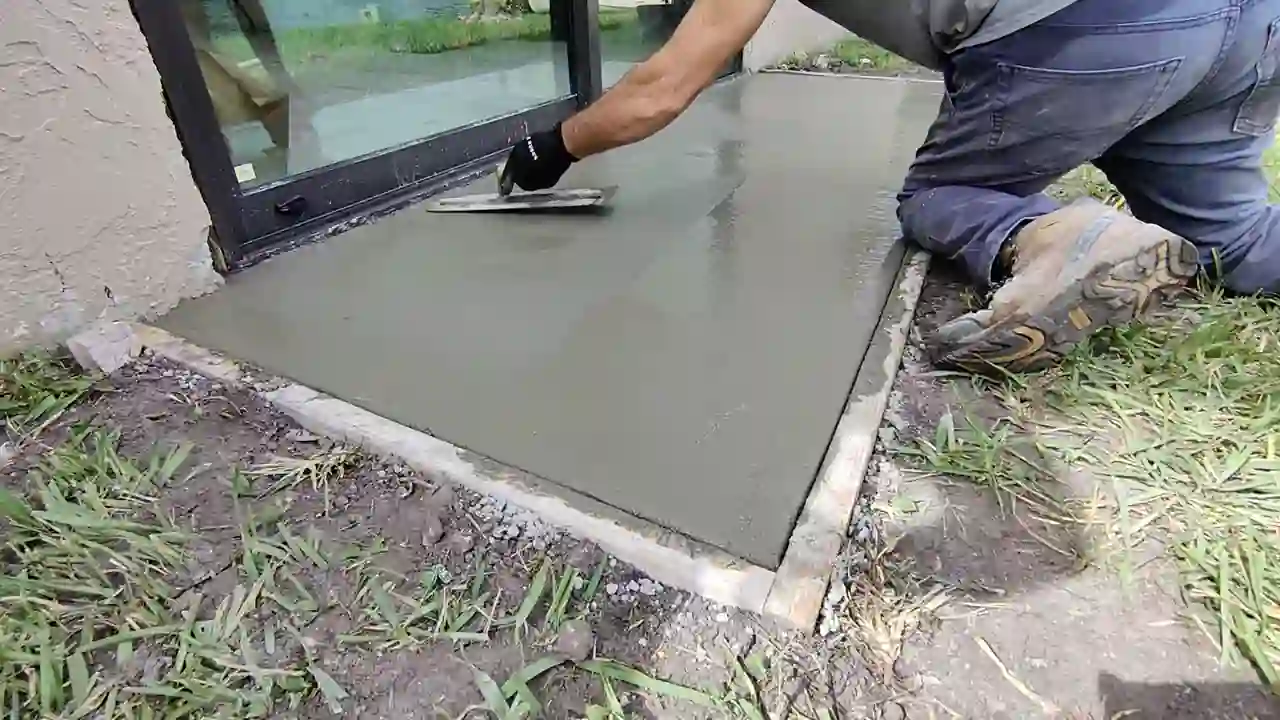
A significant portion of concrete removal work in Virginia Gardens involves driveway and flatwork removal — either as part of a full property renovation or as a standalone scope to replace deteriorated surfaces. Corner lots in this municipality present a specific challenge: dual street frontages mean dual utility conflicts, dual permit jurisdictions in some cases, and a debris load-out that has to be carefully coordinated to avoid blocking traffic on both streets simultaneously.
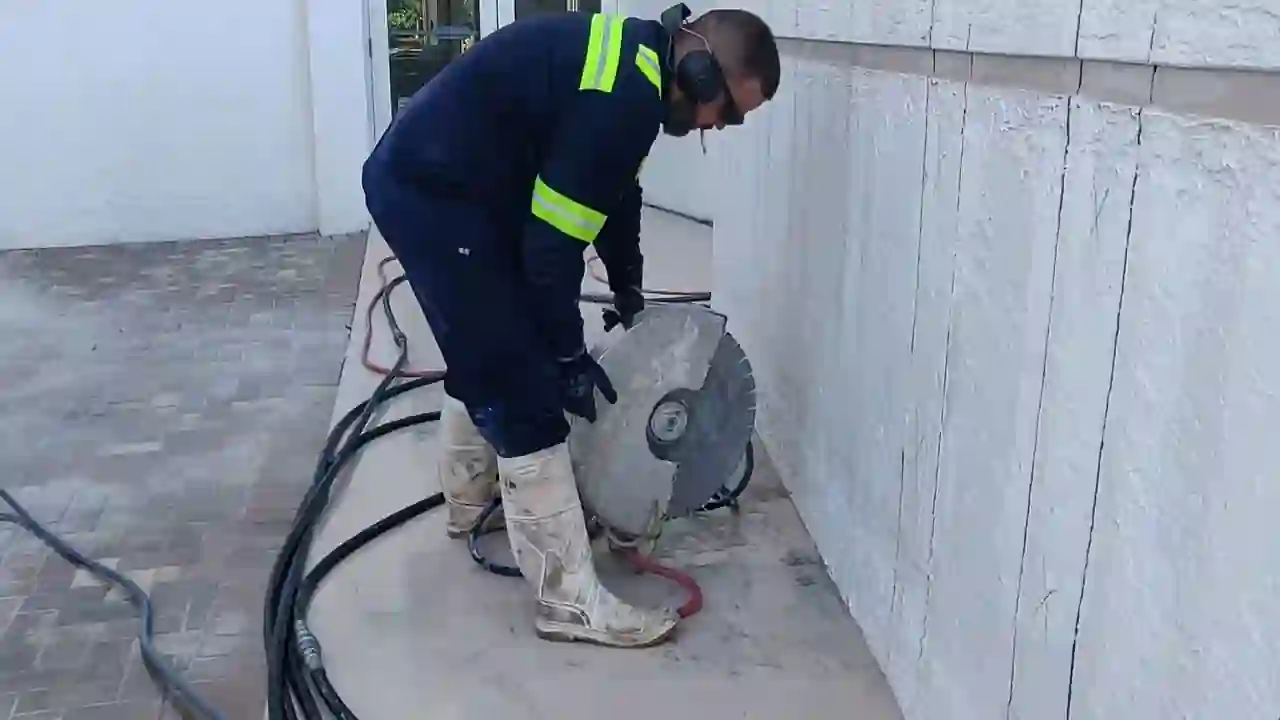
For standard driveway removal on narrow interior lots, we use a proven driveway removal methodology that starts with perimeter saw cutting to isolate the removal zone from any adjacent sidewalk or apron that’s being retained. This protects the municipality’s infrastructure and gives you a clean, defined break line that prevents edge spalling on the retained sections. From there, systematic breaking and same-day load-out keeps the project from becoming a neighborhood nuisance — critical in a community as compact as Virginia Gardens.
Why Project Planning Density Separates Competent Crews from Costly Mistakes
The technical demands of concrete removal in Virginia Gardens aren’t exceptional in isolation — confined spaces, access restrictions, and utility conflicts are common variables in urban demolition work across Miami-Dade. What makes Virginia Gardens distinctive is the concentration of those variables on very small project footprints. You’re solving multiple logistical problems simultaneously, often with less physical space to maneuver than you’d have on a comparable job in a suburban setting.
That density of challenge is exactly why pre-project site walks, equipment pre-qualification, GPR scanning, and permit coordination aren’t optional line items — they’re the core of what makes a Virginia Gardens concrete removal project succeed. A crew that shows up with the right gear, a documented logistics plan, and a confined space protocol already in place will finish on schedule and on budget. A crew that improvises those decisions on-site will not.
If you’re managing a concrete removal scope in Virginia Gardens and need a team that understands the site-specific demands of this municipality, contact Concrete Cutting Miami, LLC for a technical site assessment. We bring the planning infrastructure that these projects require — before the first hammer swings.