Why the Cost to Cut Concrete Per Foot Starts With the Machine, Not the Markup
Every time a property owner or general contractor asks me for a per-foot price on a concrete cut, the first thing I do is ask about the slab. Not because I’m stalling — but because the equipment specification required to execute that cut is the single largest driver of cost. A 4-inch decorative control joint cut in a 3,000 PSI residential slab is a completely different animal than a 24-inch deep wall saw pass through 6,000 PSI post-tensioned parking structure concrete. The blade, the power unit, the water delivery system, and the operator skill level all shift dramatically between those two scenarios. If your contractor isn’t discussing equipment specs before quoting a linear foot price, you’re flying blind on both quality and cost accountability.
Flat Saw Power Units and How Horsepower Directly Affects Your Linear Foot Rate
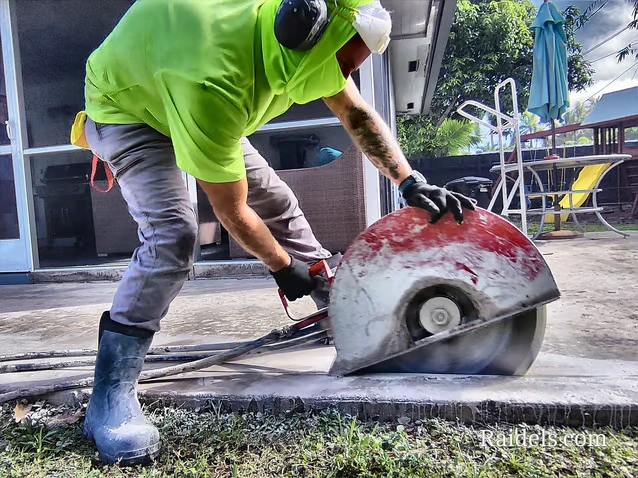
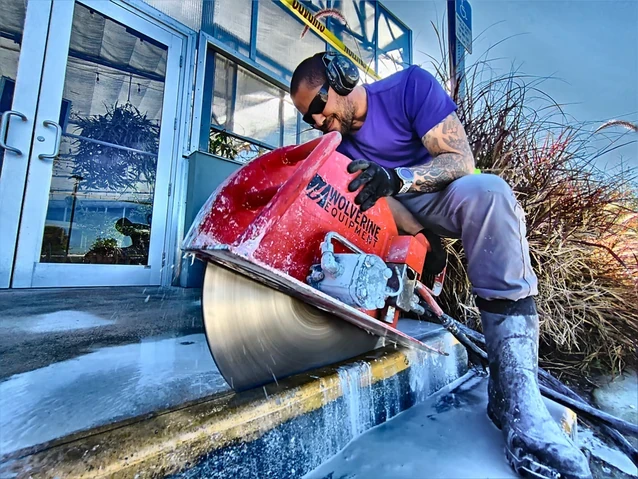
Walk-behind flat saws — the workhorses of slab cutting — range from 13-horsepower gas units to 65-horsepower diesel machines. That horsepower gap translates directly into blade diameter capacity, cutting depth, and production speed, all of which affect your cost to cut concrete per foot. A 13 HP unit spinning a 14-inch blade might produce 30 linear feet per hour in a standard 4-inch slab. A 35 HP diesel running a 20-inch blade through the same material can push 90 to 120 linear feet per hour. The rental and operating cost of the larger machine is higher, but the per-foot cost often drops because the production rate more than compensates.
For high-production commercial work — think concrete cutting services in Miami on warehouse floors, airport aprons, or DOT roadway work — diesel flat saws in the 35 to 65 HP range are standard. Blade arbor size also matters here. A 1-inch arbor accepts a wider range of professional-grade diamond blades than the smaller arbors on entry-level saws. Mismatching arbor size and blade bore is a rookie mistake that kills blade life and creates runout vibration, both of which inflate your per-foot cost.
Diamond Blade Segment Geometry and Bond Matrix Selection for Different Concrete Hardness Ratings
The diamond blade is where most of the technical complexity — and most of the cost variability — lives. A diamond blade is not a commodity. It’s an engineered tool with a specific segment height, segment count, kerf width, bond hardness, and diamond concentration, all of which must be matched to the concrete’s compressive strength, aggregate hardness, and reinforcement density.
Here’s the core principle: hard concrete requires a soft bond matrix, and soft concrete requires a hard bond matrix. In a hard, dense 6,000 PSI slab, the abrasive action of the concrete itself is sufficient to wear away the metal bond and continuously expose fresh diamond crystals. If you run a hard bond blade in that material, the diamonds glaze over and the blade stops cutting — you’re just grinding metal. In soft, green, or aggregate-heavy concrete, a soft bond wears too fast and the blade burns through in a fraction of its rated life, driving up your per-foot tooling cost significantly.
Segment Height and Its Role in Blade Longevity Per Linear Foot
Standard diamond segments range from 8mm to 15mm in height for flat saw blades. A 15mm segment on a premium blade rated for 300 linear feet in medium-hard concrete will deliver a dramatically lower per-foot tooling cost than a 10mm segment blade rated for 150 feet — even if the upfront blade price is higher. When I’m pricing a job, I calculate tooling cost as: (blade cost) ÷ (rated linear footage at the specific concrete hardness). That number — often between $0.08 and $0.45 per linear foot for diamond blades alone — gets added to machine time, labor, and water costs to build an accurate per-foot rate.
Laser-Welded Versus Sintered Segment Attachment for Wet Cutting Applications
Laser-welded blades bond the diamond segment to the steel core using a high-heat laser fusion process. This creates a stronger mechanical bond and allows for thinner cores, which reduces blade flex and improves cut accuracy. Sintered (cold-pressed) blades use a furnace-bonding process and are generally less expensive but carry a higher risk of segment loss under thermal stress — a critical safety and cost concern in deep cutting applications. For concrete saw operations involving cuts deeper than 6 inches or sustained high-RPM passes, laser-welded blades are non-negotiable from both a safety and per-foot cost standpoint.
Wall Saw Hydraulic Drive Systems and Their Impact on Deep Cut Pricing
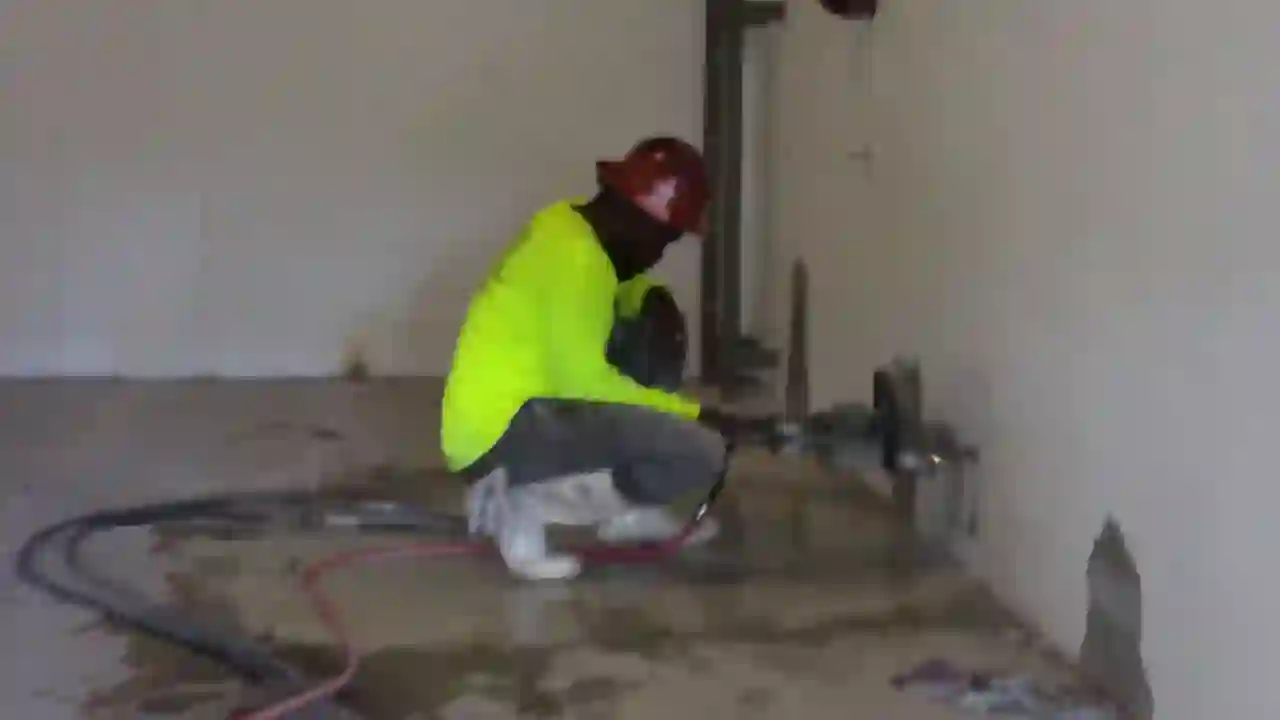
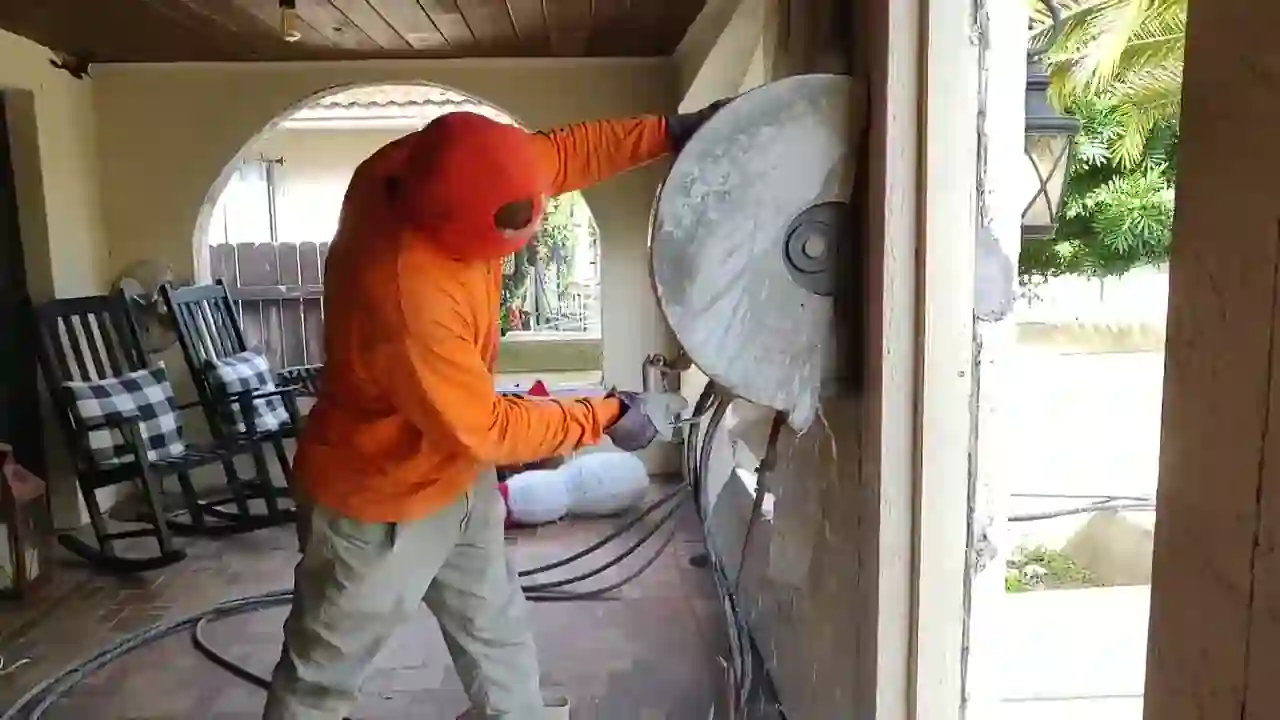
Wall saws introduce a completely different equipment and cost structure. These track-mounted systems use hydraulic power packs — typically ranging from 20 HP to 50 HP electric or diesel units — to drive a blade through vertical or horizontal concrete surfaces at depths up to 24 inches per pass. The hydraulic drive allows for precise blade speed control (RPM adjustment) and consistent torque delivery, which is critical for maintaining diamond exposure in variable concrete.
The cost to cut concrete per foot on wall saw work is substantially higher than flat saw work — often 3x to 5x more — because of equipment setup time, track installation, blade diameter requirements (24-inch to 60-inch blades are common), and the slower production rate inherent to vertical cutting. A 24-inch deep cut through a reinforced shear wall might yield only 8 to 15 linear feet per hour. Blade cost per foot also spikes because large-diameter wall saw blades carry premium pricing, and rebar contact accelerates segment wear dramatically. For projects involving structural modifications or utility penetrations, this is where expert core drilling may offer a more cost-effective alternative depending on the opening geometry required.
Water Delivery Rate Specifications and Blade Cooling Economics
Wet cutting is standard practice for any production concrete cutting operation, and water flow rate is a specification that directly affects both blade life and per-foot cost. The minimum acceptable water flow for a 14-inch flat saw blade is approximately 1.5 to 2 gallons per minute at the blade. For a 20-inch blade, that climbs to 3 to 4 GPM. Insufficient water causes thermal stress cracking in the steel core, accelerates diamond glazing, and creates silica dust exposure — all of which carry cost consequences, either in tooling replacement or OSHA compliance liability.
On job sites without accessible water supply, contractors must factor in water tank transport, pump equipment, and slurry containment systems. In environmentally sensitive areas — near storm drains, waterways, or interior commercial spaces — slurry vacuum systems add another equipment layer and cost component. These logistics can add $0.10 to $0.30 per linear foot to the final price, a detail that rarely appears in low-ball estimates. For demolition-phase work involving hydraulic concrete breaking, water requirements shift significantly since breaking operations are typically dry, but the downstream cutting to size still requires full wet-cut protocols.
Reinforcement Density, Rebar Diameter, and the Tooling Upgrade Cost Trigger
Plain concrete and reinforced concrete are priced differently — and they should be. When a blade contacts a #4 rebar (1/2-inch diameter), the steel contact event creates a momentary shock load on the segment bond and generates localized heat. Occasional rebar contact in lightly reinforced slabs is manageable with a standard general-purpose blade. But in heavily reinforced structural concrete — #8 or #10 rebar on 6-inch centers, for example — you need a blade specifically engineered for steel cutting with reinforced segment geometry and a bond matrix that handles the thermal cycling without premature segment loss.
These rebar-rated blades carry a 20% to 40% price premium over standard blades, and their life in heavily reinforced concrete is shorter per linear foot than a standard blade in plain concrete. The net effect on per-foot cost is an increase of $0.15 to $0.50 per foot depending on reinforcement density. Any accurate quote for structural concrete cutting must account for this variable — pulling drawings or performing a rebar scan before pricing is standard practice for professional crews.
Reading a Per-Foot Quote Like a Technical Specification Sheet
A credible per-foot quote for concrete cutting should be traceable back to specific equipment and tooling assumptions. Ask your contractor which saw model they’re using, what blade diameter and segment specification is specified for your concrete strength, what the anticipated production rate is in linear feet per hour, and how tooling replacement is handled if conditions differ from the estimate. These aren’t unreasonable questions — they’re the same questions a structural engineer would ask before signing off on a demolition plan.
The range of legitimate per-foot costs in the Miami market runs from $2.50 per foot for shallow residential control joint cutting to $18.00 or more per foot for deep wall saw cuts through high-strength reinforced concrete. That range isn’t arbitrary — it reflects real differences in machine horsepower, blade engineering, operator certification, and site logistics. Understanding those technical inputs is the only way to evaluate whether a quote represents fair value or a shortcut that will cost you more in callbacks, blade failures, or structural damage downstream.