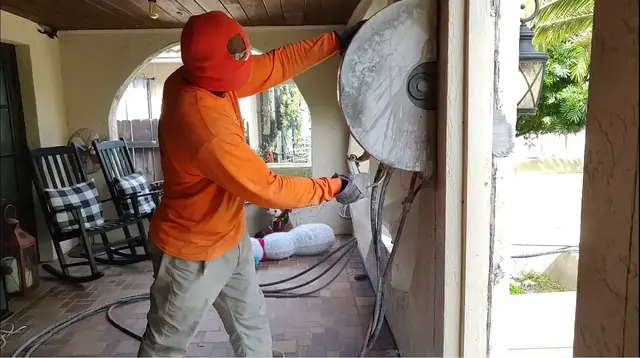
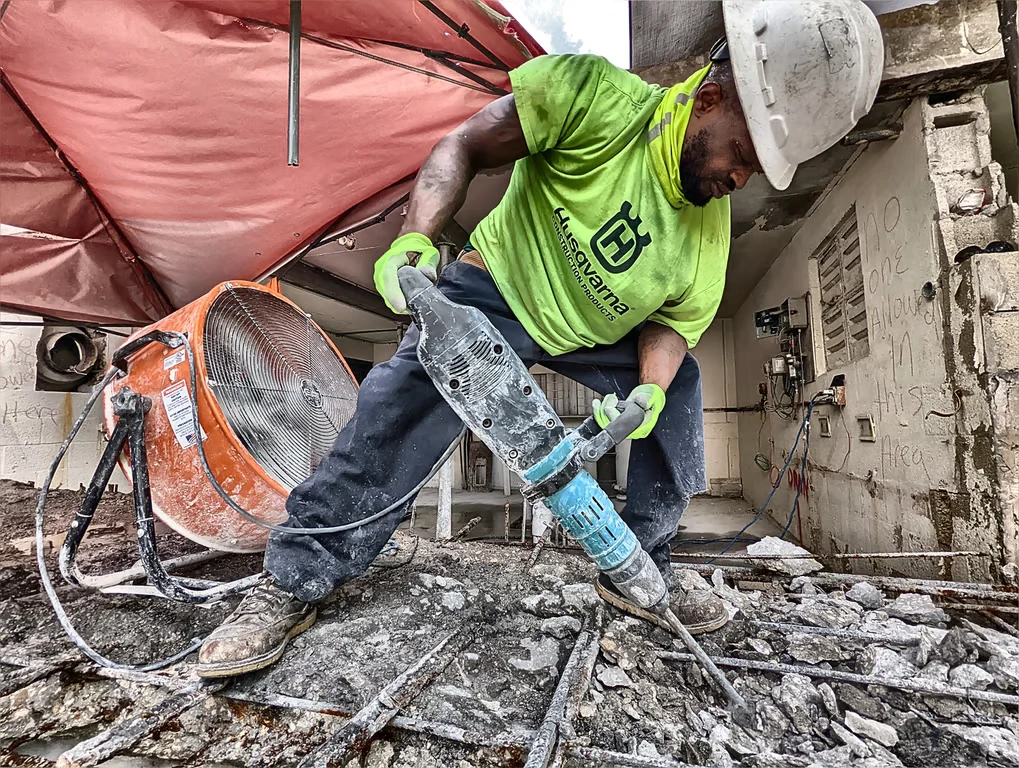
What Cement Dust Actually Does to the Human Body — And Why Confined Spaces Make It Exponentially Worse
Let’s be direct: yes, cement dust is harmful. But the degree of harm isn’t fixed — it scales dramatically with ventilation conditions, exposure duration, and the physical constraints of the work environment. In open-air settings with proper wet suppression and airflow, experienced crews can manage risk effectively. But the moment that same cutting operation moves into a mechanical room, a parking garage sub-level, a utility corridor, or any space where air exchange is limited, the calculus changes entirely. Respirable crystalline silica — the primary hazard embedded in cement dust — becomes concentrated, lingers far longer than most site managers expect, and penetrates lung tissue in ways that cause irreversible damage over time. This isn’t theoretical. OSHA’s permissible exposure limit (PEL) for silica is 50 micrograms per cubic meter of air averaged over an 8-hour shift. In an unventilated basement with active flat sawing, that threshold can be exceeded within minutes.
The Silica Problem Broken Down for Field Crews and Project Managers
Ordinary Portland cement contains crystalline silica — primarily in the form of quartz — at concentrations that vary depending on the aggregate mix. When concrete is cut, ground, drilled, or demolished, that silica is liberated as fine particulate matter. The particles most dangerous to human health measure 10 microns or smaller in diameter, classified as respirable silica. They bypass the body’s natural filtration mechanisms in the nose and upper airway and embed directly in alveolar tissue deep in the lungs.
Prolonged or repeated exposure causes silicosis, a progressive and incurable fibrotic lung disease. Beyond silicosis, crystalline silica is classified as a Group 1 carcinogen by the International Agency for Research on Cancer (IARC), linked to lung cancer even in workers without full-blown silicosis. Cement dust also carries alkaline compounds — primarily calcium hydroxide — that cause chemical burns to mucous membranes, eyes, and skin on contact. Chronic dermatitis and occupational asthma round out the clinical picture.
For a deeper look at what’s actually inside Miami’s concrete mix — including the rebar configurations and aggregate densities that influence dust generation rates — see our definitive guide to cutting through rebar and reinforced slabs.
How Site Logistics Determine Dust Exposure Risk Before a Single Cut Is Made
Experienced concrete cutting contractors don’t treat dust control as an afterthought. It’s a logistical variable that gets evaluated during site walk-throughs, factored into project estimation, and built into the equipment selection process. The physical layout of a jobsite — ceiling height, number of access points, proximity to HVAC returns, presence of other trades — determines which dust suppression strategy is viable and which is not.
Consider a typical scenario in downtown Miami: a high-rise retrofit requiring core drilling through post-tensioned slabs in an occupied building. The drilling locations may be in service corridors with no operable windows, ceiling heights under 8 feet, and active foot traffic from building occupants two floors above and below. In this context, wet drilling alone isn’t sufficient. The water slurry must be contained, the vacuum extraction system must be rated for the volume of particulate generated, and the work schedule must account for air purge time between shifts.
Confined Space Classifications and What They Mean for Dust Management
OSHA defines a confined space as any space large enough for a worker to enter, with limited means of entry or exit, and not designed for continuous occupancy. A permit-required confined space adds atmospheric hazards — including airborne contaminants — to that definition. Many concrete cutting operations in Miami’s older commercial and industrial building stock occur in spaces that technically qualify as permit-required confined spaces, even if they aren’t labeled as such on site.
- Sub-grade mechanical rooms with single-point access ladders and no forced ventilation
- Utility tunnels running beneath parking structures where flat sawing operations for drainage modifications are common
- Elevator pit environments requiring core drilling for sump installation
- Crawl spaces beneath ground-floor slabs in older Miami Beach commercial properties
- Interior stairwell shafts where saw cutting is needed for structural modifications
In each of these environments, dust doesn’t dissipate — it accumulates. Air monitoring before, during, and after cutting operations isn’t optional in these contexts; it’s the only way to verify that engineering controls are actually working.
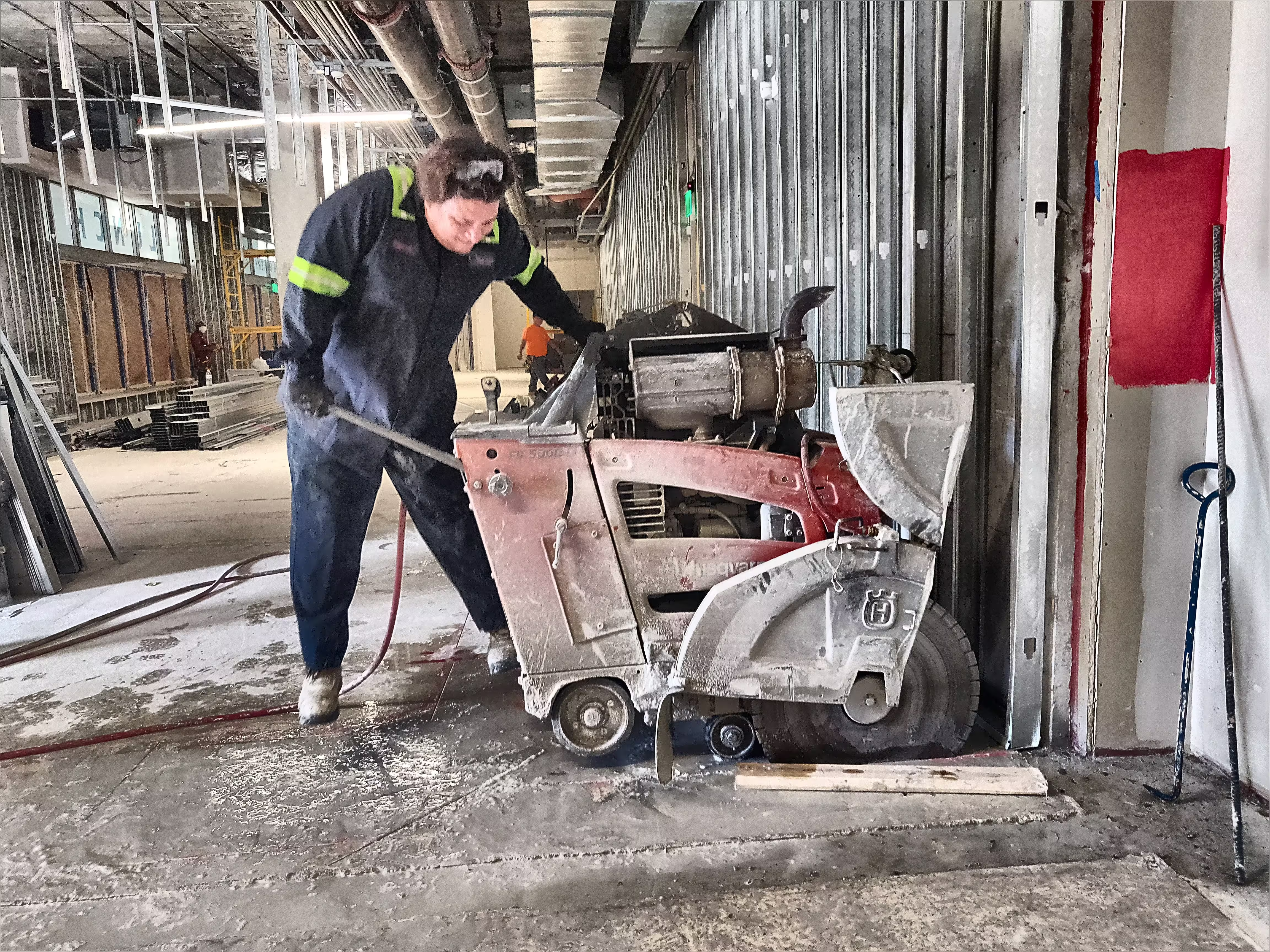
Engineering Controls That Actually Work in Access-Restricted Miami Jobsites
The hierarchy of controls for silica dust exposure starts with elimination and substitution — neither of which is typically available when the task is cutting concrete. That moves the priority to engineering controls, which must be selected based on site-specific constraints rather than generic best practices.
Wet Suppression Systems in Low-Clearance Environments
Wet cutting remains the most effective method for suppressing silica at the point of generation. For flat sawing operations in confined areas, the challenge is water management. Slurry accumulates rapidly, creates slip hazards, and can compromise structural assessments if it migrates into adjacent spaces. Vacuum-assisted wet systems — where the slurry is immediately extracted through a dedicated wet-vac line — address this in tight footprints without requiring large containment berms.
Local Exhaust Ventilation for Core Drilling in Enclosed Spaces
For core drilling in confined spaces, shroud-mounted vacuum systems attached directly to the drill motor housing are the standard engineering control. These systems capture particulate at the source before it enters the breathing zone. The critical specification is airflow rate: the vacuum unit must maintain sufficient face velocity at the shroud opening to capture dust generated at drilling speeds typical for the concrete density on site. In Miami’s high-PSI coastal construction, that often means denser aggregate and higher silica liberation rates per linear inch of penetration.
Forced Air Ventilation Staging for Extended Operations
When cutting operations extend beyond 30 minutes in a space with limited natural ventilation, portable forced-air ventilation units should be staged to create directional airflow — drawing contaminated air away from the worker’s breathing zone and toward an exhaust point. The exhaust point must be evaluated carefully: venting into an adjacent occupied space or HVAC return is not acceptable. On concrete cutting services in Miami Beach projects involving occupied boutique hotels or mixed-use developments, this often requires after-hours scheduling and coordination with building management to temporarily disable return air systems in affected zones.
Respiratory Protection as the Last Line of Defense — Not the First
Half-face respirators with P100 particulate filters and OV cartridges are the minimum standard for workers in active cutting zones. In permit-required confined spaces with confirmed silica concentrations above the action level (25 µg/m³), supplied-air respirators or self-contained breathing apparatus may be required. The common site management error is treating respiratory PPE as the primary control rather than the backup. PPE fails — fit-check failures, filter saturation, user fatigue — and when it fails, there’s no redundancy if engineering controls weren’t implemented first.
Projects that integrate dust control planning into the early estimation and scoping phase consistently outperform those that treat it as a field-level decision. The equipment required for proper dust management in confined spaces — industrial HEPA vacuums, air monitoring instruments, forced ventilation units — adds weight, volume, and setup time. If access to the work area is via a single stairwell or a freight elevator with a 2,000-lb capacity limit, that equipment load must be factored into the logistics plan before mobilization, not discovered on the morning of the pour.
What Property Owners and Developers Need to Demand From Their Cutting Contractors
If you’re managing a renovation or structural modification in Miami involving concrete cutting, the questions you ask your contractor before work begins directly affect the health of workers on your site and your own liability exposure. A contractor without a written silica exposure control plan — required by OSHA’s 1926.1153 standard for construction — is operating outside federal compliance. That’s not a technicality; it’s a signal about how the entire operation will be run.
- Ask for the silica exposure control plan specific to your site’s confined space conditions
- Confirm air monitoring protocols and who is responsible for real-time exposure assessment
- Verify equipment specifications — vacuum airflow ratings, HEPA filtration certification, wet suppression capacity
- Review the ventilation staging plan for any space with fewer than two points of natural air exchange
- Confirm respirator fit-test records for every worker entering the cutting zone
Properties undergoing this level of careful, compliant renovation see measurable returns — both in project quality and in long-term asset positioning. For context on how controlled structural modifications affect asset value, our property value optimization resources lay out the connection between quality execution and market performance.
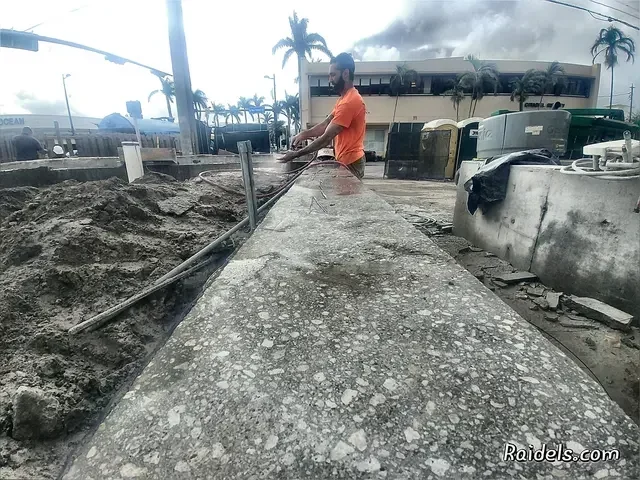
The Operational Reality of Dust Control on Miami’s Most Challenging Sites
Miami’s construction environment presents unique compounding factors. High ambient humidity affects how silica particles behave in air — wet air doesn’t necessarily mean suppressed dust, and in enclosed spaces, humidity can actually extend particle suspension time by reducing static charge dissipation. Older pre-1980 construction stock in Brickell, Wynwood, and the Beach corridor often contains higher-silica aggregate mixes than modern engineered concrete, meaning dust generation per cut is higher even with equivalent cutting parameters.
The crews that operate safely and efficiently in these conditions are the ones who treat dust control as a core technical competency — not a compliance checkbox. Site logistics, confined space hazard assessment, access planning, and engineering control selection are all interconnected. Getting any one of them wrong doesn’t just create a regulatory problem; it creates a health crisis for the workers executing the work and a liability exposure for everyone in the project chain.
Cement dust is harmful. In confined spaces with restricted access and limited ventilation, it is acutely dangerous. The difference between a well-managed cutting operation and a hazardous one isn’t the type of saw or the skill of the operator alone — it’s the depth of planning that happens before the blade ever spins.