Why concrete cutting price per foot is the wrong way to compare quotes
Every concrete cutting contractor in Miami gets the same phone call: “What is your concrete cutting price per foot?” The caller wants a simple number they can use to compare quotes. The problem is that per-foot pricing for concrete cutting is like per-pound pricing for surgery — it tells you nothing about what is actually being done, what complications exist, or what happens if something goes wrong.
Here is the reality: concrete cutting price per foot varies by a factor of 5x or more depending on what is being cut, where it is being cut, and what is inside the concrete being cut. A linear foot of 4-inch unreinforced patio slab with open access on both sides is fundamentally different from a linear foot of 8-inch reinforced structural wall at the back of a mechanical room. Anyone offering a flat rate per foot without asking detailed questions is either inexperienced or planning to add charges once the blade is in the concrete and you cannot say no.
That said, Miami property owners need some frame of reference to evaluate quotes. Here are realistic pricing factors for different types of concrete cutting, what drives the costs, and the questions to ask that produce an honest, accurate estimate rather than a tempting low number that doubles on invoice day.
Flat sawing / slab cutting — pricing factors per linear foot
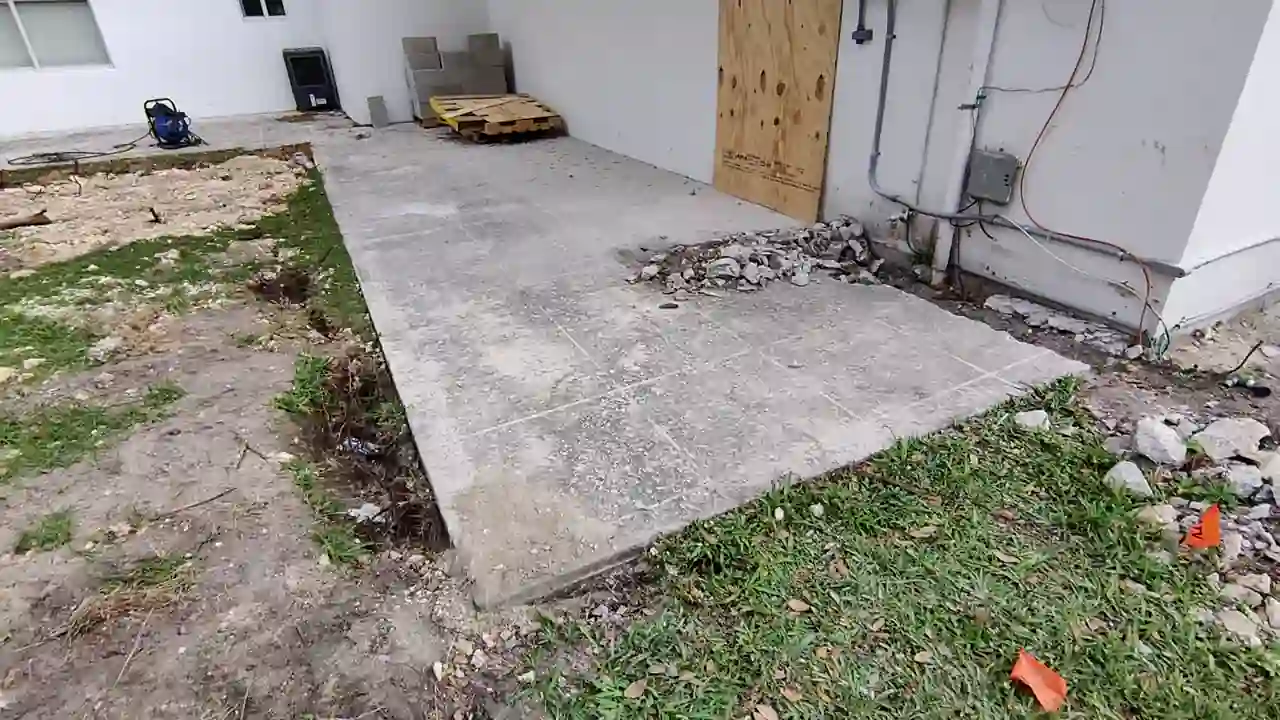
Flat sawing is cutting horizontal concrete surfaces — slabs, pavements, floors. It is typically the most cost-effective type of concrete cutting per linear foot because walk-behind saws are efficient and setup is simpler than wall sawing.
What drives flat sawing cost per foot:
- Concrete thickness: A 4-inch patio slab cuts faster and uses less blade than a 6-inch driveway or an 8-inch commercial floor. Blade cost per linear foot increases significantly with depth because the blade contact area grows.
- Rebar content: Unreinforced slabs cut fastest. Slabs with #3 or #4 rebar at 12-inch centers slow the cut and increase blade wear. Post-tension slabs should not be cut until the tendon locations are verified by GPR.
- Aggregate hardness: Miami concrete typically uses limestone aggregate — relatively soft compared to granite or river rock used in other regions. This is favorable for cutting speed and blade life.
- Access and obstructions: Open exterior slabs with walk-behind saw access are the most cost-effective cuts. Interior slabs with doorways too narrow for equipment, obstacles to cut around, or work in occupied spaces add labor and time.
- Depth of cut vs slab depth: Partial-depth cuts (control joints, expansion joints) are faster than full-depth cuts because the blade engages less material. But partial-depth cutting for utilities requires precision to avoid over-cutting and damaging sub-surface items.
Wall sawing — the most variable concrete cutting price per foot
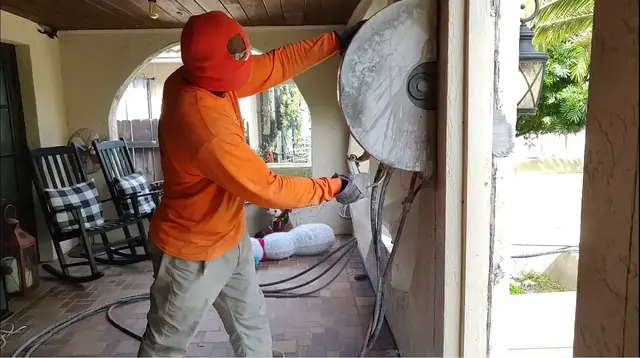
Wall sawing is cutting vertical or near-vertical concrete surfaces. It is more expensive per linear foot than flat sawing because of equipment complexity, setup time, and the structural and safety considerations involved.
Wall sawing cost drivers:
- Track setup: A hydraulic wall saw mounts to a track system bolted or vacuum-anchored to the wall. Track installation, alignment, and removal are a significant portion of the total job time — on short cuts, setup can exceed cutting time.
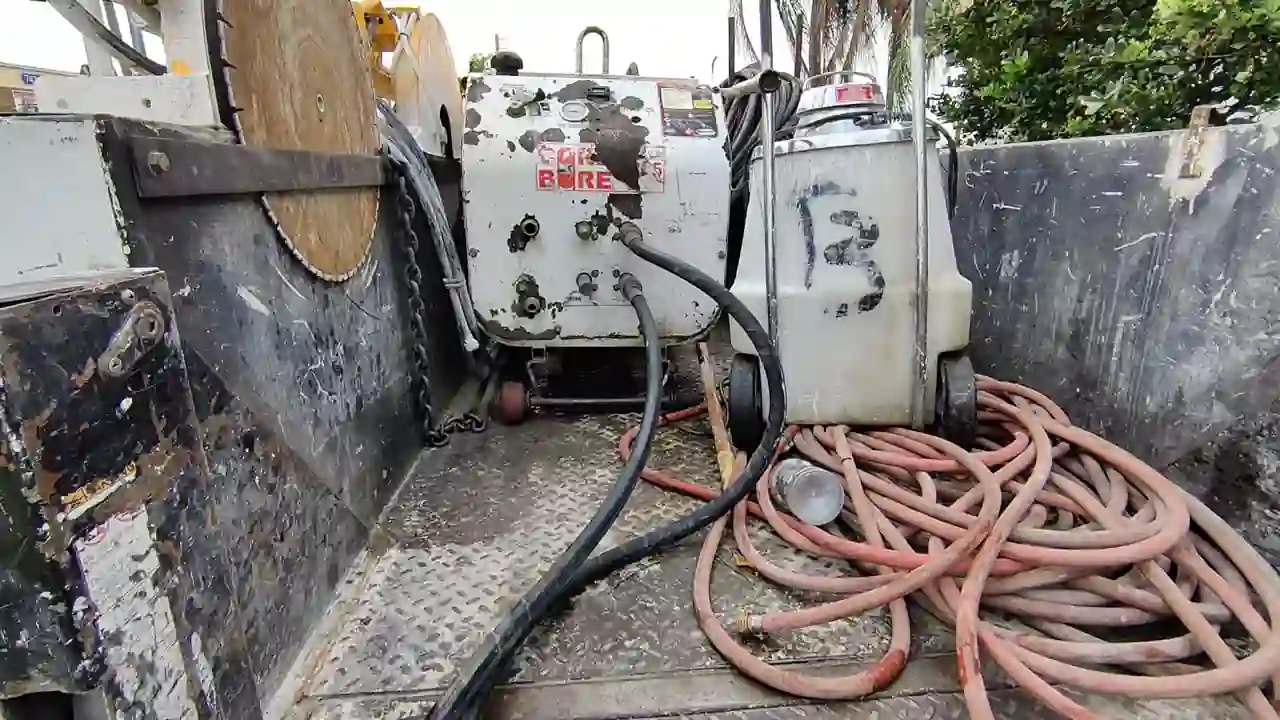
- Hydraulic power unit requirements: Wall saws require a hydraulic power unit on site. The unit’s size, power source (electric vs gas), and distance from the saw all affect setup and therefore cost.
- Overcut requirements: Door and window openings require overcuts at corners — the saw blade is round, so the cut extends past the corner to create a square opening. Each overcut adds time and may require a separate tool pass.
- Cutting from both sides: Walls thicker than the blade diameter require cutting from both sides, aligned precisely so the cuts meet in the middle. This doubles setup time and requires more skill.
- Slurry containment on vertical surfaces: Wet cutting a vertical wall creates slurry that runs down the wall. In finished spaces, this requires extensive floor and wall protection that adds labor cost.
Core drilling — pricing per hole, not per foot
Core drilling is priced per hole, not per linear foot of cutting. The per-hole cost depends on:
- Hole diameter: A 2-inch core for a plumbing penetration is fundamentally different from a 12-inch core for an HVAC duct. Larger diameters require larger, more expensive core bits and more powerful drill motors.
- Concrete thickness: A core through a 4-inch slab is straightforward. A core through a 12-inch foundation wall may require a barrel extension and significantly more time per inch.
- Rebar encounters: Core bits can cut through rebar, but doing so slows the cut, increases bit wear, and may require switching to a bit with a more aggressive diamond matrix.
- Drilling orientation: Vertical down-drilling uses gravity to assist. Horizontal drilling requires more operator effort. Overhead drilling is the most difficult and typically the most expensive per inch.
What to ask for in a concrete cutting quote
Instead of asking for a price per foot, ask for a detailed quote that includes:
- Scope of cut: Exact dimensions, locations, and cut types. Linear feet of wall sawing, square feet of slab sawing, number and diameter of core holes.
- GPR scanning: Confirm scanning is included and specify whether it covers the full cut line or just spot checks.
- Equipment type: Wall saw, flat saw, core drill — each should be specified for each cut in the scope. This tells you they have planned the job, not just priced it from an office chair.
- Slurry containment and cleanup: Should be a specific line item explaining how slurry will be managed and what condition the site will be left in.
- Debris disposal: Confirm disposal is included and that debris goes to a permitted C&D facility.
- Exclusions: What is NOT included. Engineering review, permitting, patching or restoration, utility relocation. A good quote lists exclusions explicitly so there are no surprises.
The real cost comparison
When comparing concrete cutting quotes, do not compare the price per foot. Compare what each contractor is actually doing:
- Is GPR scanning included? If not, that is an extra cost and a risk they are accepting on your behalf.
- Is slurry containment specified? If not, you may be paying fines or cleanup costs later.
- Are the cut dimensions and equipment types listed? If not, they have not planned the job — they are guessing.
- What blade type is specified? For reinforced concrete, the quote should indicate diamond blades rated for steel.
The most expensive concrete cutting quote is the one that looks cheapest on paper. A low upfront price with no scanning, no slurry plan, and no equipment specification will cost you more by the time the rebar is cut, the slurry is cleaned up, and the site is restored. Pay for the right job once, not the cheap job twice.