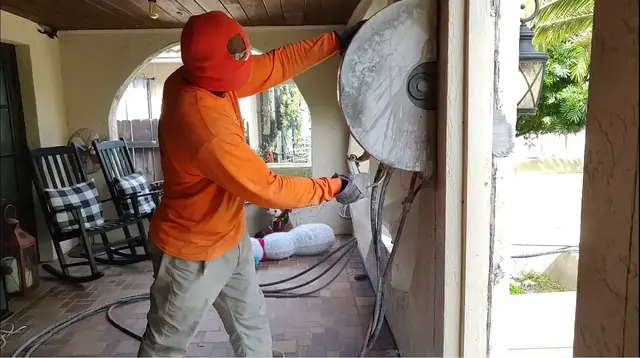
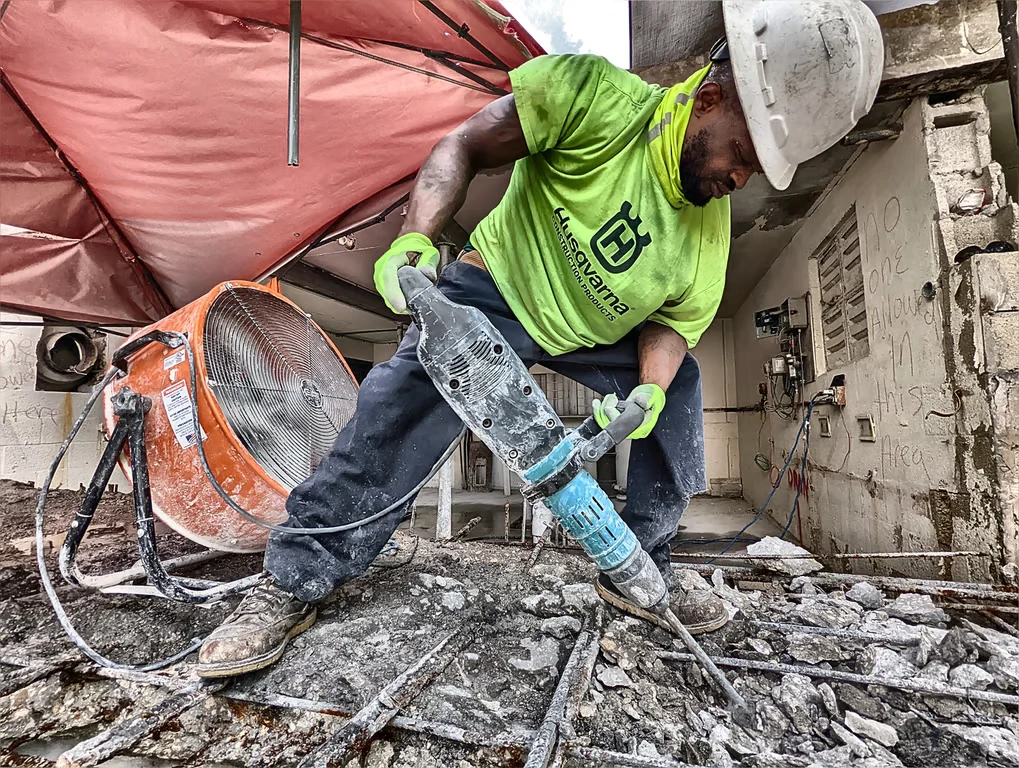
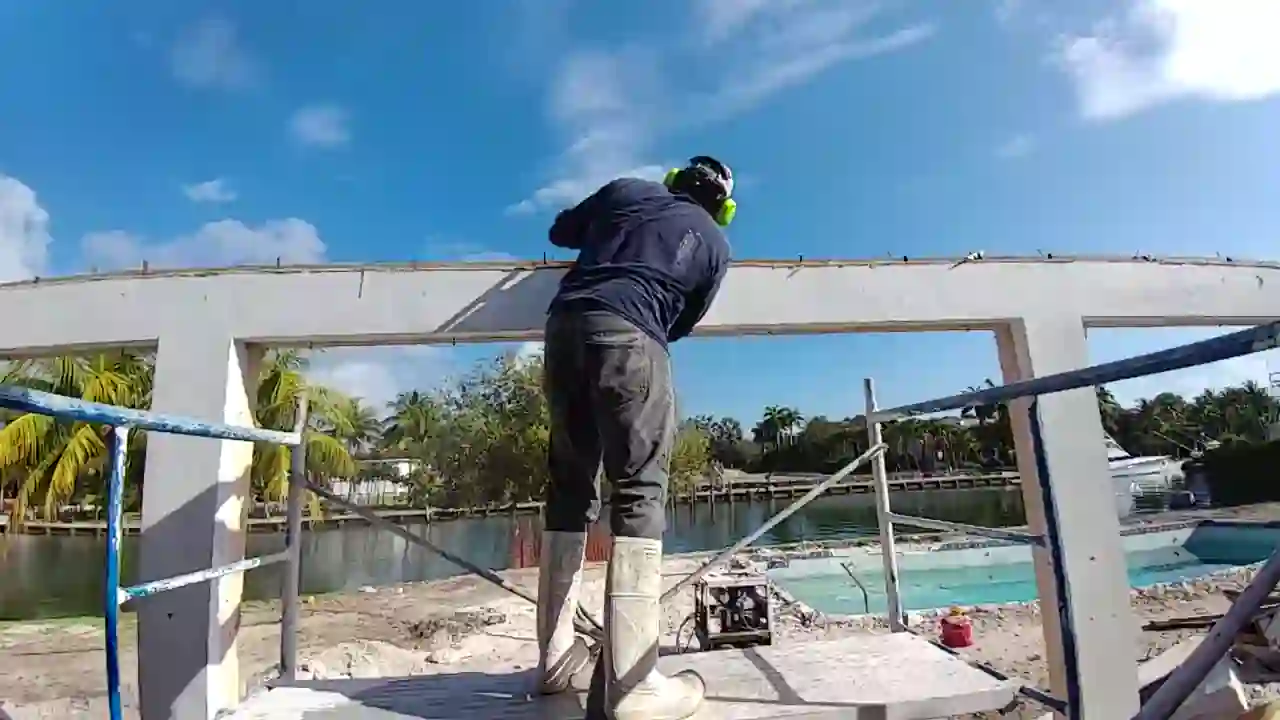
Why cutting reinforced concrete is a different discipline entirely
There are two types of concrete in South Florida: the kind with rebar in it and the kind where you have not found the rebar yet. Cutting reinforced concrete — concrete with embedded steel reinforcement — requires fundamentally different equipment, techniques, and expertise than cutting plain concrete. The difference comes down to one fact: the steel inside the concrete is, by design, stronger than the concrete itself.
When a diamond blade cuts through plain concrete, it grinds through the cement matrix and the aggregate. The diamond segments on the blade are harder than both, so the blade cuts efficiently and wears at a predictable rate. When that same blade encounters a #4 or #5 steel rebar, the physics change. The blade is now cutting two materials simultaneously — concrete and steel — with vastly different properties. A blade designed only for concrete will skate on the steel, generating heat, wearing unevenly, and eventually glazing over. A blade designed for cutting reinforced concrete uses a different diamond matrix, segment geometry, and bond hardness specifically engineered to cut through both materials in a single pass.
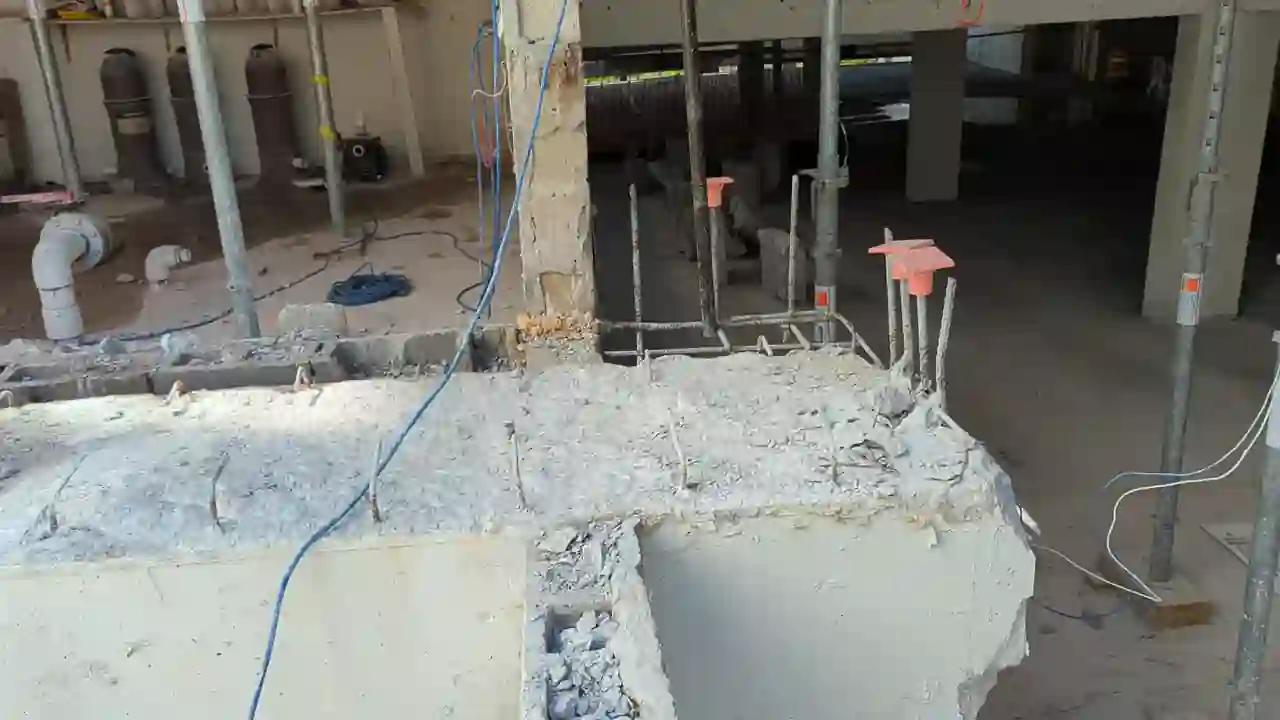
This is the technical reality that separates professional concrete cutting contractors from everyone else. We cut reinforced concrete daily. We know what blades work, what RPM ranges to use, when to push the cut and when to let the blade do the work. The alternative — showing up with a rental saw and a generic blade, hitting rebar, and spending the next three hours switching between a grinder and a sawzall — is how jobs go over budget and off schedule.
How diamond blades handle cutting reinforced concrete
The diamond blade is the single most important variable in cutting reinforced concrete. Not all diamond blades are rated for metal, and even among those that are, the performance differences are dramatic.
Blade bond hardness
Diamond blades use a metal bond matrix to hold the diamond particles in place. As the blade cuts, the bond wears away, exposing fresh diamonds. The bond hardness must be matched to the material being cut. Too hard a bond for the material and the blade glazes — the diamonds wear down but the bond does not release them, so the blade stops cutting. Too soft a bond and the diamonds are released before they are fully used, causing excessive blade wear.
Cutting reinforced concrete requires a blade with a medium-hard bond — hard enough to hold diamonds through steel cutting, soft enough to continue wearing and exposing fresh diamonds in concrete. This is a narrower window than for plain concrete cutting, and it requires blades from manufacturers who specifically engineer for reinforced concrete.
Segment design and diamond concentration
Blades for cutting reinforced concrete typically use:
– Higher diamond concentration than plain concrete blades — more diamonds per segment to handle the dual-material cutting without wearing prematurely
– Sandwich or layered segments with alternating layers optimized for concrete and metal — these wear at different rates during the cut, maintaining cutting efficiency across both materials
– Undercut protection segments on the steel core to prevent the blade body from wearing where the segments meet it during prolonged steel cutting
Wet cutting is mandatory
Cutting reinforced concrete generates significantly more heat than cutting plain concrete. The steel rebar absorbs and conducts heat away from the cut zone — which sounds helpful but actually makes blade cooling harder because the entire rebar network becomes a heat sink. Continuous water flow at the blade is not optional. It cools the blade, suppresses dust, and extends blade life. Dry cutting reinforced concrete destroys blades rapidly and produces dangerous airborne silica dust.
Equipment requirements for cutting reinforced concrete
The saw matters almost as much as the blade. Cutting reinforced concrete demands:
- Adequate horsepower: The saw motor must maintain RPM under the higher load of dual-material cutting. Undersized saws bog down when the blade hits rebar, slowing the cut and causing uneven blade wear.
- Proper RPM range: Diamond blades have an optimal RPM range for their diameter. Running outside this range — too fast or too slow — dramatically reduces blade life and cut quality.
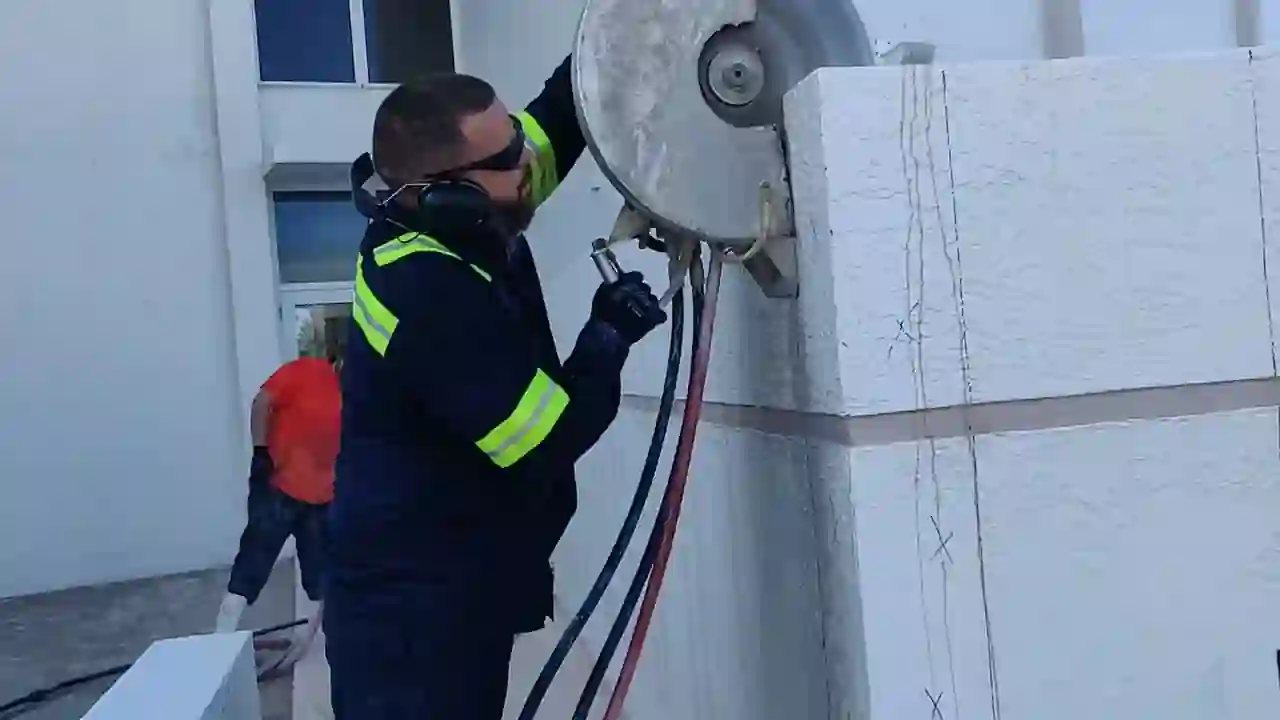
- Hydraulic power for sustained cuts: For wall sawing and large slab sawing, hydraulic power units provide consistent torque regardless of load variation. Electric saws can work for smaller cuts but may struggle with extended rebar cutting.
What happens when you cut reinforced concrete wrong
When a contractor shows up without the right blade or equipment for cutting reinforced concrete, the sequence is predictable:
- The blade cuts fine through the first inch of concrete — above the rebar mat.
- The blade hits the first rebar and slows. The operator pushes harder to compensate, increasing heat and blade wear.
- The blade glazes. It is now a spinning metal disc that will not cut concrete or steel, just generate heat and noise.
- The operator switches to a Sawzall or grinder to cut each rebar individually, then resumes with a fresh concrete blade between rebars. What should have been two continuous cuts is now a stop-start ordeal that takes all day.
The result: a wall opening that takes eight hours instead of two, with extra blade costs, extra labor, and cut edges that look ragged because the blade changes created uneven cutting planes.
Rebar patterns in Miami construction
Understanding what is inside the concrete matters for planning the cut. Typical South Florida rebar patterns:
- Residential slabs: #3 or #4 bars at 12-18 inch centers, single mat, typically 2-3 inches below the slab surface.
- Commercial slabs: #4 or #5 bars at 12-inch centers, often double mat (one near top, one near bottom).
- Structural walls: #4 or #5 bars at 6-12 inch centers, double mat, with horizontal and vertical bars tied at every intersection.
- Post-tension slabs: Unbonded tendons in plastic sheathing instead of conventional rebar — GPR scanning is mandatory and should not be cut under any circumstances.
Questions to ask a concrete cutting contractor about rebar
- “Are your blades rated for cutting through rebar?” The answer should be an immediate yes with a specific blade type or manufacturer named.
- “What do you do when you hit rebar that is larger than expected?” They should describe adjusting cutting speed, ensuring water flow, and if necessary, switching to a blade with appropriate specifications — not switching to a Sawzall.
- “Do you GPR scan for PT cables before cutting?” This question identifies whether they understand the difference between conventional rebar (can be cut) and post-tension cables (must not be cut).
- “How does rebar density affect your quote?” A contractor who understands reinforced concrete cutting will tell you that GPR results factor into pricing. A contractor who says it does not matter is either inexperienced or planning to figure it out on site at your expense.
Cutting reinforced concrete is a specialized skill with specialized equipment. The right contractor shows up with the right blade, makes continuous cuts through concrete and steel without stopping, and produces clean openings in the time they estimated. Everyone else learns about rebar when their blade stops spinning.