Swimming pool demolition is not a single process — it is a decision tree with consequences at every branch
A swimming pool demolition project starts with a concrete vessel in the ground and ends with a flat, buildable piece of land. Between those two points are decisions about demolition scope, fill material, soil compaction, drainage management, and regulatory compliance that will affect your property for decades. In Miami, where the water table sits just a few feet below grade and hurricane codes govern everything that touches the ground, swimming pool demolition is one of the most technically demanding residential construction projects a homeowner will ever commission.
We cut concrete and perform demolition across Miami-Dade County, so we see the full lifecycle of pool demolition projects — from the initial call when a homeowner is tired of maintaining a pool they never use, to the final grade when that same space is a grassy yard or a patio. The projects that go smoothly share one thing in common: the homeowner understood what they were asking for before the backhoe arrived. The projects that go sideways share a different thing: the homeowner chose the cheapest quote and discovered what was excluded only after the pool was half-demolished.

Here is what swimming pool demolition actually involves in Miami-Dade County, what you should expect from your contractor, and the decisions you need to make before anyone starts breaking concrete.
The demolition method decision — this is not a cost decision, it is a land-use decision
The fundamental choice in any swimming pool demolition is between partial demolition (sometimes called a pool fill-in or abandonment) and full demolition (complete removal). The difference in cost is real, but the decision should be driven by what you plan to do with the land afterward, not by the upfront savings.
Partial demolition — what stays in the ground
In a partial swimming pool demolition, the upper portion of the pool walls is broken down to a depth specified by code — typically 24 to 48 inches below finished grade. The floor of the pool is broken, usually by punching holes in it with a hydraulic breaker, to allow future drainage through the shell. The broken wall sections and floor pieces remain in the excavation. The hole is then backfilled with clean fill dirt, compacted, and graded.
The key limitation: you cannot build over a partially demolished pool. The buried concrete shell, even broken, does not provide uniform bearing capacity. Any structure with footings — an addition, a garage, a new pool — would settle differentially over the buried shell edges, cracking whatever is built above. The area can be landscaped, paved, or used as open yard space. Future buyers must be informed that a partially demolished pool exists on the property.
Full demolition — nothing stays in the ground
Full swimming pool demolition removes every piece of the pool structure — walls, floor, steps, plumbing stub-outs, everything. The concrete is broken up with hydraulic breakers, extracted from the excavation, and hauled to a construction and demolition debris facility. The excavation is then backfilled with engineered fill, compacted in lifts with compaction testing to verify density, and the area is certified as buildable. Professional demolition services handle both partial and full pool demolition with the right equipment for each scope.
The Miami water table — the invisible factor that controls everything
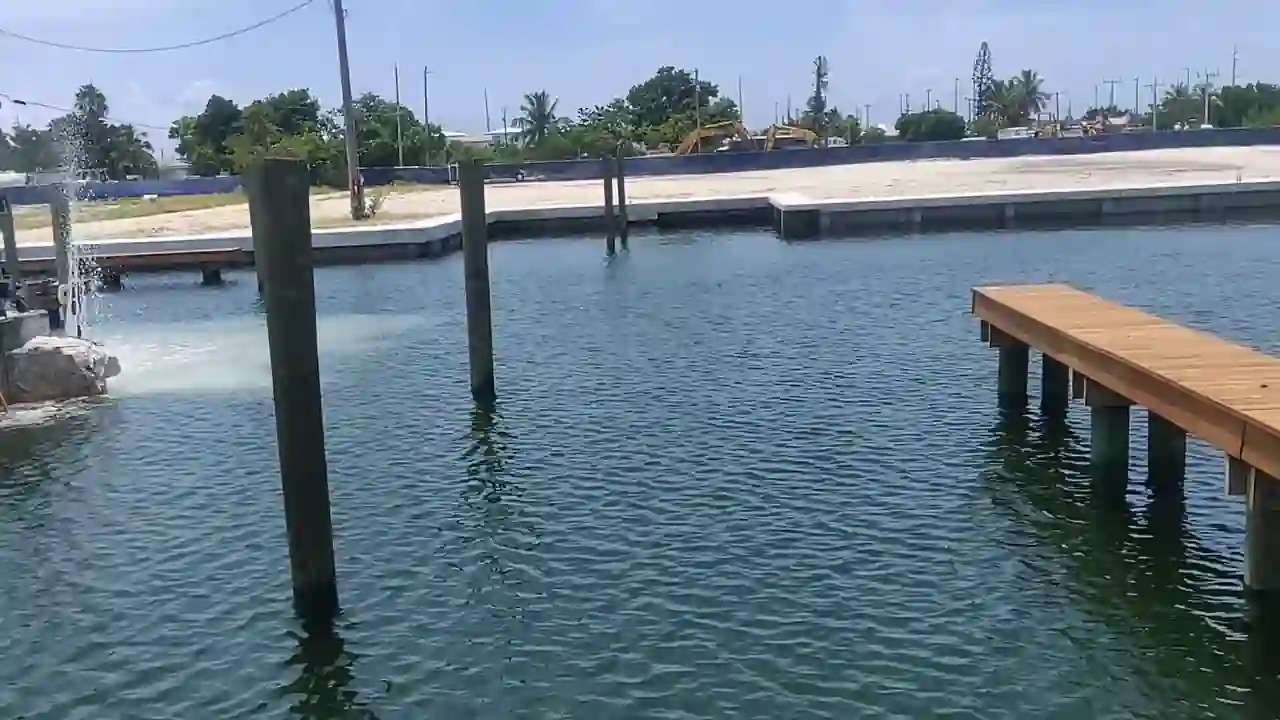
In most of Miami-Dade County, groundwater sits within 3 to 8 feet of the surface. When you demolish a swimming pool, you are creating an excavation that extends below the water table in many locations.
Dewatering during demolition
An empty pool shell surrounded by water-saturated soil is under constant hydrostatic pressure. Remove enough of the pool structure without first managing the groundwater, and the surrounding soil can collapse into the excavation, the pool shell can shift or float, and the adjacent patio, deck, or even the house foundation can be affected. Professional pool demolition contractors install dewatering wells around the pool perimeter — typically well points connected to a pump — to lower the local water table during demolition.
Compaction and settlement in saturated soils
After backfilling, the fill material must be compacted to prevent settlement. In saturated soil conditions, the fill material — typically clean sand or sandy fill — must be placed in thin lifts (12 inches or less) and mechanically compacted before the next lift is placed. Compaction testing verifies that the fill meets the specified density. This is standard practice for full demolitions and recommended for partial demolitions where the area will be paved or hardscaped.
Permits and regulations — what Miami-Dade requires
Swimming pool demolition requires a permit from the local building department — either the municipality for incorporated cities or Miami-Dade County for unincorporated areas. The permit application typically requires a site plan, a description of the demolition method, the fill material specification, and the compaction plan. Some municipalities require structural engineer review if the pool is close to a structure or property line. Your contractor should handle the permit. A contractor who asks you to obtain the permit may not be licensed in your municipality.
What the demolition day actually looks like
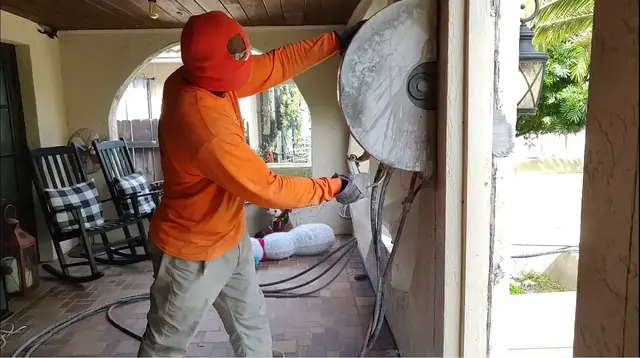
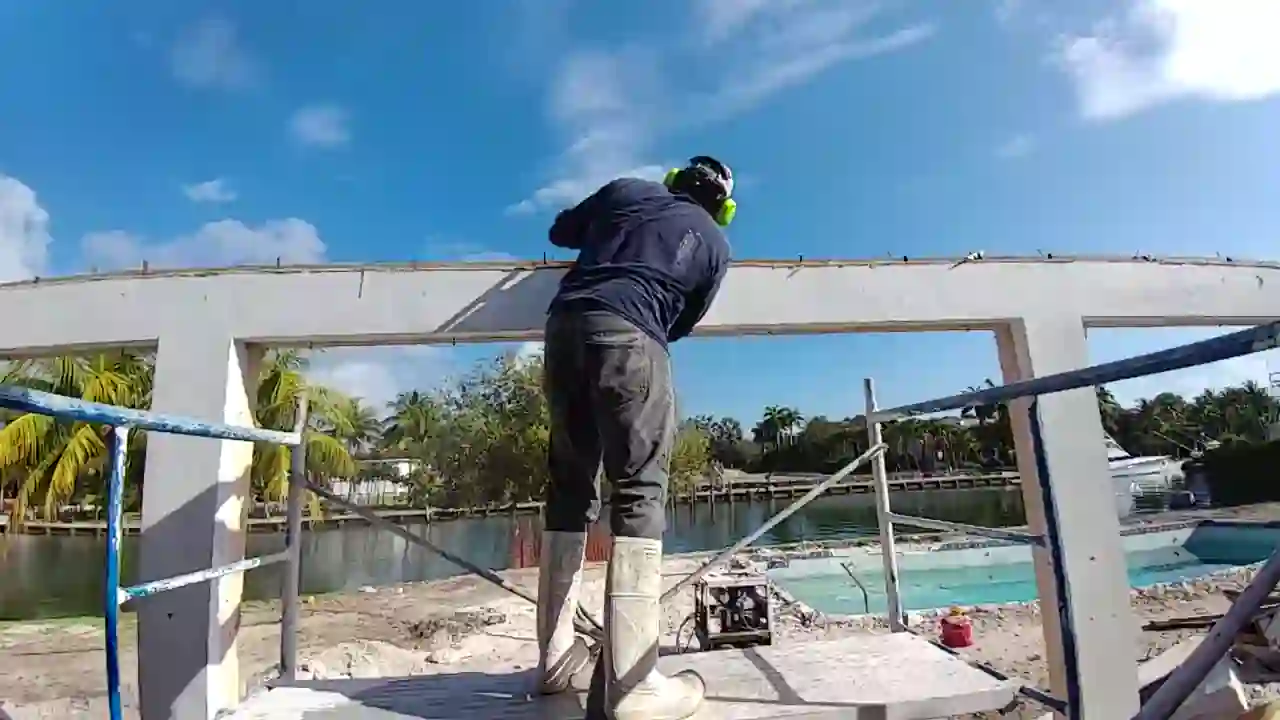
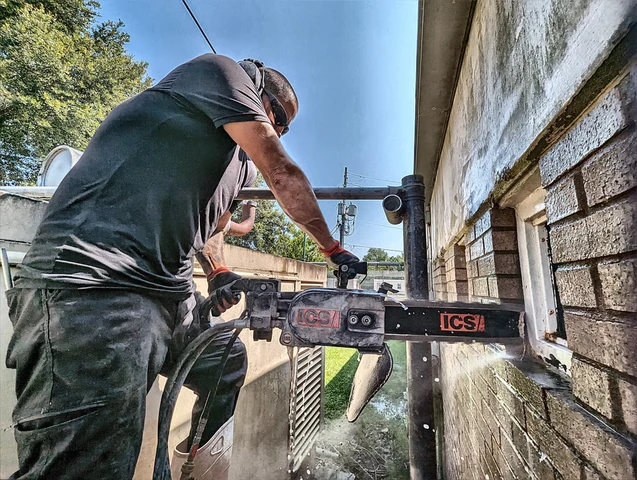
On demolition day, the sequence is roughly: dewatering setup with well points and pumps; pool deck and coping removal using saw cutting for clean separation; pool shell demolition with a hydraulic breaker mounted on an excavator; debris loading into dump trucks for transport to a C&D facility; backfill placement in compacted lifts; final grading to match surrounding elevations and direct surface water away from structures; and the building inspector’s visit to verify the work matches the permit scope.
Choosing a swimming pool demolition contractor in Miami
- “How many pool demolitions have you done in my municipality?” Pool demolition in Coral Gables is different from pool demolition in Homestead. Local experience means they know the inspectors, the soil conditions, and the permit office requirements.
- “What is your dewatering plan?” If they do not have one, they do not understand Miami groundwater.
- “What fill material are you using and how is it compacted?” They should specify clean fill, describe lift thickness and compaction method, and offer compaction testing.
- “What documentation will I receive when the job is complete?” You should receive the signed-off permit, the compaction test results (if testing was performed), and a completion letter from the contractor describing the demolition scope.
- “Are you licensed and insured for demolition work in Miami-Dade?” Verify the license number with the county. Verify the insurance certificate names you as additionally insured.
Swimming pool demolition is one of those projects where the cheapest quote is almost never the best value. The cost difference between a partial demolition done by a licensed contractor with proper dewatering, compaction, and inspection and a partial demolition done by someone with a backhoe and a dump truck is modest in dollar terms but enormous in terms of what you are left with. Hire the contractor who asks questions about your water table, your future plans for the space, and your municipality’s specific requirements.