When the Job Site Fights Back — Understanding Demolition Chainsaw Applications in Restricted Environments
There’s a specific moment on every difficult demolition job when a senior operator looks at the available space, looks at the equipment list, and quietly crosses half of it off. Wall saws need rail systems and clearance. Wire saws need anchor points and geometry that cooperates. Ring saws are powerful but limited in depth. Then there’s the demolition chainsaw — a tool that doesn’t ask much from the environment because it was engineered precisely for the environments that ask too much from everything else. In Miami’s dense urban construction landscape, where basement retrofits, parking structure removals, and confined mechanical room demolitions are routine, the demolition chainsaw isn’t a fallback. It’s frequently the only rational choice from the start.
What a Demolition Chainsaw Actually Is — and Why It Differs From Every Other Cutting System
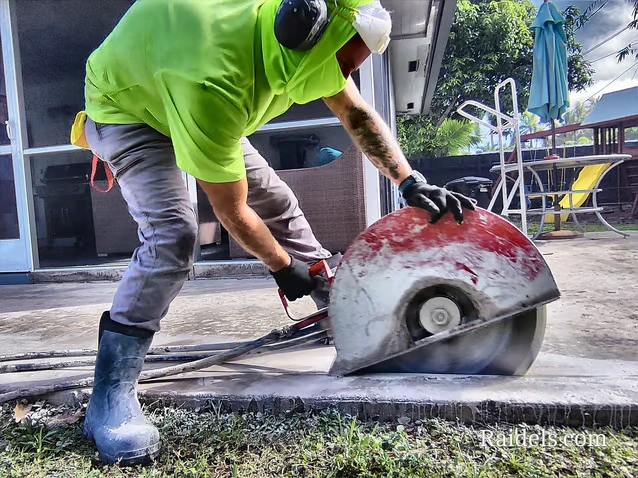
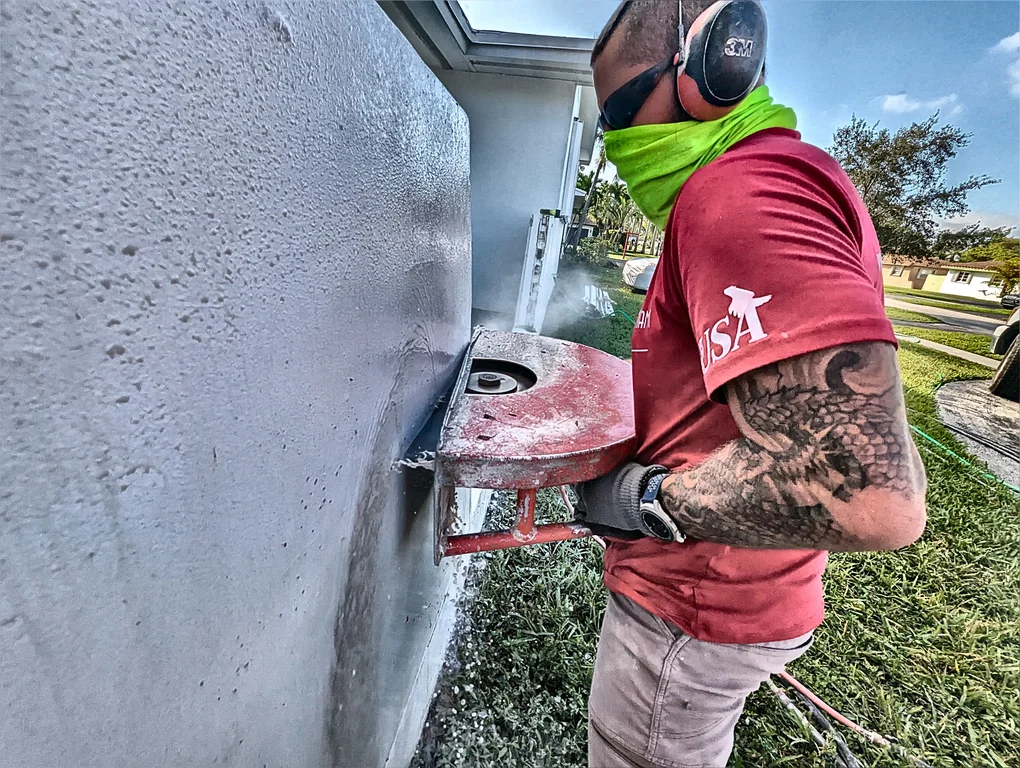
A demolition chainsaw operates on a diamond-segmented chain driven around a guide bar, cutting through reinforced concrete, masonry, and composite materials in a single continuous pass. Unlike a standard concrete saw — which requires a fixed rotational plane — the demolition chainsaw’s bar can be angled, plunged, and repositioned mid-cut. This gives operators something no other tool category offers: true three-dimensional cutting freedom within a confined footprint.
The chain itself is the critical component. Diamond segments are brazed or laser-welded onto carbide-tipped drive links, and the chain pitch is matched to the drive sprocket for consistent tension management under load. When cutting through rebar-laden slabs — common in Miami’s hurricane-rated structures — the chain doesn’t deflect or bind the way abrasive blades do. It tracks through steel reinforcement with controlled aggression, maintaining cut geometry even in irregular material compositions.
Hydraulic-powered demolition chainsaws dominate commercial applications. The hydraulic motor eliminates the torque spike that electric or gas units experience when the chain contacts embedded rebar, and it allows sustained cutting power without thermal fatigue. On a confined site where you’re running multiple tools off a single hydraulic power unit, this matters enormously for scheduling and logistics. Understanding the science behind concrete cutting makes it clear why hydraulic systems outperform in sustained, high-load environments.
Site Logistics for Demolition Chainsaw Operations — The Variables That Actually Drive Equipment Selection
Equipment selection on a demolition job isn’t purely technical — it’s logistical. The demolition chainsaw wins in confined and access-limited environments for several compounding reasons that go beyond raw cutting capability.
Vertical and Overhead Cutting in Basement and Sub-Grade Structures
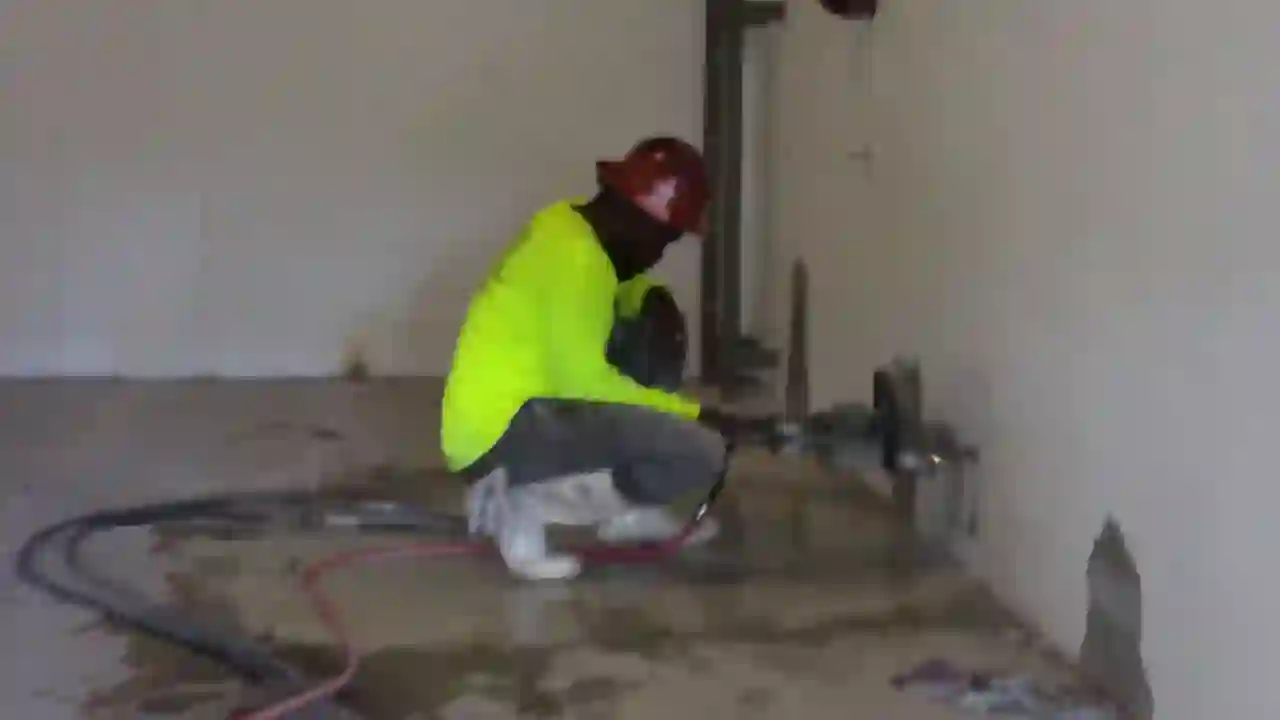
Basement demolitions in Miami’s older commercial inventory frequently involve ceiling heights between 7 and 9 feet, with structural columns, MEP runs, and existing slab edges creating a geometry that wall saws simply cannot navigate. A demolition chainsaw mounted to a hydraulic arm or operated by a trained hand operator can cut overhead slabs, vertical walls, and angled structural elements without requiring the operator to establish a fixed rail system. The setup time collapses from hours to minutes. In a 900-square-foot basement mechanical room where you need to remove a 12-inch reinforced concrete wall, the demolition chainsaw allows plunge cuts at any point along the wall face, controlled segment removal, and clean break lines — all without moving a rail system repeatedly across a floor that may already be compromised.
Doorway and Corridor Access Limitations
Miami’s older mixed-use structures — particularly those built between 1955 and 1985 — were not designed with demolition equipment access in mind. Doorways measuring 32 to 36 inches wide are standard, and corridor turns at 90 degrees are common. A demolition chainsaw’s profile is narrow enough to transport through standard commercial doorways, set up in tight corridors, and position against target surfaces without disassembly. Compare that to a wall saw system, which requires the rail, the saw head, the water supply lines, and the power unit — all of which must be staged and connected inside a space that may not accommodate them simultaneously.
Elevation Changes and Multi-Level Access Logistics
When cutting operations span multiple floors — particularly in parking structures where ramps, curbs, and drainage slopes create uneven working surfaces — the demolition chainsaw’s independence from a flat, level mounting surface is a significant advantage. Wall saws and flat saws require a stable, predictable substrate for accurate tracking. The demolition chainsaw operator can adapt in real time to surface irregularities, cutting consistent lines across sloped or damaged concrete without recalibrating a rail system. This directly reduces labor hours and keeps projects on schedule.
Confined Space Safety Protocols Specific to Demolition Chainsaw Operations
Confined space work introduces hazard layers that don’t exist in open-air demolition. Slurry accumulation, reduced ventilation, noise amplification, and limited egress all compound the standard risks of concrete cutting. Operators running demolition chainsaws in confined environments must follow a protocol stack that addresses each of these independently. Reviewing concrete demolition safety standards is non-negotiable before any confined-space chainsaw operation begins.
Slurry Management in Enclosed Cutting Zones
Hydraulic demolition chainsaws require water suppression at the cutting interface — both for diamond chain longevity and for silica dust control under OSHA’s Table 1 requirements. In a confined space, this water has nowhere to go passively. Job site logistics must include a slurry vacuum system staged immediately adjacent to the cutting zone, with a dedicated operator managing extraction continuously during the cut. Allowing slurry to pool on a confined basement floor creates slip hazards, compromises footing for the cutting operator, and can damage adjacent finished surfaces or waterproofed assemblies. For projects involving below-grade waterproofing systems, coordinating with concrete waterproofing specialists prior to demolition staging prevents costly damage to existing moisture barriers.
Ventilation Requirements and Hydraulic Fluid Misting
Hydraulic power units staged outside a confined space generate exhaust that must be fully isolated from the work area. Inside the space, hydraulic line connections at the saw head can produce fine oil misting under high-pressure conditions — particularly if fittings are worn or improperly seated. Ventilation calculations for confined demolition chainsaw operations should account for both particulate and aerosol contamination, not just CO levels from combustion equipment. Forced-air ventilation with a minimum of 20 air changes per hour is a practical baseline for most enclosed concrete cutting operations in Miami’s climate, where ambient humidity already taxes respiratory protection.
Diamond Chain Tensioning and Bar Maintenance Under Field Conditions
Field maintenance of the demolition chainsaw directly affects cut quality, operator safety, and equipment longevity — and in a confined space where downtime is expensive, a chain failure mid-job is a serious problem. Proper equipment maintenance protocols for demolition chainsaws in field conditions include checking chain tension every 20 to 30 minutes of active cutting, inspecting drive sprocket wear after each bar change, and monitoring water flow to the chain at regular intervals.
Chain tension in a demolition chainsaw is not static. Heat generated during cutting causes bar expansion, which reduces effective chain tension. An operator who sets tension correctly at the start of a cut and doesn’t recheck it will find the chain riding loose on the bar within 15 to 20 minutes of sustained operation — increasing the risk of chain throw and reducing cut accuracy. In a confined space where the operator has limited room to react, a loose chain event is far more dangerous than in an open environment.
Comparing the Demolition Chainsaw Against Alternative Methods for Access-Restricted Jobs
The question project managers ask most often is whether a demolition chainsaw is genuinely faster or whether it just appears faster because setup is simpler. The honest answer depends on the specific geometry of the job. For straight, long cuts through thick slabs in open areas, a wall saw or wire saw will outperform a demolition chainsaw on raw cutting speed. But for jobs where the cut count is high, the individual cuts are short, and the geometry changes frequently, the demolition chainsaw’s setup-to-cut ratio makes it the clear winner. Exploring the fastest concrete cutting methods reveals that speed is always a function of context — and in confined, access-limited environments, the demolition chainsaw consistently leads the field.
The tool’s ability to make plunge cuts — starting a cut at any point on a surface without a pre-drilled entry hole — is particularly valuable in confined spaces where drilling operations would require additional equipment staging. A single operator with a demolition chainsaw and a hydraulic power unit can execute a complete wall removal sequence that would otherwise require a drill operator, a wall saw operator, and a separate staging crew.

Practical Staging Recommendations for Miami Demolition Chainsaw Projects
Based on field experience across Miami-Dade and Broward County projects, the following staging framework consistently produces efficient, safe demolition chainsaw operations in confined and access-limited environments. The hydraulic power unit should be positioned as close to the work zone as egress and ventilation constraints allow — every additional foot of hydraulic hose introduces pressure drop and reduces cutting power at the saw head. A minimum 3/4-inch hydraulic supply line is recommended for bar lengths exceeding 16 inches. Water supply should be independent of the hydraulic circuit, with a dedicated pressure-regulated feed maintaining 30 to 50 PSI at the cutting interface. Debris management — both slurry and concrete fragments — must be planned before the first cut, not after. In confined spaces, fragment accumulation creates trip hazards and can block emergency egress routes faster than operators anticipate.
The demolition chainsaw isn’t a tool that forgives poor planning. But for the jobs where access is the problem and precision is the requirement, it’s the system that makes the impossible routine. Miami’s construction environment — dense, vertical, and frequently constrained — demands exactly that kind of capability, and experienced operators know that having the right tool staged correctly is what separates a clean project from a costly one.