Why Pool Deck Removal in Miami Carries Environmental Obligations Most Contractors Ignore
Pool deck removal looks straightforward from the outside — a few slabs of concrete, some rebar, maybe a wire mesh layer, and a dumpster waiting at the curb. But in South Florida, where the water table sits just a few feet below grade and stormwater drains connect directly to Biscayne Bay and the Everglades watershed, the act of cutting and demolishing a pool deck generates regulated waste that cannot simply be hosed down the driveway. Concrete slurry — that gray, alkaline suspension of cement particles, silica dust, and process water — is classified as a potential pollutant under the Clean Water Act’s National Pollutant Discharge Elimination System (NPDES) permit framework. Any contractor operating in Miami-Dade County who fails to contain and properly dispose of that slurry is not cutting corners; they are creating environmental liability for themselves and for the property owner.
Understanding the Composition of Concrete Cutting Slurry During Deck Demolition
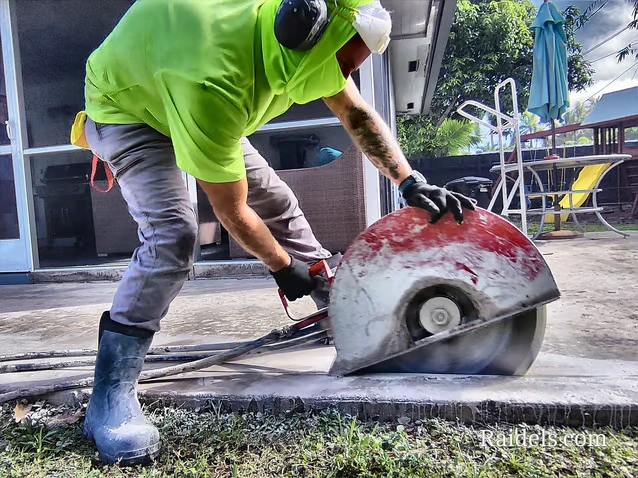
When a diamond blade or diamond wire saw engages a pool deck slab, the cutting action generates heat that must be suppressed with continuous water flow — typically between 1.5 and 3.5 gallons per minute depending on blade diameter and cutting depth. That water picks up pulverized concrete fines, calcium hydroxide leached from the cement matrix, and microscopic silica particles. The resulting slurry has a pH ranging from 11 to 13, making it highly alkaline and acutely toxic to aquatic organisms. A standard pool deck removal project involving 400 to 800 square feet of 4-inch slab can generate anywhere from 80 to 200 gallons of slurry over the course of a full day’s cutting.
Beyond pH, the suspended solids concentration in fresh cutting slurry routinely exceeds 10,000 mg/L — far above the 25 mg/L threshold that triggers turbidity violations under Florida Department of Environmental Protection (FDEP) discharge standards. This means that allowing slurry to reach a storm drain, a canal, or even a landscaped swale is a direct regulatory violation, not merely a best-practice failure.
Calcium Hydroxide Leaching and Its Impact on Soil Chemistry
One underappreciated consequence of uncontained slurry is its effect on soil chemistry around the pool perimeter. Calcium hydroxide migrating into sandy South Florida soils raises localized pH and can destroy beneficial microbial populations, damage root systems of ornamental plantings, and alter the permeability of the soil layer above the water table. For properties with shallow wells or cisterns, this is not a hypothetical concern — it is a documented pathway for groundwater contamination that can trigger liability under Florida Statute 376.
Site Preparation and Containment Systems Before the First Cut Is Made
Professional pool deck removal begins with containment engineering, not with the saw. Before any cutting equipment is staged, the work zone must be bordered with a combination of physical and absorbent barriers designed to capture 100% of slurry runoff. In practice, this means deploying berms of absorbent boom material around the deck perimeter, blocking all adjacent storm drain inlets with drain plugs or filter bags rated for concrete slurry, and establishing a low-point collection sump where slurry can be pumped to a holding tank for off-site disposal.
For pool deck projects where the existing slab drains toward the pool basin itself, the pool water must be pumped down or the basin must be isolated with a temporary dam before cutting begins. Allowing slurry to discharge into pool water creates a secondary disposal problem — the pool water itself becomes a regulated waste stream requiring treatment or permitted discharge.
Vacuum-Assisted Slurry Recovery During Slab Cutting
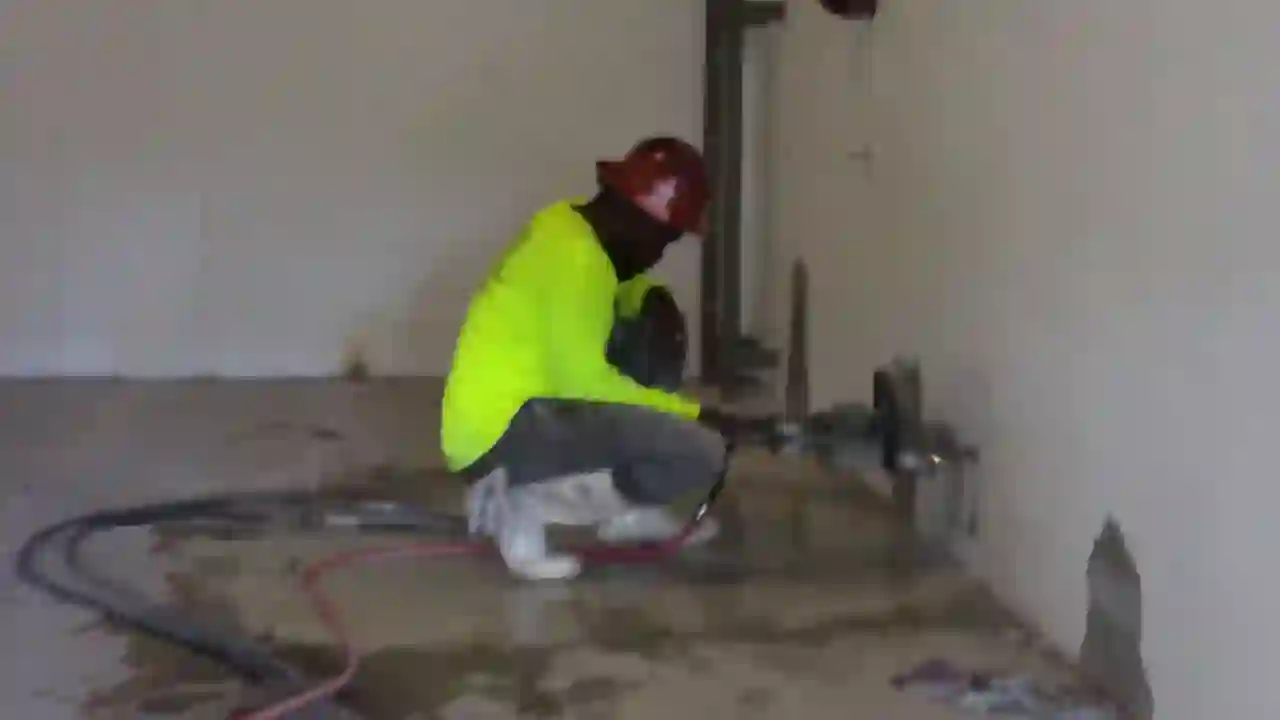
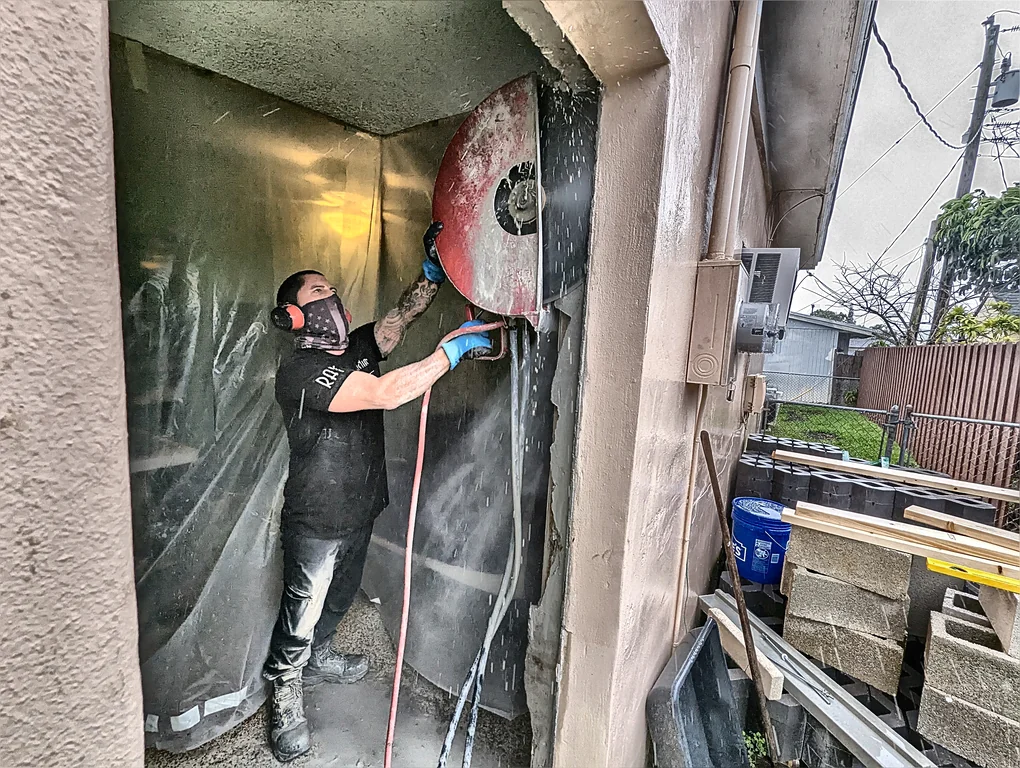
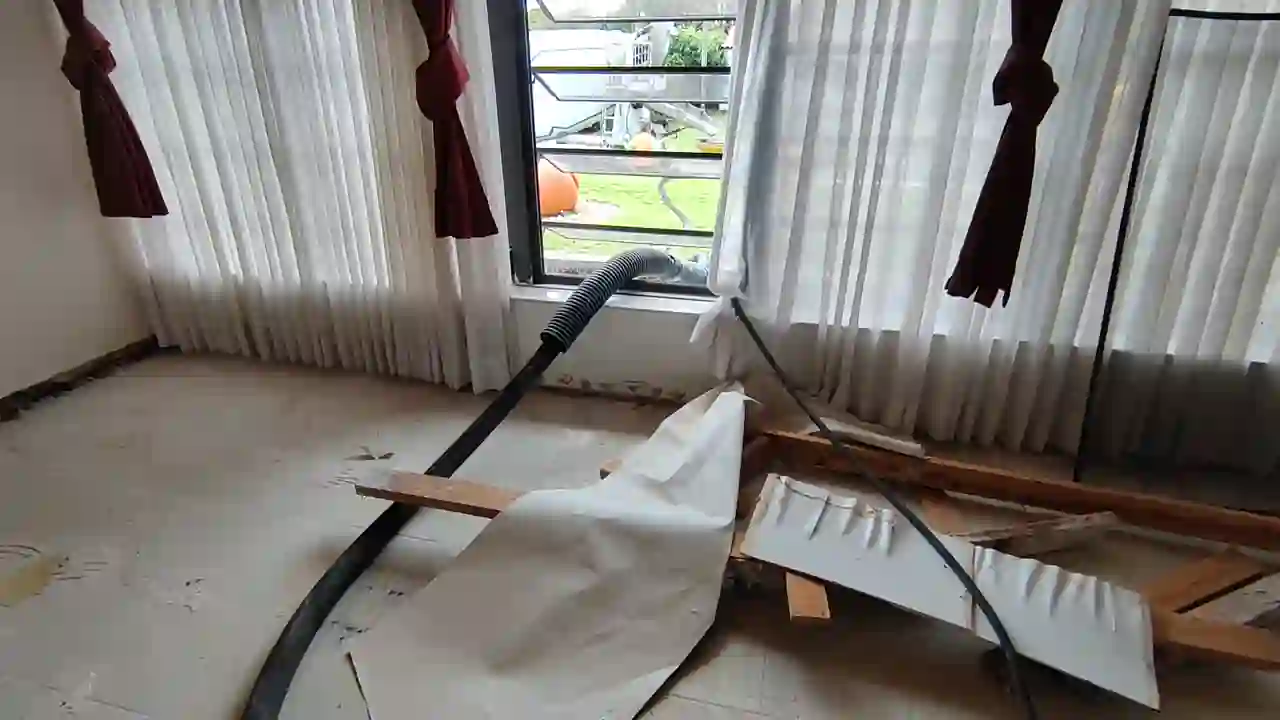
The most effective containment method for pool deck removal combines a wet-cutting diamond blade system with a direct-coupled industrial vacuum recovery unit. These systems, sometimes called slurry vacuums or wet-vac rigs, draw slurry from the blade guard shroud in real time, preventing it from ever reaching the slab surface as a free-flowing liquid. Recovery efficiency on a well-configured rig exceeds 90%, with residual surface moisture handled by secondary absorbent sweeping after each cut pass. For more on precision cutting equipment and techniques used in Miami, see our resources at Precision Cutting.
Mechanical Demolition Phase and Secondary Slurry Generation
Once the pool deck slab has been saw-cut into manageable sections — typically 18-inch to 24-inch panels for manual handling, or larger sections for mechanical lift — the demolition phase begins. This stage involves hydraulic breakers, electric chipping hammers, or pry bars depending on slab thickness and reinforcement density. Dry demolition generates no slurry, but it does generate significant respirable crystalline silica (RCS) dust, which is regulated under OSHA 29 CFR 1926.1153. Wet suppression methods — misters and hand-held water sprayers — are commonly used to knock down dust, and this suppression water must also be captured within the containment perimeter.
Rebar extraction during demolition is straightforward in most residential pool decks, which typically use #3 or #4 rebar on 18-inch centers. However, older decks in Miami — particularly those poured before 1985 — may contain post-tension cables or embedded conduit for pool lighting circuits. These must be identified through ground-penetrating radar scanning before any cutting begins to avoid catastrophic blade damage and personnel injury. Cutting into a live post-tension tendon releases stored energy equivalent to a small explosive charge — a risk that demands zero tolerance for guesswork.
Handling Reinforced Sections Near Pool Coping and Beam Edges
The bond beam and coping interface presents the highest technical challenge in pool deck removal. Here, the deck slab often transitions into a thicker structural section — sometimes 8 to 12 inches — that is integrally cast with the pool shell. Cutting this zone requires a blade capable of achieving full depth without binding, and the operator must maintain consistent water flow rates to prevent thermal stress fractures in the pool shell itself. Diamond wire saws, which apply uniform cutting pressure along a continuous loop, are frequently the preferred tool for this transition zone. Learn more about diamond wire saw applications in our technical resource library.
Slurry Dewatering, pH Neutralization, and Legal Disposal Pathways
Collected slurry cannot simply be poured into a dumpster or released into a municipal sewer without authorization. The correct disposal pathway begins with dewatering — allowing solids to settle in a holding tank or lined containment vessel, then decanting the clarified water off the top. The decanted water must be pH-tested; if it reads above 9.0, it requires neutralization with a CO2 injection system or a dilute acid treatment before any discharge to an approved location. Solid concrete fines that settle out of the slurry are classified as inert construction debris in Florida and can be disposed of at a permitted C&D landfill — but only after dewatering to a non-flowing consistency.
Miami-Dade County’s Department of Regulatory and Economic Resources (RER) actively enforces stormwater pollution prevention requirements on construction sites, and pool deck removal projects are not exempt from these rules simply because they occur on private residential property. Property owners who hire contractors without documented slurry management plans are accepting joint liability for any discharge violations that occur. Reviewing applicable building codes and environmental regulations before project start is not optional — it is foundational risk management.
Documentation and Chain of Custody for Waste Disposal
Every professional pool deck removal project should generate a waste disposal manifest documenting the volume of slurry collected, the pH readings before and after neutralization, the name of the licensed disposal facility, and the dates of transport. This documentation protects the contractor and the property owner in the event of a regulatory inquiry and demonstrates good faith compliance with NPDES permit conditions. Concrete demolition safety extends well beyond the physical work zone — it encompasses the full lifecycle of every waste stream the project generates.
Why Choosing an Environmentally Certified Contractor Protects Your Property Value
In Miami’s real estate market, environmental compliance history follows a property. An unpermitted pool deck removal that discharged slurry into a neighboring drainage easement can trigger FDEP inspection records that appear in title searches and environmental due diligence reports. Choosing a contractor who treats slurry management as a core technical competency — not an afterthought — is a direct investment in the long-term defensibility of your property’s environmental status. At Concrete Cutting Miami, LLC, every pool deck removal project is planned with a site-specific slurry containment protocol, vacuum recovery equipment staged before the first cut, and documented disposal through licensed facilities. That is not a premium service. That is the minimum standard the work demands.