Why Cutting Charges Carry an Environmental Price Tag That Most Contractors Underestimate
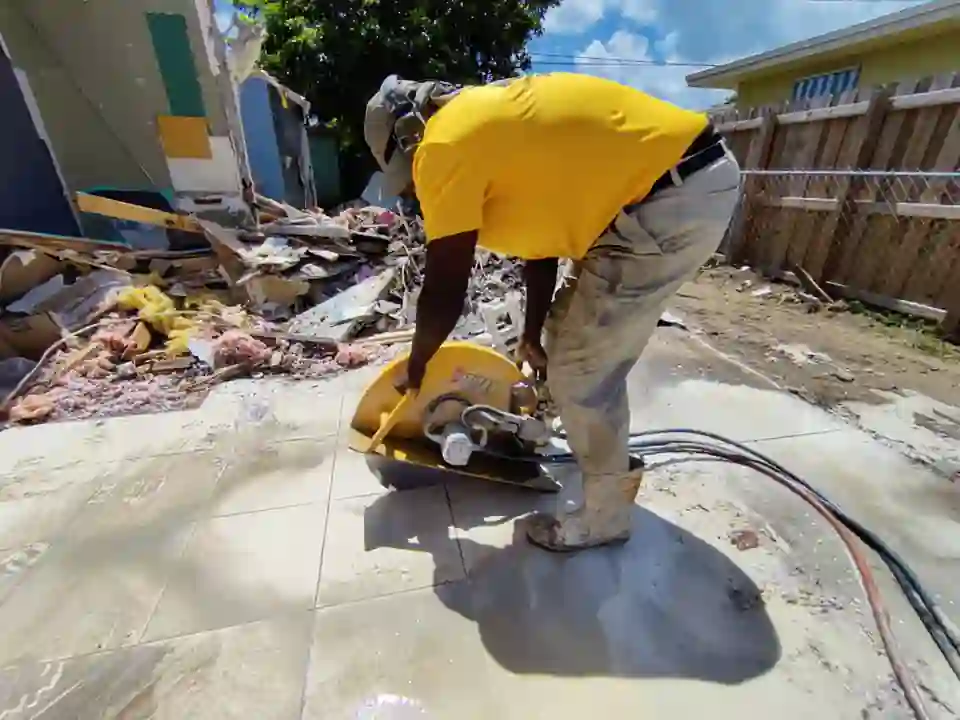
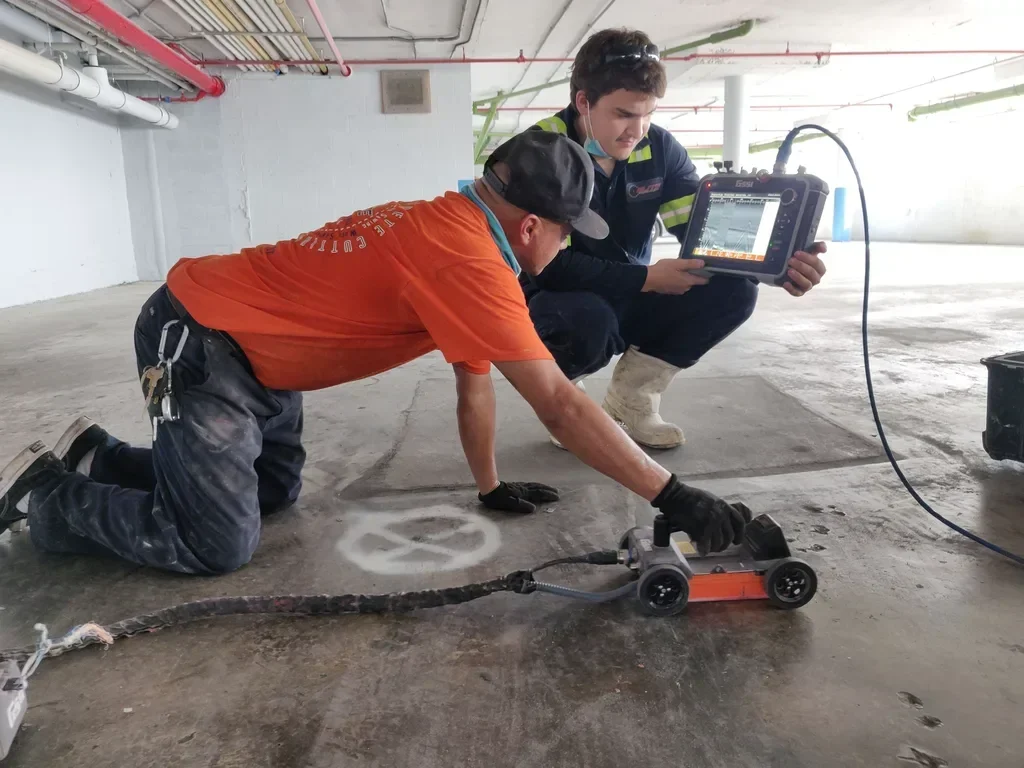
When we talk about cutting charges in the concrete industry, most project managers immediately think about blade wear, horsepower requirements, and labor hours. What rarely gets the attention it deserves — until an inspector shows up — is the environmental liability baked into every single cut. In Miami-Dade County, where stormwater runoff regulations are aggressively enforced and proximity to Biscayne Bay makes environmental violations politically and legally combustible, the slurry generated by diamond blade cutting operations is not a nuisance byproduct. It is a regulated waste stream. Every cutting charge you authorize on a job site activates a chain of environmental obligations that, if ignored, can result in stop-work orders, fines, and remediation costs that dwarf your original cutting budget.
The Chemistry of Concrete Slurry and Why pH Levels Define Your Liability
Concrete slurry is not simply gray water. When a diamond blade engages a concrete substrate — whether you are performing flat sawing, wall sawing, or wire sawing — the cutting action suspends fine particulate matter, calcium hydroxide, and silica dust in the cooling water stream. The resulting slurry typically carries a pH between 11 and 13, placing it firmly in the caustic range. At those pH levels, direct discharge into storm drains, soil, or surface water is a federal Clean Water Act violation under the National Pollutant Discharge Elimination System (NPDES), and Florida’s own Chapter 62-302 water quality standards add another layer of enforcement teeth.
The silica content compounds the problem. Crystalline silica particles suspended in slurry can leach into groundwater tables, and in South Florida’s porous limestone geology, that migration happens faster than in most other regions of the country. A cutting charge that seems routine on paper — say, a 6-inch-deep slab penetration for a utility sleeve — can generate enough high-pH slurry to contaminate a drainage swale within minutes of an uncontrolled release.
Quantifying Slurry Volume Per Cutting Charge
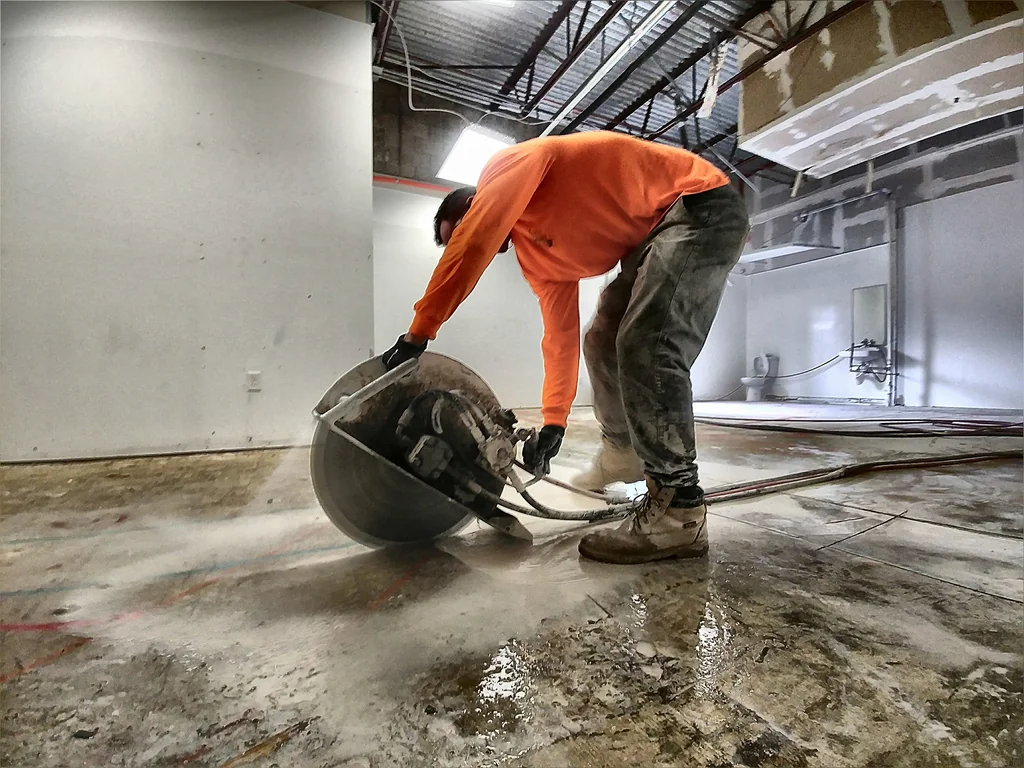
Experienced crews know to estimate slurry output before mobilizing containment equipment. As a working rule of thumb, a standard wet-cut flat saw operating at full depth on a 4,000 PSI slab generates approximately 0.5 to 1.5 gallons of slurry per linear foot of cut, depending on aggregate hardness, blade segment configuration, and water flow rate. A 200-linear-foot cutting charge on a parking structure deck can realistically produce 150 to 300 gallons of slurry. That volume requires active management — it does not disappear, and it cannot be squeegeed toward a drain without triggering a violation.
Water Containment Systems That Actually Work on Miami Job Sites
Containment is not a one-size-fits-all solution, and the specific geometry of your cutting charge dictates which system is appropriate. Construction safety protocols in South Florida increasingly require that containment plans be submitted as part of the permitting package, particularly on projects near coastal setback zones or within wellfield protection areas.
Perimeter Berms and Vacuum Recovery for Flat Slab Cuts
For horizontal cutting charges on elevated decks or grade-level slabs, the most effective containment strategy combines hydraulic berms with continuous vacuum recovery. Foam or rubber perimeter dams — typically 2 to 4 inches in height — are deployed around the cutting zone to prevent lateral slurry migration. A wet-vac or industrial slurry vacuum runs simultaneously with the saw, pulling slurry into a holding tank before it can pool and breach the berm. The critical operational detail here is vacuum capacity sizing: the recovery system must match or exceed the saw’s water delivery rate, which on a large-diameter flat saw can reach 8 to 12 gallons per minute. Undersizing the vacuum is the single most common containment failure on Miami job sites.
Wall Saw and Wire Saw Vertical Cut Containment
Vertical cutting charges present a fundamentally different containment challenge. Gravity works against you. Slurry generated by wall saws or wire saws cutting through rebar-reinforced walls runs down the face of the structure and fans out at the base. The standard approach involves a combination of plastic sheeting or rubber curtains affixed directly below the cut zone, channeling slurry into a collection trough or vacuum inlet. For thicker walls — anything above 18 inches — the volume generated per linear foot increases substantially, and collection troughs must be sized accordingly. Portable slurry tanks with 200- to 500-gallon capacity are standard for major wall cutting charges in commercial demolition contexts.
Slurry Disposal Pathways and Miami-Dade Regulatory Requirements
Collecting slurry is only half the compliance equation. Disposal is where many contractors who have invested in containment equipment still fall short. In Miami-Dade County, demolition and cutting operations must adhere to disposal pathways that are legally defensible and documentable.
Neutralization Before Disposal
High-pH slurry must be pH-adjusted to a range of 6.0 to 9.0 before it can be discharged to a sanitary sewer system — and only then with written authorization from Miami-Dade Water and Sewer Department (WASD). The neutralization process typically involves the addition of carbon dioxide (CO₂) through a carbonation system or the careful introduction of a dilute acid solution. CO₂ injection is the preferred method on active job sites because it avoids the handling hazards associated with acid reagents and produces no secondary contaminants. pH testing must be performed with calibrated meters — test strips are not considered adequate documentation for regulatory purposes.
Solid Separation and Landfill Disposal
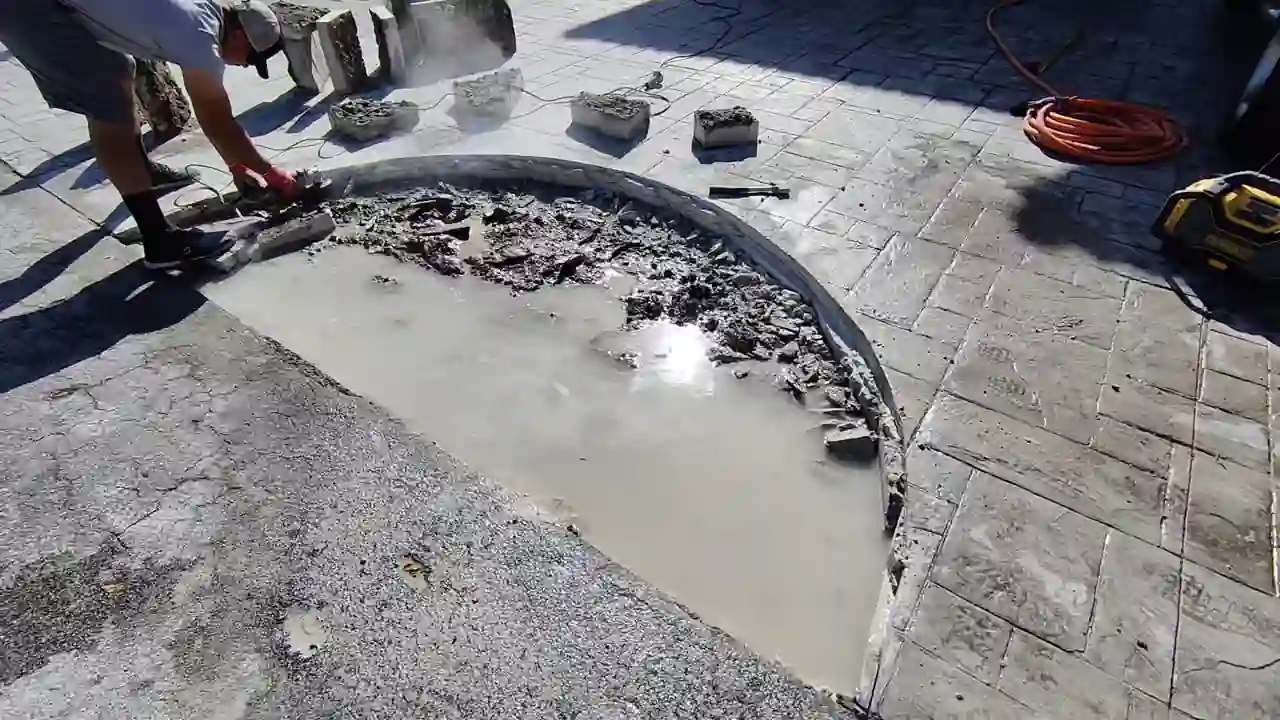
Once slurry has been pH-adjusted, the solid fraction must be separated from the liquid. Dewatering bags — geotextile filter bags rated for fine concrete particulate — are the most field-practical solution for most cutting charges. Slurry is pumped into the bag, water filters through the geotextile and is collected for further treatment or discharge, and the dried solid cake is then disposed of as construction debris at a permitted facility. The solid cake from concrete cutting is generally classified as non-hazardous solid waste unless the substrate contains lead paint, asbestos, or other regulated materials — a determination that must be made during pre-construction assessment.
Integrating Compliance Costs into Cutting Charge Estimates
Here is where the technical and the financial converge. Professional concrete cutting operations that price cutting charges without factoring in environmental compliance overhead are either absorbing those costs silently or passing the liability to the client without disclosure. Neither outcome is sustainable. A properly scoped cutting charge estimate should itemize containment setup, vacuum recovery operation, slurry tank rental, neutralization reagents, dewatering bag materials, pH testing, and disposal fees as discrete line items.
In Miami’s regulatory environment, these costs are not optional add-ons. They are cost-of-doing-business items that protect the contractor’s license, the general contractor’s project schedule, and the owner’s exposure to third-party environmental claims. Foundation repair cutting operations in particular, which often occur in close proximity to existing drainage infrastructure and landscaping, carry elevated slurry management complexity that must be reflected in the charge structure.
Field Verification Protocols Before Any Cutting Charge Begins
Before the first blade engages, a compliant Miami cutting operation should have completed the following environmental verification steps:
- Site drainage mapping — identify all storm drains, swales, and permeable surfaces within 50 feet of the cutting zone and install inlet protection on all drains.
- Slurry volume estimate — calculate expected output based on cut length, depth, and substrate type, and confirm containment capacity exceeds that estimate by a minimum 25% safety margin.
- pH meter calibration — verify calibration against buffer solutions rated for high-pH environments before mobilization.
- Disposal pathway confirmation — confirm sewer discharge authorization or landfill manifest availability before slurry is generated, not after.
- Emergency spill kit staging — position absorbent booms and neutralization agents within immediate reach of the cutting zone for rapid response to containment failures.
- Documentation package — prepare a job-specific environmental compliance log that records pH readings, disposal volumes, and disposal destinations for each cutting charge performed on the project.
Cutting charges in concrete work will always generate slurry. The contractors who build durable, compliant operations in Miami are the ones who treat slurry management not as an afterthought but as a core technical discipline — as demanding and as billable as the cutting itself. The blade makes the cut. The containment system protects everything else.