Why Miami Pool Excavation Demands a Different Playbook Than the Rest of the Country
Miami pool excavation is not a generic dig-and-pour operation. The moment your excavator breaks ground in South Florida, you’re dealing with a geotechnical environment that humbles even experienced contractors from other states. You’ve got Miami limestone — locally called oolitic limestone — sitting anywhere from a few inches to several feet below the surface. You’ve got a water table that can rise dramatically during the rainy season, turning a clean excavation into a flooded pit overnight. And you’ve got dense residential neighborhoods where equipment access is tight, utility conflicts are common, and neighbors are watching every move. If you’re planning a pool build or a pool removal in Miami-Dade or Broward County, this guide is your technical foundation.
Soil and Subsurface Analysis Before the First Blade Hits the Ground
The single most important step before any Miami pool excavation begins is a proper geotechnical assessment. Don’t skip this. A standard soil boring report — ideally two to three borings per project site — will tell you the depth and density of the limestone layer, the presence of voids or karst formations, and the seasonal high water table elevation. In Miami-Dade, the seasonal high water table is typically between 12 and 36 inches below grade depending on your specific location. That number directly determines your pool shell design and your dewatering strategy.
Miami’s oolitic limestone presents in two primary forms on residential sites. The first is loose, granular material that excavates relatively easily with a standard mini-excavator or backhoe. The second is dense, consolidated rock that will stop a conventional bucket cold. When you hit consolidated limestone at pool depth — usually 5 to 8 feet below finished grade for a standard pool — you need hydraulic hammering, diamond wire cutting, or controlled blasting. Most residential projects in Miami use hydraulic hammer attachments on excavators to break the rock before scooping. For tighter access situations, smaller electric or hydraulic rock breakers are deployed.
Reading the Boring Report for Pool Excavation Depth Calculations
Your structural engineer will specify the pool shell thickness and the required bearing capacity of the subgrade. In Miami, pools are typically designed to bear on competent limestone or compacted fill that meets a minimum 2,000 psf bearing capacity. If the boring report shows soft organic material or loose sand above the limestone, you may need to over-excavate and import compacted fill material before placing the shell. This adds cost and time — budget accordingly before you commit to a project schedule.
Miami-Dade and Broward Permit Requirements for Pool Excavation Projects
You cannot legally excavate for a new pool in Miami-Dade County without a valid building permit and approved plans. The permitting process involves submitting engineered structural drawings, a site plan showing setbacks, and sometimes a geotechnical report depending on the municipality. Miami Beach, Coral Gables, and other incorporated cities may have additional local requirements on top of county standards. Pull your permits before equipment arrives on site — inspectors in South Florida are active and stop-work orders are issued regularly on unpermitted excavations.
For pool removal projects — which involve demolishing the existing concrete shell before excavating and backfilling — the permit requirements differ slightly. If you’re doing a full pool removal and planning to repurpose the space, check out our detailed breakdown on removing a pool with a Bobcat, which covers the mechanical demolition side of the equation in depth. Partial fills also require permits and specific backfill compaction documentation in most South Florida jurisdictions.
Equipment Selection and Access Planning for Tight Miami Residential Lots
Miami residential lots are notoriously tight. A standard 50-foot-wide lot in Hialeah or Little Havana leaves minimal room for equipment staging, spoil piles, and access paths. Your equipment selection must account for gate widths, overhead obstructions like utility lines and tree canopies, and surface conditions like pavers, decorative concrete, or existing pool decks that need to be preserved.
For most Miami pool excavations, a 3.5-ton to 6-ton mini-excavator is the workhorse. These machines fit through a standard 36-inch gate opening with the blade removed and can operate effectively in spaces as narrow as 8 feet. When limestone breaking is required, a hydraulic hammer attachment replaces the bucket — typically a 300 to 500 foot-pound class breaker for residential applications. Spoil removal is handled by either a tracked dumper running alongside the excavator or a conveyor belt system that moves material over fences or walls to a waiting truck on the street.
Protecting Existing Concrete Surfaces During Excavation Access
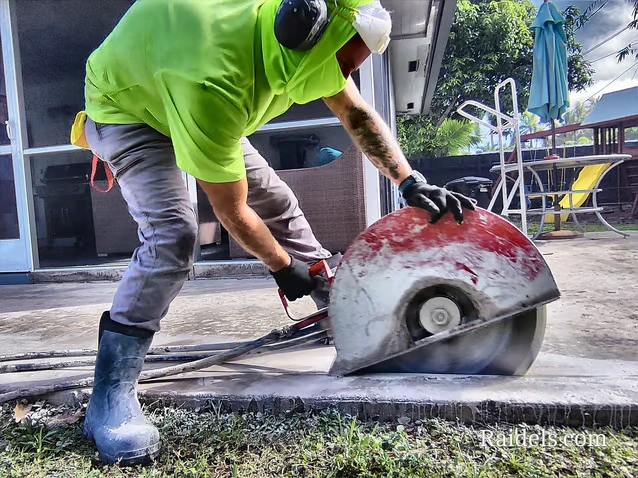
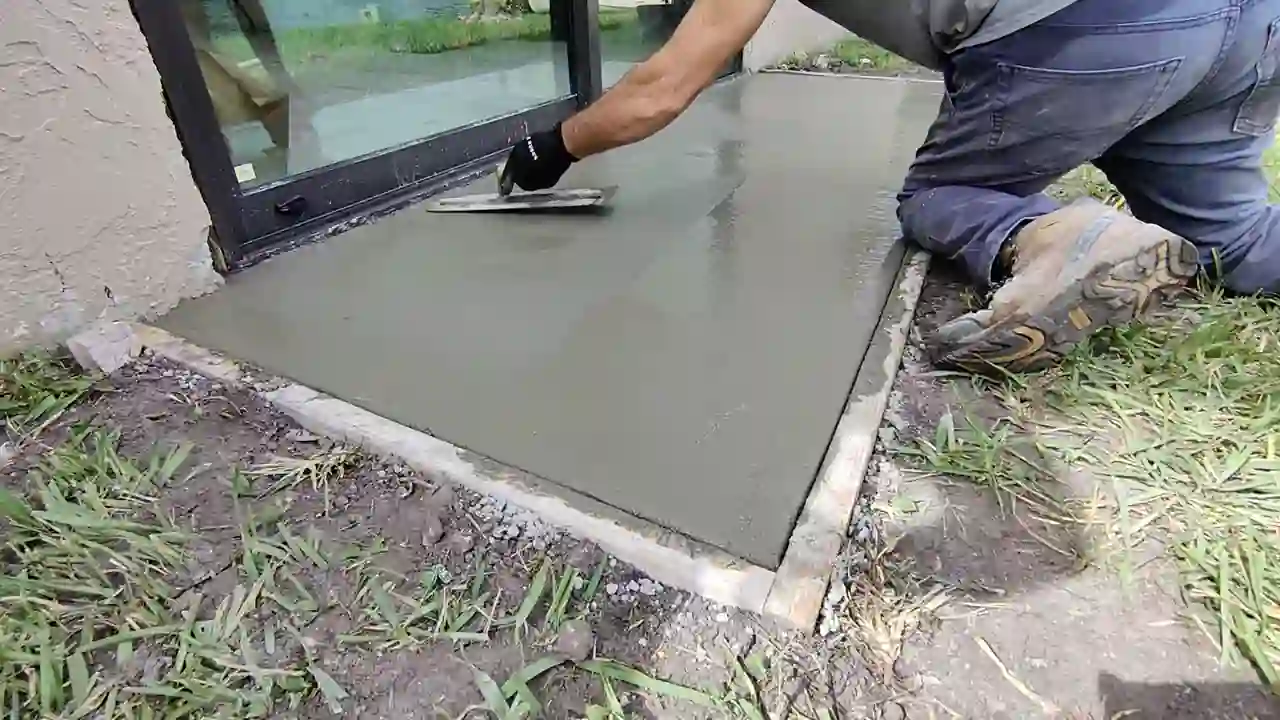
One of the most common and costly mistakes in Miami pool excavation is failing to protect existing flatwork during equipment access. A mini-excavator running over an unprotected paver driveway or decorative concrete walkway will crack and shift it. Use rubber track equipment whenever possible, and lay down heavy rubber mats or steel road plates on any surface that equipment will travel across repeatedly. If existing concrete needs to be cut and removed to create an access path, precision matters — our residential concrete cutting and demolition services handle clean, controlled cuts that protect adjacent structures and allow for exact reinstallation afterward.
Dewatering Strategies for High Water Table Conditions in South Florida
If your boring report shows the seasonal high water table within 4 feet of your pool excavation depth — which is common in coastal Miami, Biscayne Park, and low-lying areas of Miami-Dade — you need a dewatering plan before you dig. Uncontrolled groundwater intrusion into an open excavation creates unstable sidewalls, equipment bogging, and concrete placement failures.
The most common dewatering method for residential Miami pool excavations is wellpoint dewatering. Wellpoints are small-diameter perforated pipes driven into the ground around the excavation perimeter and connected to a header pipe and vacuum pump. A properly designed wellpoint system can draw the water table down 15 to 20 feet below grade, keeping the excavation dry during shell placement. For smaller excavations or situations where wellpoints aren’t feasible, sump pumping inside the excavation combined with rapid concrete placement is used — though this is a higher-risk approach that requires experienced crews.
Managing Dewatering Discharge in Miami Residential Neighborhoods
Dewatering discharge cannot simply be pumped into the street or storm drain without consideration. Miami-Dade County has specific requirements for dewatering discharge that may require turbidity screens or settling tanks if the water is carrying fines. Coordinate with your contractor and, if necessary, the county’s DERM office before beginning dewatering operations. Neighbors and HOAs in Miami are increasingly aware of construction impacts, and a muddy discharge stream is a fast way to generate complaints and regulatory attention.
Concrete Cutting Operations That Intersect With Pool Excavation Scope
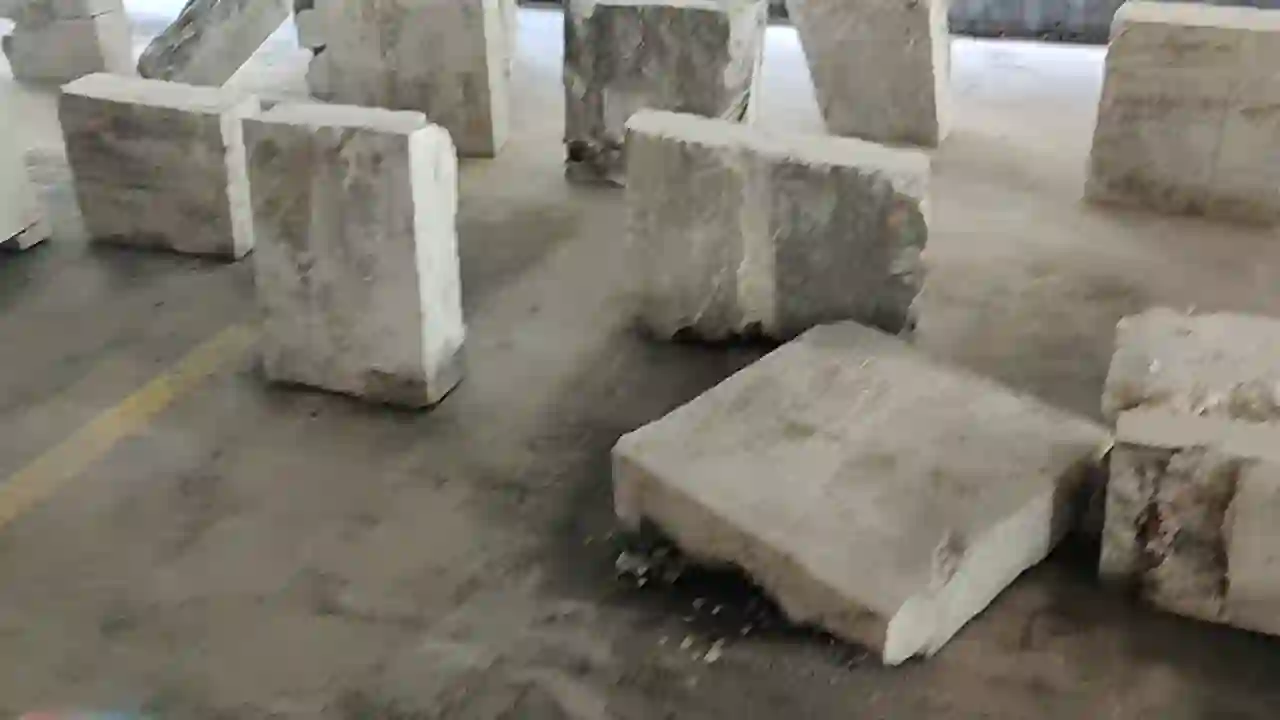
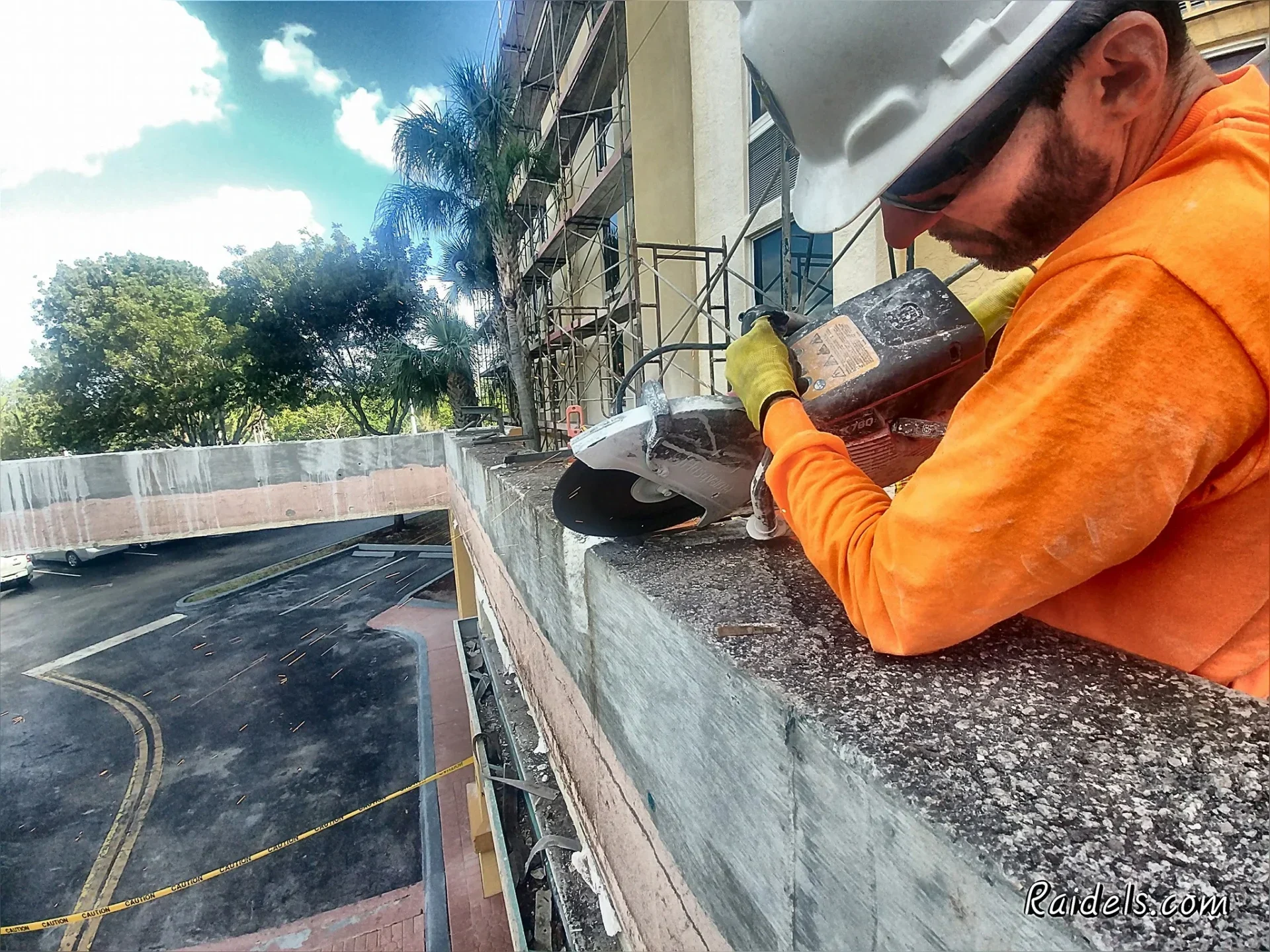
Pool excavation in Miami frequently involves concrete cutting work that goes beyond simple dirt moving. Existing pool decks, cantilever coping, underground utility slabs, and even old concrete pool shells all require precision cutting before excavation equipment can operate effectively. Wire sawing and flat slab sawing are the primary methods used to section large concrete masses into manageable pieces for removal.
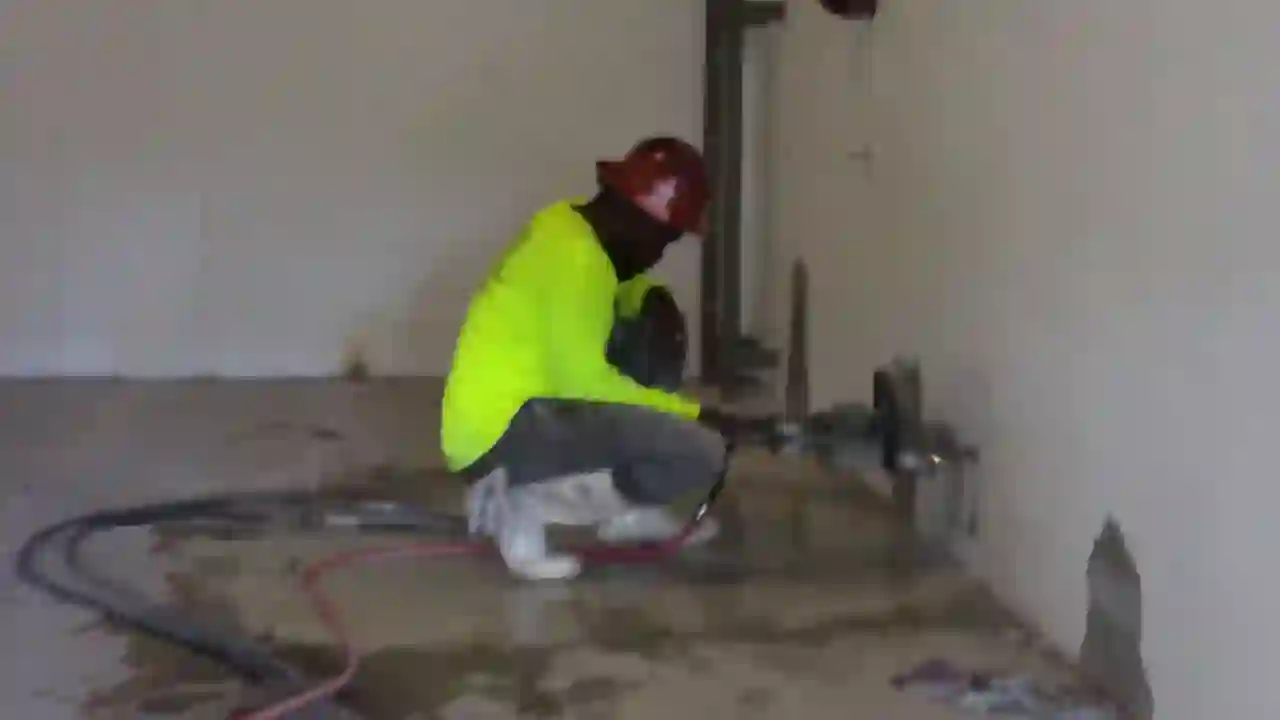
For projects involving adjacent structures — a pool next to a home foundation, for example — diamond wire sawing allows cuts to be made without the impact vibration of hydraulic hammering, protecting the structural integrity of nearby elements. This is the same technology used in commercial applications like commercial door cutouts and concrete balcony demolition, scaled and adapted for residential pool work.
Backfill Compaction Standards After Pool Shell Placement
Once the pool shell is placed and cured, the annular space between the shell and the excavation walls must be backfilled and compacted to engineered specifications. In Miami, this typically means clean fill compacted in 12-inch lifts to 95% of maximum dry density per ASTM D1557. Failing to meet compaction standards leads to long-term settlement around the pool deck, cracking of coping and tile, and potential structural issues with the pool shell itself.
Use a plate compactor or jumping jack compactor in the annular space — never a large vibratory roller, which can damage the pool shell. Keep equipment at least 18 inches from the shell walls during compaction operations. Document your compaction with a density test report from a licensed geotechnical testing firm. Miami-Dade inspectors will ask for this documentation at final inspection on most pool permits.
If you’re working on a project during the peak South Florida build season, timing your excavation and backfill operations around afternoon thunderstorms is critical. Check our Miami summer construction resources for scheduling strategies that keep your project moving through the wet season without costly delays.
What Experienced Miami Pool Contractors Know That Homeowners Don’t
The contractors who execute Miami pool excavation successfully year after year understand that the project is won or lost in the planning phase. They pull boring reports before bidding. They walk the access route with a tape measure. They identify utility conflicts before the first call to 811. They have dewatering equipment staged and ready before the excavator arrives. And they work with concrete cutting specialists who can handle the unexpected — a buried footing, an old septic tank, a concrete slab that wasn’t on any drawing.
For homeowners evaluating contractors, the questions to ask are direct. What is your dewatering plan if we hit groundwater? What equipment will you use if you encounter consolidated limestone? Who handles the concrete cutting scope and what methods do they use? A contractor who answers these questions with specifics — not generalities — is a contractor who has done this work in Miami before. For more on how we approach complex residential demolition and cutting projects, visit our press release page for recent project highlights and technical updates.
Miami pool excavation is a precision operation that rewards thorough planning and punishes shortcuts. The geology, the water table, the permit requirements, and the tight residential lots all conspire to make this one of the most technically demanding scopes in South Florida construction. Get the subsurface data, select the right equipment, plan your dewatering, and work with cutting and demolition specialists who know Miami’s specific conditions. That’s how successful pool projects get built here — not by luck, but by preparation.