Why Miami Beach Construction and Demolition Bids Run Higher Than Mainland Projects
If you have ever submitted or received a construction and demolition bid for a Miami Beach project and immediately compared it to a Hialeah or Doral job of similar square footage, the sticker shock is real. Miami Beach operates as an island municipality with its own permitting authority, its own set of coastal construction setback rules, and a built environment that ranges from Art Deco masonry from the 1930s to post-tension concrete high-rises built in the last decade. Every one of those variables shows up as a line item. Before your project even breaks ground, the mobilization cost alone can run 15 to 25 percent higher than a comparable inland job simply because of barge access requirements, restricted haul routes, and limited staging areas on barrier island lots. Understanding why the numbers look the way they do is the first step toward writing a bid that actually holds up through project completion.
Core Cost Drivers for Demolition Work on Miami Beach Job Sites
Demolition pricing in Miami Beach is not a flat-rate exercise. A full structural demolition of a two-story commercial building on Collins Avenue will carry a fundamentally different cost profile than a selective interior demo on a Lincoln Road mixed-use property. The variables that move the needle most aggressively fall into four categories: structural material type, environmental remediation requirements, access constraints, and disposal logistics.
Structural Material Type and Reinforcement Density
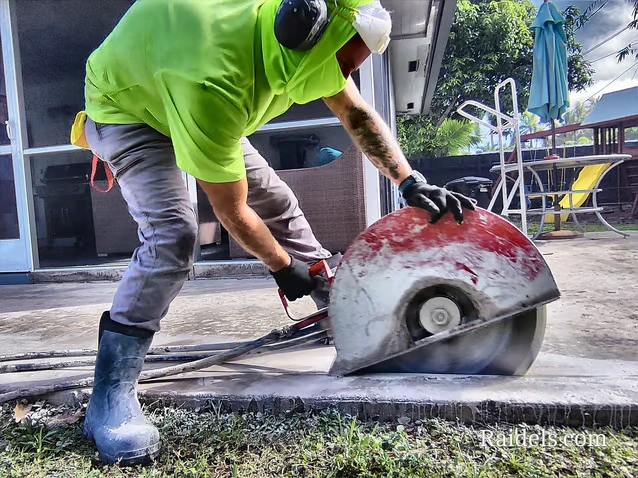
Older Miami Beach construction — particularly anything built between 1920 and 1970 — frequently involves unreinforced or lightly reinforced masonry, hollow clay tile, and early-era concrete mixes with inconsistent compressive strength. These materials break down differently than modern 4,000 PSI or 6,000 PSI post-tension slabs. When you are cutting or sawing through legacy concrete on a South Beach structure, blade wear rates increase, and job duration estimates need a buffer of 20 to 30 percent over what you would budget for a newer pour. For detailed guidance on how material type affects your cutting approach and cost per linear foot, the concrete cutting guides from Concrete Cutting Miami provide a solid technical reference point.
Environmental Remediation and Hazardous Material Abatement
Pre-1980 structures in Miami Beach carry a high probability of asbestos-containing materials in floor tiles, roofing compounds, pipe insulation, and joint compound. Lead paint is also endemic in the older residential stock. Before any mechanical demolition or concrete cutting begins, a certified industrial hygienist must conduct a comprehensive survey, and any identified hazardous materials require licensed abatement contractors working under separate scope. Abatement costs on a mid-sized commercial property in Miami Beach routinely run between $18,000 and $65,000 depending on ACM quantity and accessibility. This scope almost always sits on the critical path, meaning delays in abatement clearance push every downstream trade. Budget 10 to 21 business days for abatement completion before heavy demolition equipment can mobilize. For a broader look at job site hazard management in concrete operations, review the concrete hazards resource library.
Access Constraints and Equipment Mobilization on Barrier Island Sites
Miami Beach has exactly four road connections to the mainland. MacArthur, Julia Tuttle, Venetian, and 395 all carry weight restrictions, permitting requirements for oversized loads, and time-of-day restrictions for heavy haul. Bringing a 50-ton excavator or a large concrete crusher onto the island requires a Miami Beach Public Works permit, route approval, and in many cases, a police escort during off-peak hours. That coordination adds two to five days to your mobilization timeline and $2,500 to $8,000 in permitting and escort fees before the machine turns a wheel on your site. Smaller projects in dense neighborhoods like South of Fifth or Sunset Harbour may require robotic demolition equipment — compact remote-operated breakers that can operate in spaces where a standard excavator cannot reach — which carries a day rate premium of 35 to 50 percent over conventional equipment.
Timeline Estimations for Common Miami Beach Demolition and Construction Scopes
Timeline accuracy is where a lot of general contractors and demolition subs lose credibility on Miami Beach projects. The permitting environment alone adds weeks that mainland contractors frequently underestimate.
Selective Interior Demolition on a Residential or Boutique Hotel Property
For a selective interior demo — removing non-structural partitions, flooring systems, and MEP rough-in without touching the structural frame — a 5,000 to 8,000 square foot footprint typically runs 8 to 14 business days of active field work. Add 15 to 25 business days for Miami Beach Building Department permit issuance, assuming a complete and compliant submittal on the first round. Total elapsed calendar time from permit application to debris haul-off: 6 to 9 weeks is a realistic expectation, not an outlier.
Full Structural Demolition of a Two to Three Story Commercial Building
Full structural demolition of a non-historic commercial structure in Miami Beach, assuming clean environmental clearance, typically runs 18 to 30 business days of active demolition work. Permitting for full demolition requires Miami Beach Building Department approval, Miami-Dade County DERM notification, and in many cases, a separate right-of-way permit for dumpster or debris container placement in the public right-of-way. Realistic project duration from permit application through final grading and site restoration: 14 to 20 weeks. Projects adjacent to or within the Miami Beach Architectural District may require Historic Preservation Board review, which adds 45 to 90 days to the pre-construction phase.
Concrete Cutting and Slab Removal for Foundation Work or Utility Access
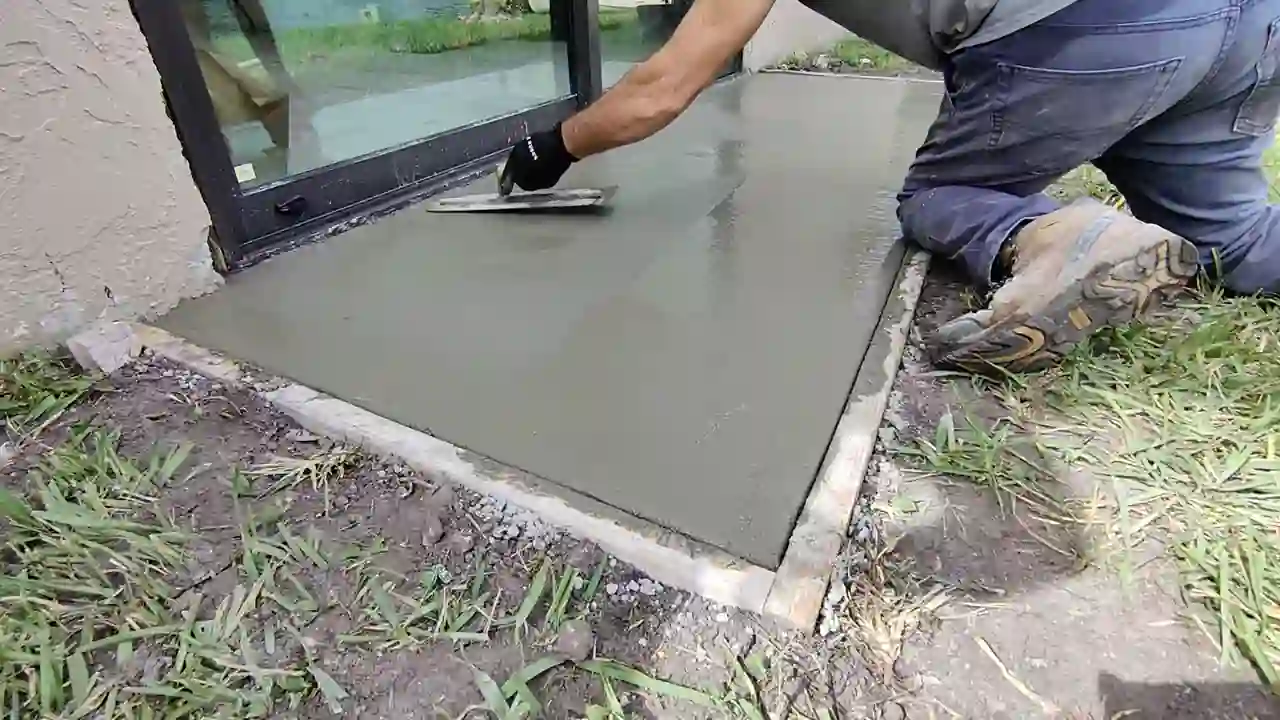
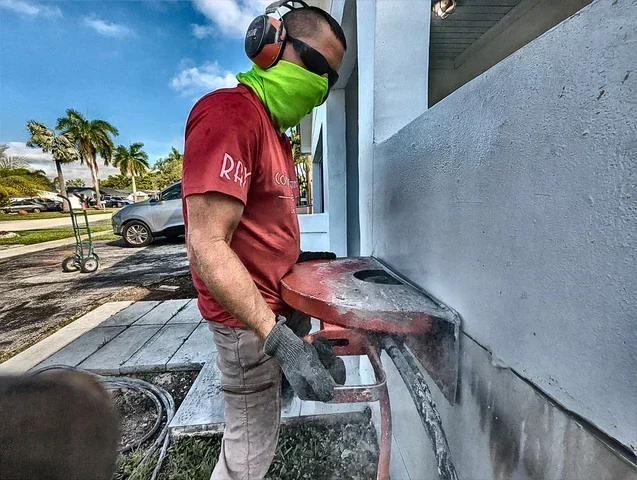
Slab sawing, core drilling, and wall sawing scopes for utility penetrations or foundation modifications are typically faster to permit and execute, but the cost per square foot in Miami Beach runs higher than mainland rates due to the factors already outlined. A standard 4-inch concrete slab removal covering 2,000 square feet will run between $4.80 and $7.50 per square foot for saw cutting and removal, depending on reinforcement density, haul distance, and disposal fees. Post-tension slab work — common in Miami Beach mid-rise and high-rise construction — requires pre-cut tendon surveys using ground-penetrating radar and carries a significant cost premium. For a current breakdown of cutting costs by scope type, the concrete cutting cost guide provides current South Florida market rate data.
Bidding Factors That Separate Competitive Bids from Losing Bids on Miami Beach Projects
Winning a construction and demolition bid in Miami Beach is not simply about being the lowest number on the page. Sophisticated owners and GCs on this island have been burned by underbid demolition scopes before, and they are increasingly evaluating bids on the strength of the assumptions behind the number, not just the number itself.
Waterfront and Coastal Setback Considerations in Your Bid Scope
Miami Beach sits in a coastal high-hazard area. Any demolition or construction work within the Coastal Construction Control Line requires FDEP permitting in addition to municipal permits. Projects on oceanfront or bayfront properties — particularly along Indian Creek, Biscayne Bay, or the Atlantic shoreline — must account for turbidity barrier installation, dewatering restrictions, and marine contractor coordination if any work touches or approaches mean high water. These are not optional line items. For contractors working waterfront scopes, the waterfront concrete cutting resources cover the technical and regulatory specifics in detail.
Noise and Vibration Ordinance Compliance Costs
Miami Beach enforces a strict noise ordinance that limits construction activity hours to 8:00 AM through 6:00 PM on weekdays and 10:00 AM through 6:00 PM on Saturdays, with no work permitted on Sundays. High-vibration equipment — hydraulic breakers, jackhammers, and impact demolition tools — may trigger additional restrictions in residential zones and near historic structures. Vibration monitoring equipment rental for sensitive adjacencies runs $800 to $2,200 per month. Factoring in reduced daily production windows, your labor and equipment cost per square foot increases accordingly. A bid that does not account for these constraints will bleed margin from day one.
Debris Disposal and Recycling Compliance
Miami-Dade County requires construction and demolition debris to be managed under a documented waste management plan on projects exceeding certain thresholds. Concrete debris from Miami Beach projects is typically hauled to certified C&D processing facilities, where tipping fees currently run between $42 and $68 per ton depending on contamination level and material type. A full structural demo of a 10,000 square foot building can generate 400 to 800 tons of debris. That is a $17,000 to $54,000 disposal line item that cannot be estimated with a rough guess. Weigh tickets and disposal manifests are increasingly required for permit closeout, so tracking this cost accurately is both a financial and compliance requirement.
Building a Bid That Holds Up Through Project Completion
The most technically sound bids for construction and demolition work in Miami Beach share a common structure. They identify the structural system and material type explicitly. They include a clearly defined environmental survey scope or note that abatement is excluded pending survey results. They itemize mobilization, permitting, and disposal as separate line items rather than burying them in a lump-sum unit price. And they build a schedule that reflects the actual Miami Beach permitting timeline, not a mainland average. Owners who have managed multiple projects on the island will recognize the difference immediately. Those who have not will learn it the hard way on their first project when the permit takes six weeks instead of two and the abatement contractor is still on site when the demolition crew shows up.
If you are preparing a bid for a construction and demolition project in Miami Beach — or evaluating one — the technical variables covered here represent the baseline due diligence every project deserves. The island environment, the regulatory framework, and the physical constraints of barrier island construction are not obstacles to be worked around in the pricing. They are the pricing. Build accordingly.