Why North Lauderdale Concrete Slab Projects Carry Unique Job Site Risk Profiles
North Lauderdale sits on a mix of older residential developments and active commercial corridors, and the concrete slab work happening across this city reflects that complexity. You’ve got post-tensioned slabs in multi-family builds, fiber-reinforced pads in light industrial zones, and decades-old unreinforced residential slabs that behave unpredictably under blade load. Every one of those substrate types introduces its own hazard category — and a safety plan that doesn’t account for substrate variation before the first blade spins is already behind the eight ball. At Concrete Cutting Miami, LLC, we’ve worked enough South Florida construction projects to know that the difference between a clean cut and a catastrophic kickback often comes down to what was done in the first 20 minutes on site, not the last 20.
OSHA 29 CFR 1926.1153 — Silica Exposure on Slab Cutting Operations
The single most regulated hazard in concrete slab cutting is respirable crystalline silica. OSHA’s construction silica standard, 29 CFR 1926.1153, establishes a Permissible Exposure Limit (PEL) of 50 micrograms per cubic meter of air as an 8-hour time-weighted average. On a North Lauderdale slab cut with a walk-behind gas saw and no engineering controls, ambient silica concentrations can spike to 10–20 times that PEL within minutes. That’s not a minor compliance gap — that’s a citation, a stop-work order, and a potential criminal liability event if a worker develops silicosis.
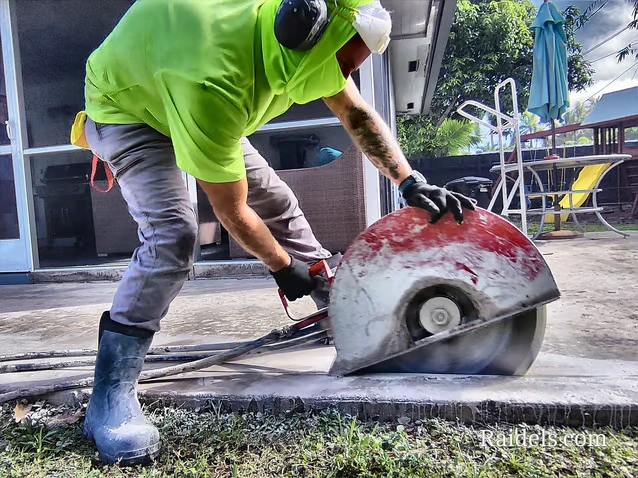
Table 1 of the OSHA silica standard outlines specific engineering controls for each tool type. For walk-behind saws cutting concrete slabs, the required control is either an integrated water delivery system providing continuous wet cutting, or a vacuum dust collection system with a HEPA filter rated at 99 percent efficiency or higher. Both methods must be verified to be functioning before each shift. Water flow rate matters — OSHA’s table specifies that water must be applied at the blade-material interface, not just sprayed in the general vicinity. Our crews operating on job site projects across Broward County carry flow meters specifically to verify delivery rate compliance before a single pass is made.
Respiratory Protection as a Supplemental Layer, Not a Primary Control
A critical mistake made by underprepared contractors is substituting respirators for engineering controls. Under 29 CFR 1926.1153, respiratory protection is a supplemental control — it does not replace wet cutting or HEPA vacuuming. If engineering controls are in place and functioning but exposure still exceeds the Action Level of 25 micrograms per cubic meter, then a half-face APF-10 respirator with N95 or P100 filters is required. If exposure approaches or exceeds the PEL despite engineering controls, a full-face respirator with an APF of 50 is mandatory. Workers must be enrolled in a written respiratory protection program under 29 CFR 1910.134, which includes medical evaluations, fit testing, and documented training.

Post-Tensioned Slab Identification and Catastrophic Failure Prevention
North Lauderdale has a significant inventory of post-tensioned concrete slabs in its multi-family residential and commercial building stock. Cutting into a live post-tensioned tendon without prior identification is one of the most dangerous events that can occur on a concrete cutting job site. When a high-strength steel tendon under 25,000 to 33,000 pounds of tension is severed, it releases stored energy violently — the cable recoils at speeds that have caused fatalities and severe structural collapses.
Before any slab cutting begins on a project where post-tensioning is suspected or confirmed, the following protocol is non-negotiable:
- GPR (Ground Penetrating Radar) Scanning: A 1.6 GHz or 2.6 GHz antenna system must be used to map tendon layout, spacing, and depth across the entire cut path. GPR data should be reviewed by a certified scanning technician, not just an equipment operator.
- Structural Drawing Review: As-built drawings must be obtained from the building department or original engineer of record. GPR results should be cross-referenced against structural documents.
- Tendon Avoidance Marking: All tendon locations must be marked on the slab surface with paint or chalk before any cutting equipment is powered on.
- Structural Engineer Sign-Off: For any cut that removes or interrupts a post-tensioned zone, a licensed structural engineer must review and approve the scope before work begins.
This is not optional protocol — it is the baseline standard for responsible concrete slab work in South Florida’s built environment.
Saw Kickback Mechanics and Blade Pinch Prevention During Slab Demolition
Blade pinch is the leading cause of walk-behind saw kickback on slab cutting jobs. It occurs when the concrete slab shifts or closes around the blade during the cut, creating lateral pressure that arrests blade rotation and drives the saw backward toward the operator. On a 14-inch or 16-inch diamond blade spinning at 3,000–4,500 RPM, a kickback event can generate forces exceeding 500 foot-pounds — enough to throw a 300-pound saw and cause severe operator injury.
Prevention requires understanding slab behavior under cut load. Slabs that are being cut for removal tend to shift as sections lose support. Operators must:
- Use wedges or shims to keep the kerf open behind the blade as the cut progresses.
- Never allow a helper to stand in the direct kickback path — the area directly behind the saw operator along the cut axis is a restricted zone.
- Monitor blade RPM drop as a leading indicator of pinch — a sudden RPM decrease means the blade is being compressed.
- Use segmented diamond blades with appropriate bond hardness for the concrete PSI being cut — a blade that’s too hard for soft aggregate will glaze and bind.
These same mechanical principles apply to pipe cutting Miami operations where embedded conduit or plumbing runs through slab sections, adding additional blade load variability.
Electrical and Utility Clearance Before Any Slab Penetration
Florida Statute 556 requires a Sunshine State One Call notification at least two full business days before any ground-disturbing work. For slab cutting in North Lauderdale, this applies to any penetration that reaches below the slab into the subgrade. But above-slab and within-slab hazards — embedded conduit, in-slab radiant heating, electrical raceways — are not covered by utility marking services. Those require on-site scanning and coordination with the building’s electrical contractor or facilities manager before work begins.
Heat Stress Management on North Lauderdale Outdoor Slab Jobs
Broward County’s climate creates a compounding hazard on outdoor slab cutting jobs that doesn’t get nearly enough attention in safety planning. Wet-cutting a concrete slab in direct sun at 92°F with 85 percent relative humidity while wearing a respirator, hearing protection, and a full-face shield is a heat stress scenario. OSHA’s Heat Illness Prevention guidelines recommend a work-rest ratio of 45 minutes on, 15 minutes off during high-heat conditions, along with mandatory hydration of at least 8 ounces of water every 20 minutes.
Job site supervisors on North Lauderdale slab projects should designate a shaded rest area within 200 feet of the work zone, assign a heat illness lookout for crews of three or more, and establish a heat emergency response protocol that includes the address of the nearest urgent care facility. These aren’t soft recommendations — they’re the framework that keeps production moving without a medical emergency that shuts the entire job down.
For a full breakdown of how we structure safety-compliant workflows across construction services in South Florida, our project team is available to consult on site-specific hazard assessments before mobilization. Every North Lauderdale concrete slab project deserves a safety plan that’s as precise as the cut itself.