Understanding the Core Difference Between Cutting and Coring Before You Touch a Slab
Walk onto any active job site in Miami-Dade County and you’ll hear these two terms used interchangeably by people who should know better. Concrete cutting and concrete coring are not the same thing, they do not serve the same purpose, and choosing the wrong one will cost you time, money, and potentially your structural warranty. This guide breaks down the technical decision-making process that experienced concrete contractors use to determine which method is right for a given application — before the diamond blade ever spins up.
Defining the Methods with Precision — No Vague Language Here
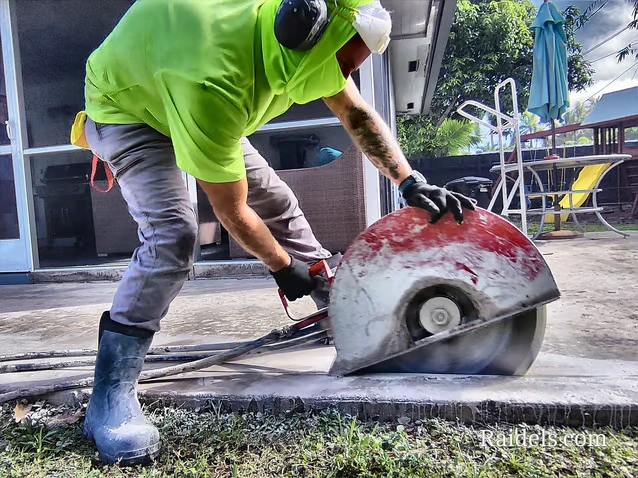
Concrete cutting refers to any process that uses a flat or segmented diamond blade to make linear, planar, or curved cuts through a concrete structure. This includes flat saw cutting (slab-on-grade), wall saw cutting (vertical or angled cuts through walls and elevated decks), wire saw cutting (for massive cross-sections or irregular geometry), and hand saw cutting for tighter access work. The result is always a straight-line removal path — you’re creating an opening, a control joint, a demolition boundary, or a sectioned panel.
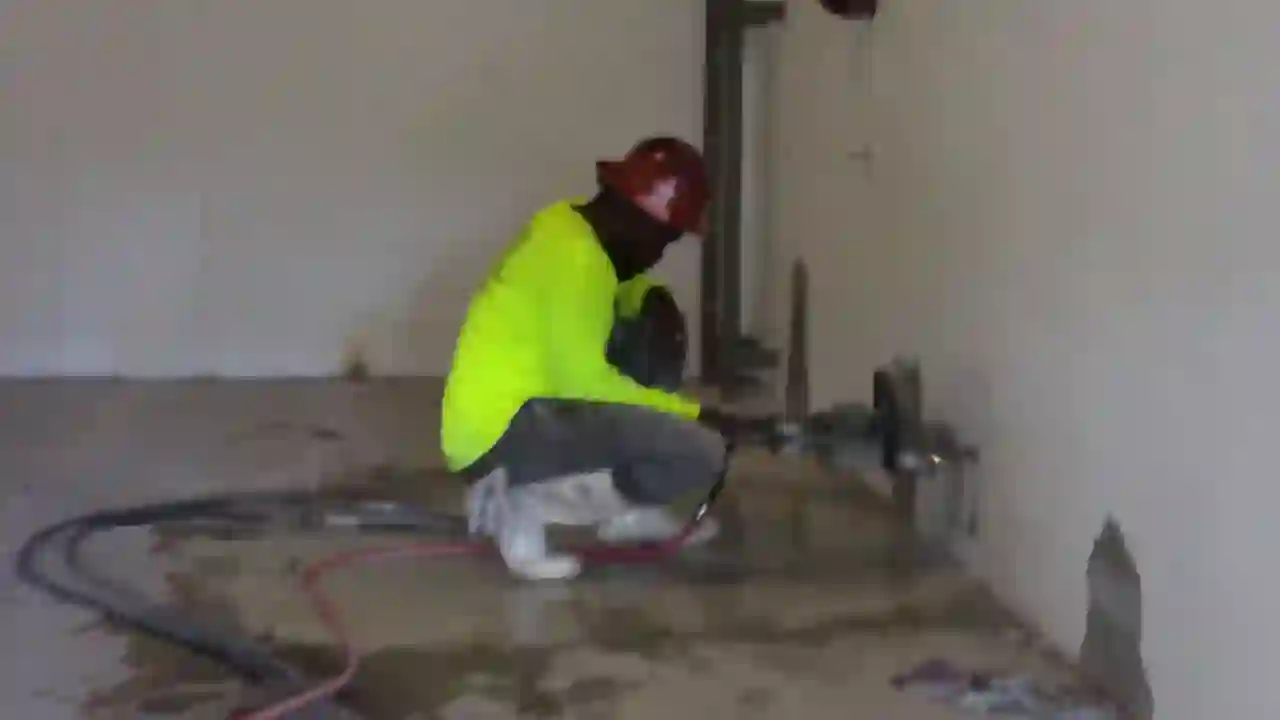
Concrete coring uses a hollow, cylindrical diamond-tipped drill bit to extract a circular plug of concrete. The resulting hole is clean, precise, and round. Diameters typically range from ½ inch to 60 inches depending on the application and the rig used. Core drilling can be performed in any orientation — vertical, horizontal, or at custom angles — and is the only method that produces a finished circular penetration without collateral damage to the surrounding material.
The distinction matters enormously in structural and MEP (mechanical, electrical, plumbing) applications. If you need a concrete hole drilled for a pipe sleeve, a conduit, an anchor bolt, or a drain, coring is the answer. If you need to remove a section of slab, open a doorway, or cut a trench for utilities, cutting is the answer. The problem arises in the gray zone — and that’s where real expertise earns its keep.
When Concrete Cutting Is the Correct Technical Choice
Concrete cutting is the right tool when your project requires material removal along a defined geometric boundary. Here are the specific scenarios where cutting outperforms coring every time:
- Slab demolition and selective removal — When a section of a floor slab, driveway, or parking deck needs to come out cleanly without disturbing adjacent panels, flat saw cutting defines the break line. This is standard practice in concrete removal in Pinecrest neighborhoods where precision around existing landscaping and structures is non-negotiable.
- Wall openings for doors, windows, and HVAC penetrations — Wall saws and hand saws create rectangular or custom-shaped openings in vertical concrete walls. No coring rig can replicate this geometry.
- Control joint installation — Early-entry or conventional flat sawing creates stress-relief joints in new concrete pours to manage crack propagation. This is a cutting-only application.
- Trenching for underground utilities — Cutting parallel lines and removing the core section between them is the standard method for utility trench work in concrete slabs. This often integrates with broader excavation planning on commercial and civil projects.
- Pool demolition and deck removal — Sectioning a concrete pool shell or surrounding deck for removal requires cutting to define manageable panel sizes. See how this integrates into full pool demolition projects where multiple removal strategies are layered together.

When Concrete Coring Is the Only Technically Sound Option
Coring is non-negotiable when the application demands a clean, circular, dimensionally precise penetration with zero collateral cracking. The diamond core barrel removes material in a controlled cylinder, leaving the surrounding concrete structurally undisturbed. This is critical in post-tensioned slabs, reinforced shear walls, and anywhere that impact-based methods would trigger micro-fracturing in the host structure.
- Plumbing and drain penetrations — Any time a pipe needs to pass through a concrete slab or wall, coring is used to create a sleeve hole that matches the pipe’s outside diameter with controlled tolerance. This is one of the most common concrete hole drilling applications in residential and commercial construction across Miami.
- Electrical conduit and data raceway penetrations — Electricians and low-voltage contractors rely on core drilling for clean, code-compliant penetrations that don’t compromise fire-rated assemblies.
- Anchor bolt and rebar dowel installation — Structural engineers specify cored holes for epoxy-set anchors and dowel connections because the hole geometry directly affects load transfer calculations. A jagged, hammered hole invalidates the anchor’s rated capacity.
- HVAC duct and sleeve penetrations through walls and decks — Large-diameter coring (12 to 36 inches) handles these applications where a wall saw would require additional forming and finishing work.
- Geotechnical and forensic sampling — Extracting intact concrete cores for compressive strength testing, carbonation depth analysis, or aggregate inspection requires coring. The extracted cylinder must remain structurally intact for lab testing — cutting destroys the sample.
The Structural Risk Assessment That Changes Everything
Before any method is selected, a competent contractor must assess the structural system being penetrated. This is where most DIY attempts and under-qualified crews make catastrophic errors. Post-tensioned slabs are the most critical scenario. Cutting or coring into a post-tensioned slab without GPR (ground-penetrating radar) scanning and engineering approval can sever a tendon under thousands of pounds of stress — a failure mode that has caused complete slab collapses.
In reinforced slabs, the placement of rebar and the direction of primary reinforcement determine both the method and the orientation of the work. A core drilled through a beam’s tension zone requires engineering sign-off. A flat saw cut that severs multiple continuous rebars without a proper load path analysis is a structural liability. Always pull the structural drawings, always scan before you cut, and always consult the engineer of record when working on load-bearing elements. Understanding the full cost implications of concrete cutting includes accounting for the engineering review and scanning steps that protect both the structure and your liability exposure.
Matching Equipment Specs to the Job Requirement
The method decision also drives the equipment specification, and getting this wrong creates field problems that delay projects and inflate costs.
- Flat saws are rated by horsepower and maximum blade diameter. A 35-hp flat saw with a 20-inch blade cuts to approximately 7.5 inches deep — insufficient for a 10-inch structural slab in a single pass. Underspecifying the saw means multiple passes or incomplete cuts.
- Core drill rigs must be matched to the diameter and depth of the hole. A hand-held drill is appropriate for holes up to 4 inches in diameter in thin slabs. Anything beyond that requires a rig-mounted unit with proper anchoring to maintain perpendicularity and prevent bit wobble, which destroys diamond segments and produces out-of-tolerance holes.
- Wire saws are deployed when neither flat saws nor core drills can handle the cross-section — think bridge piers, massive foundation walls, or submerged concrete. This is a specialized cutting application with its own rigging and tensioning requirements.
- Water management differs significantly between methods. Core drilling produces a slurry that must be contained and vacuumed continuously. Flat sawing generates a high-volume slurry stream that requires surface berms and a vacuum slurry system to prevent stormwater violations — a serious compliance issue on Miami job sites near waterways.
The Decision Framework Used by Experienced Miami Contractors
When a project scope lands on the desk, here is the sequential decision logic that determines method selection:
- Step 1 — Define the geometry of the required opening or penetration. Is it circular? Core drill. Is it linear, rectangular, or a complex polygon? Cutting method applies.
- Step 2 — Identify the structural system. Post-tensioned, conventionally reinforced, unreinforced, or fiber-reinforced? Each has specific constraints on where and how you can cut or core.
- Step 3 — Scan the work area. GPR scanning maps rebar, PT tendons, conduits, and voids before any diamond tool engages the concrete. This is not optional on any project where structural consequences exist.
- Step 4 — Assess access and orientation constraints. Overhead work, confined spaces, and wet environments all influence whether a wall saw, flat saw, core rig, or wire saw is physically deployable.
- Step 5 — Confirm water management and containment plan. Both methods require slurry control. The volume and flow rate differ, and the site plan must account for both.
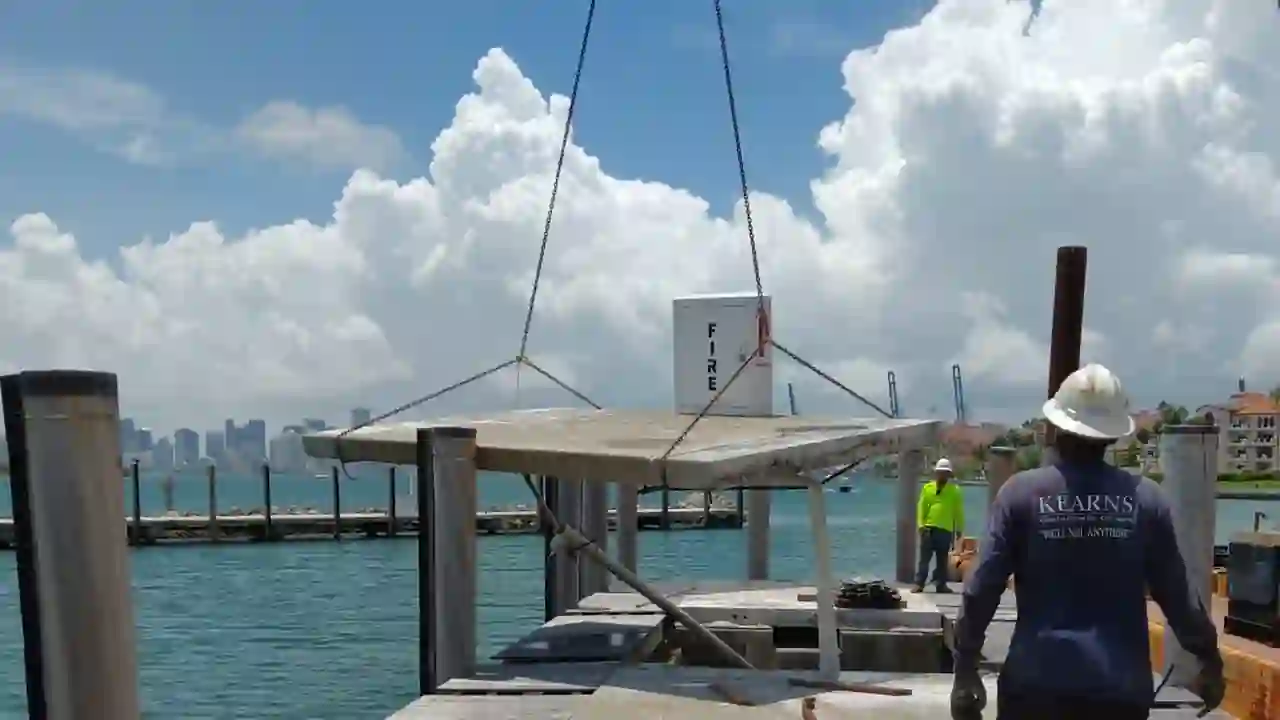
Applying this framework consistently is what separates a contractor who delivers clean, on-spec work from one who creates expensive rework situations. Whether you’re managing a high-rise MEP retrofit in Brickell, a residential pool removal in Coral Gables, or a utility trench installation across a commercial parking lot, the method selection process is the same — disciplined, sequential, and grounded in the physical realities of the structure in front of you. Get that decision right before the equipment leaves the yard, and everything downstream gets easier.