What Makes Wall Sawing Equipment Different from Every Other Concrete Cutting System
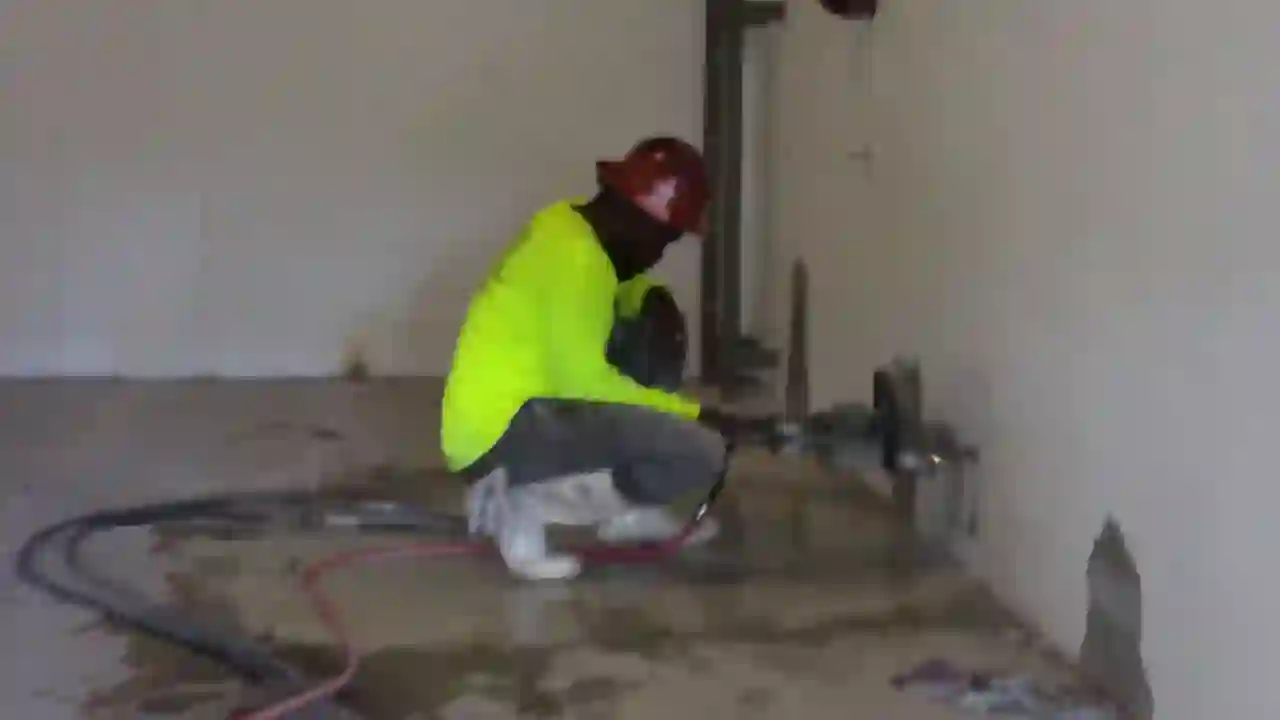
Concrete wall sawing is not a scaled-up version of hand cutting, and it is not a simplified version of wire sawing. It occupies a precise mechanical niche that demands track-mounted, hydraulically or electrically driven systems capable of delivering consistent blade speed, feed pressure, and cooling flow through cuts that can exceed 24 inches in depth. The wall saw — sometimes called a track saw — runs a diamond blade along a rack-and-pinion rail system anchored directly to the concrete face. This configuration eliminates operator fatigue variables, maintains a fixed cutting plane, and allows depth-per-pass control that freehand methods simply cannot replicate. For contractors working on South Florida’s dense concrete structures, from high-rise shear walls to luxury estate foundations, understanding the mechanical specifications of these machines is the difference between a clean, schedule-compliant opening and a catastrophic blade bind.
Hydraulic vs. Electric Drive Systems and the Power Ratings That Actually Matter
The first specification decision in any wall sawing project is drive type. Hydraulic wall saws dominate heavy commercial and industrial applications because their power-to-weight ratio and torque delivery under load are unmatched. A high-performance hydraulic wall saw head — such as units in the 20 to 30 horsepower range — can sustain blade RPM under aggressive feed rates without the voltage drop issues that plague electric motors on long cable runs. Hydraulic systems require a power pack rated to match: a 20 GPM flow rate at 2,500 PSI is a baseline minimum for production wall sawing, with premium units delivering 30+ GPM for larger blade diameters.
Electric wall saws have closed the performance gap significantly. Three-phase electric units operating at 480V with motor ratings between 15 and 25 kW are now viable for interior hospital, school, and high-rise cutting where combustion or hydraulic fluid contamination is unacceptable. The critical spec here is not just kilowatt rating — it is the motor’s ability to maintain torque at low RPM during the initial plunge cut, where blade loading is highest. Variable frequency drives (VFDs) integrated into modern electric wall saw controllers address this by allowing soft-start ramp-up and real-time RPM adjustment without mechanical intervention.
Blade Shaft Speed Ranges and Their Relationship to Blade Diameter
Peripheral speed — the speed at which the blade’s outer edge contacts the concrete — is the governing variable in diamond tooling performance. The industry target for most wall sawing applications is between 18 and 25 meters per second (m/s) at the blade’s cutting edge. Achieving this across different blade diameters requires adjustable shaft RPM. A 24-inch (600mm) diameter blade needs approximately 450 to 600 RPM to hit that peripheral speed window. A 36-inch (900mm) blade operating on the same shaft must run at 300 to 400 RPM. Wall saw heads with fixed-speed transmissions are a liability when your project requires multiple blade sizes. Specify equipment with at least two-speed gearboxes or continuously variable hydraulic speed control.
Track Rail Anchoring Systems and Their Load Distribution Requirements
The track is not a passive component. In wall sawing, the rail system transmits all cutting forces — blade drag, feed pressure, and vibration — back into the concrete face. Anchor bolt spacing must account for the dynamic load cycle, not just static weight. For standard 20 to 30 horsepower wall saw heads, anchor bolts should be spaced no more than 24 inches apart along the rail, using wedge anchors or adhesive anchors rated for shear loads exceeding 2,000 lbs per anchor in the concrete’s specified compressive strength. On structures with lightweight concrete or cellular concrete panels — common in certain Miami-Dade residential builds — anchor pull-out testing before full production cutting is non-negotiable. Compliance with Miami-Dade building codes governs anchor selection and embedment depth in many of these applications.
Rail Flatness Tolerances and Their Effect on Cut Geometry
A wall saw track that is not co-planar with the intended cut face introduces blade deflection. Even a 2mm deviation across a 10-foot rail run can cause the blade to walk laterally under feed pressure, widening the kerf, accelerating segment wear on one side, and potentially causing blade body fatigue. When setting rail on uneven or textured concrete surfaces — rough-form walls, shotcrete, or architectural finishes — use shim plates and a precision level. The acceptable flatness tolerance for production wall sawing is ±1mm over any 3-foot section of rail.
Diamond Blade Segment Geometry for Reinforced Concrete Wall Cutting
Segment design is where blade selection becomes genuinely technical. Wall sawing through heavily reinforced concrete — think 5,000 to 8,000 PSI structural walls with #8 or #10 rebar on 12-inch centers — requires a segment that balances diamond exposure for hard aggregate cutting with enough metal bond toughness to survive repeated rebar impacts without segment loss. Turbo segments with undercut protection are the standard specification for this material profile. The segment height (typically 15mm to 20mm for wall saw blades) determines usable life, while the segment width (3.2mm to 4.5mm for 24-inch blades) controls kerf width and cooling channel efficiency.
For softer, abrasive materials like the oolitic limestone and coral aggregate common in older Miami-Dade construction, a harder bond matrix is required to prevent premature diamond pullout. Conversely, cutting high-strength post-tensioned concrete — frequently encountered in luxury high-rise projects like those at Mansions at Acqualina — demands a softer bond that allows continuous diamond exposure as the matrix wears against the extremely hard aggregate.
Cooling Water Flow Rates and the Consequences of Inadequate Flush
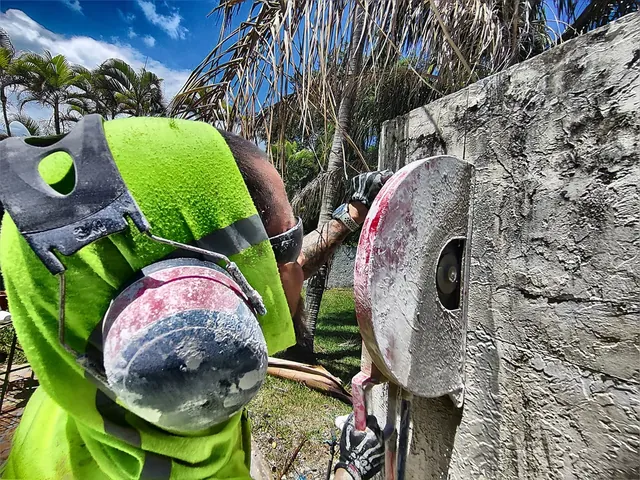
Diamond blades do not fail from cutting — they fail from heat. The water cooling system in wall sawing serves two functions: thermal management of the blade body and segment bond, and flushing of slurry from the kerf. Minimum water flow for a 24-inch wall saw blade is 4 to 6 gallons per minute (GPM), delivered through the blade guard’s integrated ports. At 36-inch diameter, flow requirements increase to 8 to 10 GPM. Insufficient flow causes segment bond softening at the diamond interface, leading to glazing — a condition where the bond melts and re-solidifies over the diamond crystals, effectively turning the blade into a polishing tool rather than a cutting tool.
Slurry management is equally critical on occupied structures. Proper water containment, vacuum extraction systems, and slurry disposal protocols are mandatory — particularly in projects tied to drainage infrastructure. Our team regularly coordinates wall cutting operations with drainage system trenching work where slurry runoff control is part of the project scope.
Blade Core Specifications for Deep Wall Cuts Beyond 18 Inches
As cut depth increases beyond 18 inches, blade core rigidity becomes the dominant engineering concern. A thin, flexible core that performs adequately at 12-inch depth will exhibit lateral deflection and harmonic vibration at 24 inches, causing the blade to wander off the cut line and generating catastrophic stress at the segment-to-core weld. For cuts in the 20 to 30-inch range, specify blades with core thickness no less than 5mm and laser-welded segments with a weld zone tensile strength rated for the blade’s maximum RPM at the intended diameter. Steel grade in the core matters: high-tensile spring steel cores (typically 65Mn or equivalent) outperform standard mild steel in deep-cut applications by resisting the cyclic bending loads imposed by the blade’s entry and exit from the kerf on each pass.
Matching Wall Saw Equipment to Project-Specific Structural Conditions
No two wall sawing projects present identical material conditions. A structural opening cut through a 12-inch tilt-up panel at a logistics warehouse is mechanically distinct from cutting a 24-inch post-tensioned shear wall in a Miami high-rise, which is again distinct from creating equipment access openings in a pool mechanical room. The latter category — where wall cutting intersects with structural load analysis — requires coordination between the cutting contractor and the structural engineer of record, particularly when cuts approach post-tensioning tendons or load-bearing elements. Our detailed protocols for these situations are outlined in our structural load analysis and core drilling protocols for Miami properties.
Landscaping and site development projects introduce their own wall sawing requirements — retaining wall modifications, decorative concrete feature cuts, and boundary wall openings — where blade selection must account for decorative aggregate, colored concrete, or exposed aggregate finishes that demand finer segment geometry to minimize surface chipping. Our landscaping concrete cutting services apply the same equipment rigor to these finish-sensitive applications.
Pre-Cut Inspection Checklist for Wall Saw Setup and Blade Verification
- Blade diameter vs. required cut depth: Confirm blade radius exceeds cut depth by minimum 2 inches to allow full kerf clearance.
- Segment bond hardness rating: Match to concrete PSI and aggregate type per manufacturer’s material classification chart.
- Core flatness inspection: Check blade for dish or warp using a precision straight edge before mounting. Reject any blade with more than 1mm deviation.
- Arbor bore fit: Confirm blade bore matches shaft diameter with zero slop. Loose bore fit causes eccentric rotation and accelerated segment wear.
- Water port alignment: Verify guard water ports are positioned at the 10 o’clock and 2 o’clock positions relative to blade rotation for optimal cooling coverage.
- Anchor torque verification: Torque all rail anchors to manufacturer specification after initial seating. Re-torque after first pass.
- RPM verification under no-load: Confirm shaft speed with a tachometer before blade engagement. Operating above blade’s rated RPM voids segment weld warranty and creates ejection risk.
- Rebar detection scan: Complete GPR or rebar scanner survey of the cut zone before anchoring the rail to avoid anchor placement through reinforcement.
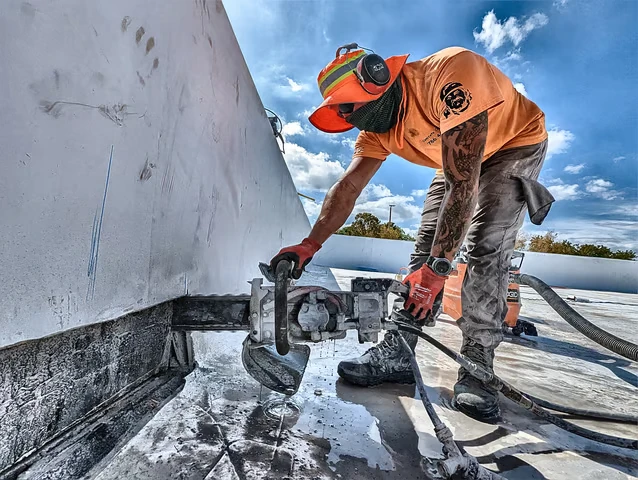
Concrete wall sawing at a professional level is an equipment science before it is a labor skill. The operators who consistently deliver clean, on-dimension, on-schedule cuts are the ones who understand why a blade glazes, what a harmonic vibration in the track rail is telling them, and how to read segment wear patterns to diagnose cooling failures before they become blade failures. Specifying the right equipment and tooling from the project outset — matched to the actual concrete, the actual reinforcement, and the actual cut geometry — is what separates production-grade wall sawing from guesswork with expensive machinery.