Structural Considerations for Pool Demolition in Miami’s Subsurface Conditions
Pool demolition in Miami is not a simple excavation task. The combination of high water tables, limestone bedrock, and aging concrete shells demands a rigorous structural load analysis before any cutting begins. At Concrete Cutting Miami, LLC, we treat every pool removal as a controlled deconstruction project where the integrity of adjacent structures, underground utilities, and soil compaction must be preserved. The first step is a geotechnical survey to determine the depth of the pool shell, the thickness of the gunite or shotcrete, and the presence of reinforcing steel (rebar) that can exceed #5 bars in older installations. Without this analysis, the risk of differential settlement, slab cracking, or even foundation failure rises exponentially.
Load Path Analysis and Structural Redundancy
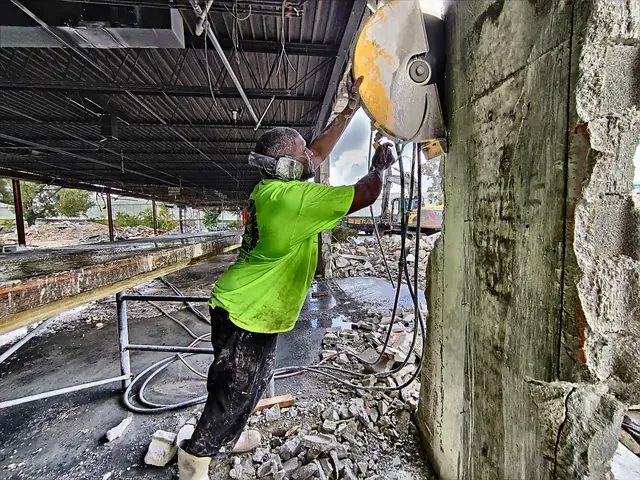
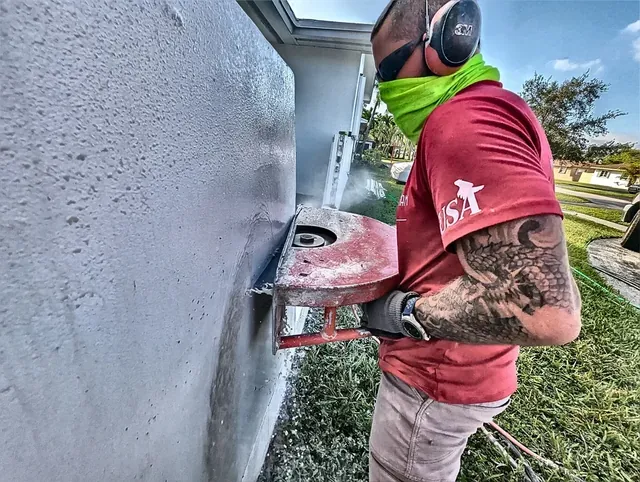
Every pool exerts both dead load (the weight of the concrete shell) and live load (water, soil pressure). When demolishing, we must account for the removal sequence to avoid sudden shifts in lateral earth pressure. Using finite element modeling, we identify the load-bearing walls and columns that may be indirectly supported by the pool structure. In many Miami homes, the pool deck is tied to the main slab via dowels or rebar lapping. Cutting these connections requires precision—typically with a 20-inch hydraulic hand saw or diamond wire saw—to prevent uncontrolled cracking. For more on enlarging openings in existing concrete, see our work on door enlargements with the 20-inch hydraulic hand saw.
Diamond Wire Saw Tensioning for Pool Shell Demolition
The pool shell is often the most reinforced element of a residential property. We deploy diamond wire saws with tensioning systems that maintain constant pressure through the cut, even when the wire encounters rebar or aggregate. The key parameter is wire speed—typically 25–30 m/s for gunite—combined with a hydraulic tensioner that adjusts automatically as the cut progresses. This prevents wire breakage and ensures a clean, straight cut through the shell’s perimeter. For deep pools (8–12 feet), we segment the shell into manageable panels of 4–6 tons each, then lift them out with a crane or excavator. The process is similar to bridge deck demolition but on a smaller scale.
Hydraulic Bursting vs. Saw Cutting: Cost-Efficiency Analysis
For pool demolition, two primary methods compete: hydraulic bursting and diamond saw cutting. Hydraulic bursting uses expansive grout or mechanical splitters to fracture the concrete along predetermined lines. While faster in open areas, it lacks the precision needed near property lines, plumbing, or electrical conduits. Saw cutting, on the other hand, offers millimeter accuracy and minimal vibration—critical when the pool is adjacent to a foundation or pool house. In Miami, where many pools are built on fill that can settle unevenly, we favor saw cutting for the first 2 feet below grade, then switch to hydraulic breakers for the deeper shell. This hybrid approach reduces dust and noise while maintaining structural control. Our fleet of specialized equipment is calibrated for each project’s unique load profile.
Core Drilling for Drainage and Utility Disconnection
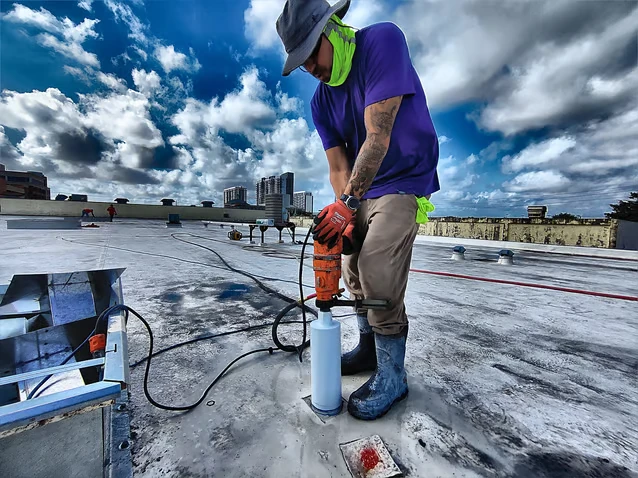
Before any demolition can begin, all utilities entering the pool must be disconnected. This includes main drain lines, skimmer returns, and any electrical conduits for pumps or lights. We use diamond core drills with diameters ranging from 2 inches to 12 inches to create clean, vibration-free penetrations through the pool wall. The core samples also reveal the concrete’s compressive strength and aggregate type, which informs the demolition plan. For example, a pool with high-silica aggregate may require a different diamond grit specification. After disconnection, we seal the core holes with hydraulic cement to prevent groundwater intrusion during excavation. For more on core drilling applications, visit our concrete core drilling Miami tag page.
Rebar Processing and Recycling Protocols
The rebar within a pool shell is typically grade 60 or higher, and its removal must be systematic to avoid injury and maximize scrap value. We cut the rebar at the concrete interface using handheld abrasive saws or hydraulic shears, then sort it by diameter and length. In Miami, recycled rebar is often repurposed for road base or new concrete reinforcement. We also document the rebar layout for structural engineers who may need to verify that no reinforcing steel remains in the soil—leftover rebar can corrode and cause future slab heave. Our team follows the same protocol used in commercial demolition, as seen in our as seen in portfolio of high-profile projects.
Miami-Dade County Permit Requirements for Pool Removal
Pool demolition in Miami-Dade County requires a building permit and, in many cases, a structural engineering plan. The county mandates that the pool be removed to a depth of at least 3 feet below grade, with the remaining void filled with compacted granular fill. If the pool is within 10 feet of a structure, a shoring plan may be necessary. We coordinate with licensed structural engineers to submit load calculations and demolition sequences. Additionally, we must comply with the Florida Building Code (FBC) Chapter 16 regarding excavations and retaining walls. Failure to obtain the proper permit can result in stop-work orders and fines. Our team handles all permitting paperwork, including the required concrete cutting in Miami work logs.
Soil Compaction and Backfill Specifications
After the pool shell is removed, the excavation must be backfilled in lifts of no more than 12 inches, each compacted to 95% Standard Proctor density. We use plate compactors or vibratory rollers depending on the depth. The fill material is typically crushed limestone or recycled concrete aggregate (RCA) to match the surrounding soil’s bearing capacity. A moisture content test is performed before each lift to ensure optimal compaction. This prevents future settlement that could crack driveways or patios. For pools that were originally built with a deep end (over 8 feet), we may recommend a geogrid reinforcement layer to distribute loads more evenly.
Debris Removal and Site Restoration
The final phase involves hauling away the demolished concrete, rebar, and any contaminated soil. We use roll-off dumpsters with capacities up to 40 cubic yards, and we separate recyclable materials on-site. The concrete is crushed and can be reused as base material for the same project if approved by the engineer. After backfilling, we grade the surface to match the existing lawn or hardscape. In some cases, a new concrete slab is poured over the former pool area—this requires a bond beam and control joints to prevent cracking. Our door enlargement expertise often comes into play when integrating new openings into the restored slab.
Cost Factors and Timeline Projections
Pool demolition costs in Miami vary based on pool size, reinforcement density, and access constraints. A typical 20×40-foot gunite pool with standard rebar runs $8,000–$15,000 for complete removal, including permits and backfill. Diamond wire sawing adds $2,000–$4,000 but reduces risk near structures. The timeline spans 5–10 days, depending on weather and utility disconnection delays. We provide a detailed line-item estimate that breaks down equipment hours, labor, and disposal fees. For complex projects involving pool houses or retaining walls, we recommend a structural engineer’s review before signing a contract.
Quality Assurance and Post-Demolition Testing
After backfilling, we conduct a proof roll test using a loaded dump truck to check for soft spots. If any deflection exceeds 1 inch, we excavate and recompact the area. We also perform a moisture content test on the final lift. For pools that were demolished near existing foundations, we install settlement markers and monitor them for 90 days. This level of quality assurance is standard for our specialized equipment operation. Finally, we provide a completion report with photos, compaction test results, and a certification that the pool has been removed in accordance with Miami-Dade building codes.
Why Choose Concrete Cutting Miami, LLC for Pool Demolition
Our team holds certifications in diamond wire saw operation, hydraulic bursting, and core drilling. We carry $2 million in general liability insurance and are licensed by the State of Florida. Every pool demolition project is assigned a project manager who holds a structural engineering background. We also offer a 5-year warranty on backfill compaction—a guarantee that reflects our confidence in the technical protocols described above. For a free site assessment and load analysis, contact us today.