Technical Overview of Concrete Saw Cutting Equipment Classes
Concrete saw cutting is not a single discipline. It is a family of techniques distinguished by drive type, arbor configuration, blade diameter, and the diamond tooling married to that platform. As a senior consultant evaluating contractor proposals across South Florida, the first red flag I look for is a mismatch between the saw class specified and the cut profile required. A 14-inch handheld gas saw cannot replace a 36-inch flat saw on a structural slab pour, and a wall saw rated at 25 HP will stall in heavily reinforced 6,000 PSI mix if the blade segment specification is wrong.
This guide focuses strictly on the iron and the diamond. We are not discussing layout, dust suppression strategy, or scheduling. We are discussing what makes a blade cut, what makes a saw deliver torque to that blade, and how to specify both correctly.
Saw Platform Classifications and Power Delivery
Every concrete saw falls into one of five operational categories, each with distinct horsepower envelopes, RPM ranges, and blade arbor sizes. Selecting the wrong platform is the single most common procurement error on commercial projects.
Walk-Behind Flat Saws (Slab Sawing)
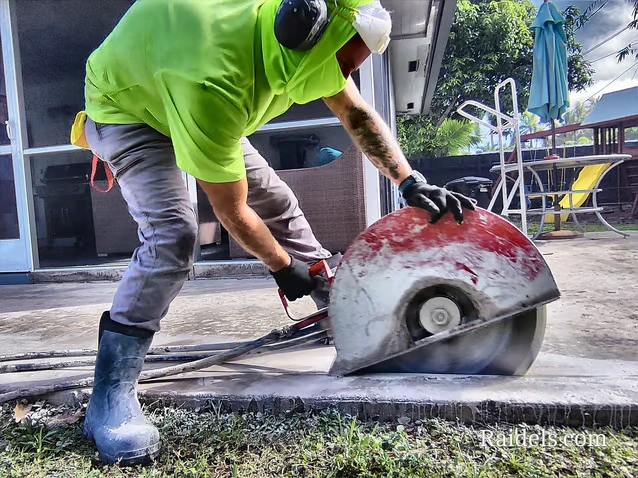
Flat saws range from 13 HP gas-powered units up to 65 HP diesel machines. Blade diameters span 14 to 42 inches, with cutting depths from 5 to 16.5 inches. The critical specification is blade tip speed, which should hold between 9,000 and 13,000 surface feet per minute (SFM) for optimal diamond exposure. A 30-inch blade running at 1,800 RPM delivers approximately 14,137 SFM, which is at the upper edge of efficient cutting and will accelerate matrix wear if pushed harder.
For deeper trenching applications such as utility ingress or expansion joint replacement, diesel platforms with 48 to 65 HP and hydraulic blade depth control are mandatory. Underpowered saws produce glazed blades, where the diamond crystals polish over and stop fracturing aggregate.
High-Frequency Wall Saws
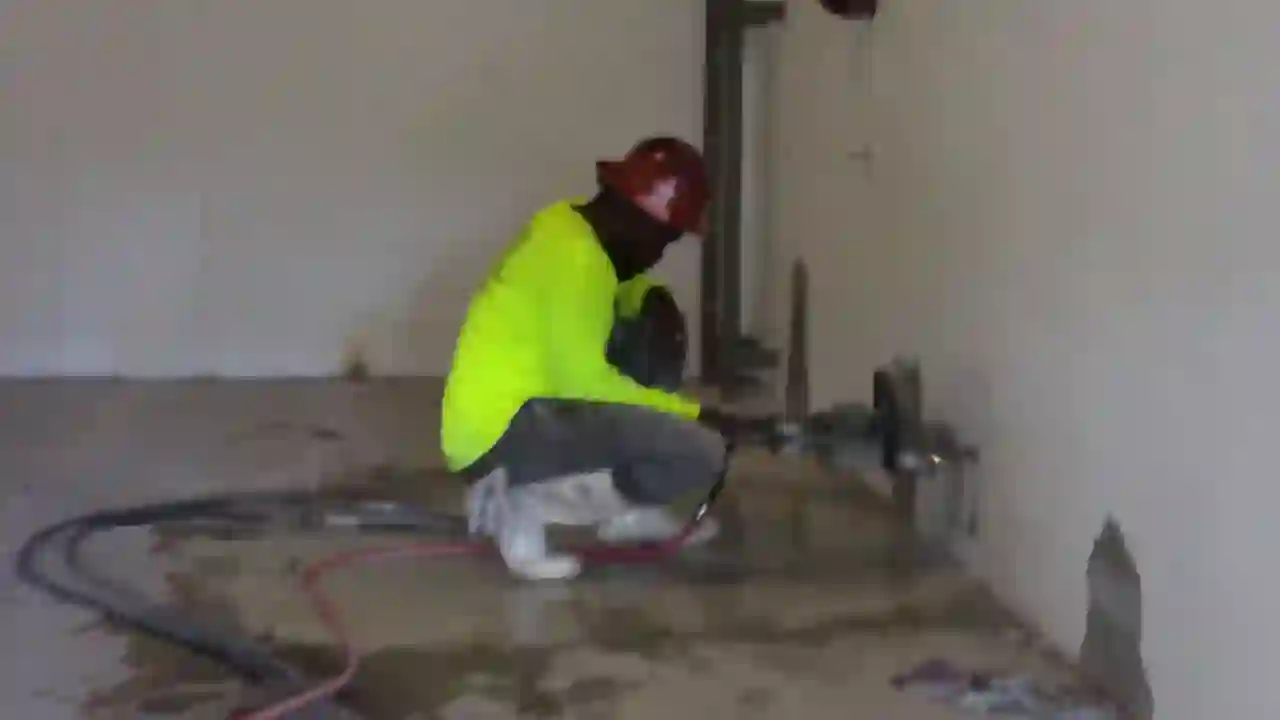
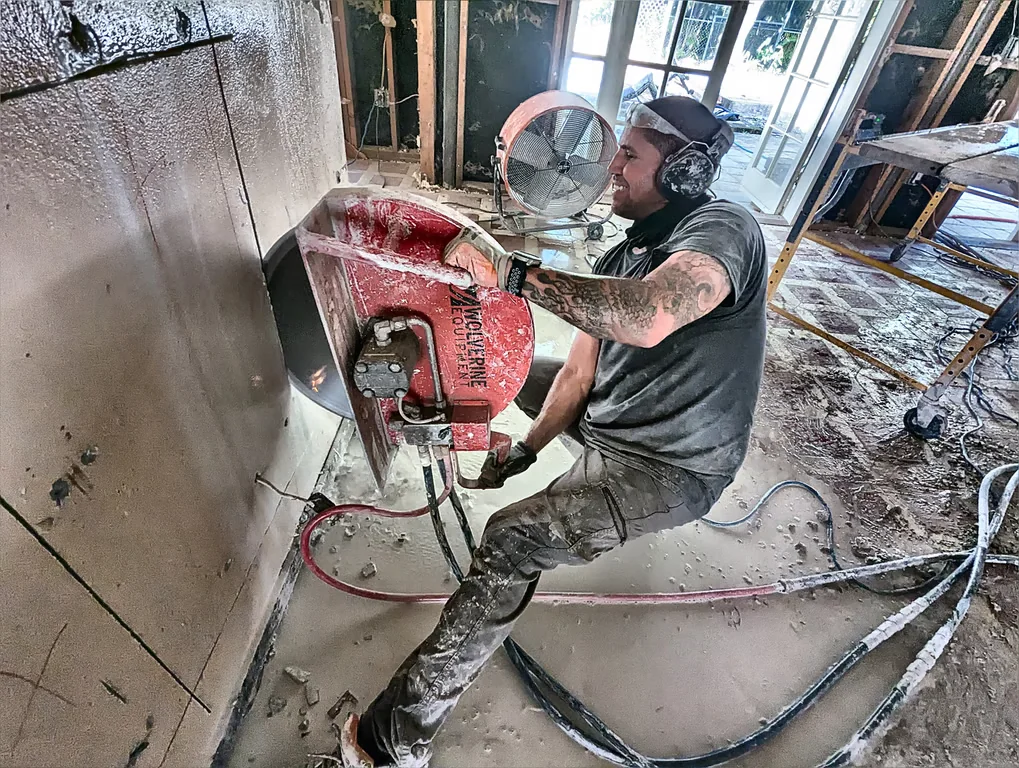
Wall saws are track-mounted, electrically driven systems running at 380V three-phase or hydraulic power packs delivering 25 to 35 HP at the spindle. Blade diameters from 24 to 60 inches allow cut depths up to 27 inches. These platforms dominate new door opening projects and structural penetrations where precision matters more than raw speed. The high-frequency electric drives produce constant torque across the RPM band, which is critical when cutting heavily reinforced sections where rebar load fluctuates.
Handheld Power Cutters
Handheld saws (gas, electric, or hydraulic) run 12 to 16-inch blades at 4,500 to 5,500 RPM. They are appropriate for cuts up to 5 inches deep. Beyond that depth, blade deflection and operator fatigue compromise the cut. These tools are not substitutes for flat or wall saws on production work.
Wire Saws and Core Drills
Wire saws use a 10mm to 11.5mm diamond-impregnated cable tensioned across pulleys, suitable for mass concrete sections exceeding 36 inches in thickness. Core drills, while technically a separate discipline, share diamond tooling principles and are essential for staged cutting sequences such as concrete skylight and roof hatch openings.
Diamond Tooling Architecture and Bond Matrices
A diamond blade is not a homogeneous cutting tool. It is a precision composite consisting of a steel core, segments brazed or laser-welded to that core, and within each segment, synthetic diamond crystals suspended in a metal bond matrix. Understanding bond chemistry is what separates a journeyman from a specifier.
Bond Hardness Versus Aggregate Hardness
The cardinal rule of diamond tooling is inverse pairing. Soft bonds cut hard aggregate. Hard bonds cut soft aggregate. When concrete contains hard aggregate such as granite, quartzite, or trap rock, the diamond crystals dull rapidly. A soft bond matrix erodes at the same rate, exposing fresh diamonds continuously. Conversely, in soft aggregate concretes typical of Miami’s oolitic limestone mixes, a hard bond is required because the matrix would otherwise wash away before the diamonds dulled.
Bond designations typically range from H (hard) through M (medium) to S (soft), with subdivisions like HH, MS, or SS for production blades. Specifying an MS bond on Miami limestone aggregate concrete is acceptable for general work, but switching to an HH bond on a granite-aggregate import mix will tank your cut rate by 40 percent or more.
Diamond Concentration and Mesh Size
Diamond concentration is measured in carats per cubic centimeter, with industrial specifications ranging from 18 to 50 concentration. Higher concentration extends blade life but slows cutting speed and demands more horsepower at the spindle. Mesh size (grit) ranges from 30/40 (coarse, fast cut) to 60/80 (fine, slow but smooth). For demolition work like concrete stair removal, a 30/40 mesh with 24 concentration in a soft bond delivers maximum cut rate.
Segment Geometry and Welding
Segment height (typically 7mm to 15mm) determines blade life. Segment width must exceed core thickness by 0.5mm to 1.5mm per side to provide kerf clearance and prevent core binding. Laser-welded segments are mandatory for wet cutting applications and any cut where blade temperatures exceed 350°C, as silver-brazed segments will release under thermal stress.
Modern segment designs include U-slots, drop segments, and turbo configurations. Drop segments protect the core during plunge cuts. Turbo segments accelerate slurry evacuation in deep cuts. Specifying these features matters when the application demands them.
Matching Blade Specifications to Concrete Conditions
The variables that drive blade selection are aggregate type, concrete age, compressive strength, rebar density, and wet versus dry cutting. Each variable shifts the optimal specification.
Green Concrete Versus Cured Concrete
Green concrete (cut within 1 to 48 hours of placement) requires a blade with hard bond and undercut protection on the segment leading edge. The aggregate is not yet fully bonded to the cement matrix, so soft bonds will lose segments to undercutting. Cured concrete (28+ days) follows standard bond pairing rules.
Rebar Encounters and Steel Cutting
When blades encounter rebar, the cutting mechanism changes from abrasion to a combination of grinding and shearing. Blades rated for heavy rebar use a hybrid bond with finer mesh diamonds and copper-cobalt matrix additives that resist heat buildup. A blade designed purely for plain concrete will lose 30 to 50 percent of its segment height in a single heavily reinforced cut.
Wet Versus Dry Cutting Specifications
Wet cutting blades use lower-temperature bonds and rely on water for chip evacuation and thermal management. Dry cutting blades incorporate cooling slots in the core and use higher-temperature bonds (typically with bronze or tungsten additions) to survive the 600°C+ temperatures generated without coolant. Running a wet-rated blade dry will warp the core within minutes.
Spindle Speed, Feed Rate, and Operator Discipline
Even perfect tooling fails under poor operating parameters. Blade tip speed must remain in the 9,000 to 13,000 SFM window. Feed pressure should be steady, not aggressive. The operator should listen for the saw’s RPM dropping more than 10 percent under load, which indicates excessive feed and potential bond glazing. Proper operator training is part of safe demolition practices and directly impacts tooling economics.
Tracking blade life in linear feet per dollar, rather than blade cost alone, reveals the true economics. A premium blade costing 40 percent more that delivers double the cut footage is the correct procurement decision every time.
Specifying concrete saw cutting equipment is a discipline that rewards precision and punishes assumption. Match the saw class to the cut depth and reinforcement profile, pair the bond matrix inversely to aggregate hardness, and respect the operating envelope of tip speed and feed rate. Get those three vectors right, and the work cuts itself.