The Rebar Challenge in Concrete Sawing
Steel reinforcement transforms concrete from brittle to structural, creating a composite material that laughs at pure tension forces. When your saw hits that first rebar grid, the vibration travels up your arms like an electric shock. Standard blades choke. Motors stall. Sparks fly. This is where amateurs fail and professionals adapt. Cutting through reinforced concrete isn’t optional in Miami’s construction landscape – it’s fundamental to everything from pool deck modifications to high-rise core drilling.
Tool Selection: Matching Blade to Steel and Concrete
Not all diamond blades eat rebar. The secret lies in the segment matrix. Soft-bond blades designed for hard concrete glaze over when hitting steel. You need hard-bond segments with reinforced diamond grit that fracture strategically to expose fresh diamonds. For rebar cutting, specify these blade types:
- Segmented rims: Heat-dissipating gullets prevent steel tempering
- Turbo rims: Serrated edges combine cutting and grinding action
- Hybrid rims: Alternating segments for mixed-material demolition
Blade manufacturers use ISO standards for hardness ratings. For typical #4-#8 rebar (12mm-25mm), select blades with bond hardness 20-35. Higher steel content demands softer bonds. Always verify blade specifications against ASTM A615 rebar grades found in Florida construction.
Step-by-Step: Cutting Concrete with Embedded Rebar
Cutting reinforced slabs requires methodical precision. Rushing guarantees blade destruction or structural compromise.
Step 1: Site Assessment and Marking
Scan with Hilti PS 1000 or GSSI StructureScan Mini XT rebar locators. Mark rebar patterns within 2 inches accuracy using layout dye. Critical step: Identify lap splices – cutting through these triggers catastrophic failure. Adjust cut lines using spray chalk. Document patterns for safety compliance.
Step 2: Blade and Saw Preparation
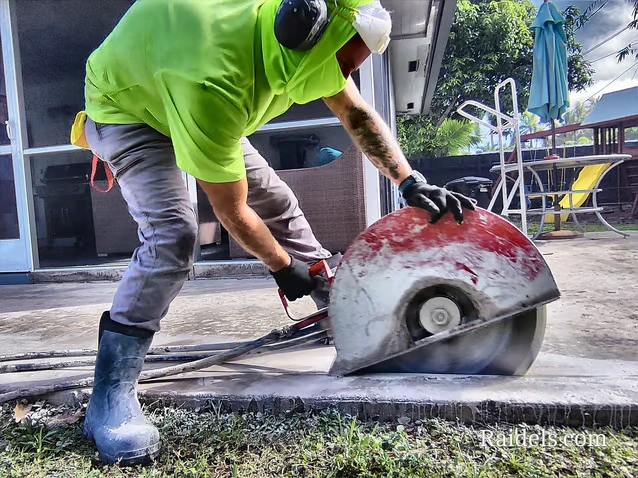
Mount ISO-rated rebar blades with proper flange alignment. Check arbor nut torque (minimum 75 ft-lbs for 14″ blades). Set walk-behind saws to 1-1.5 inch initial depth. Use continuous water feed at 0.5-1 GPM flow rate – dry cutting galvanized rebar releases toxic zinc oxide fumes. Confirm blade rotation matches directional arrows.
Step 3: Initial Concrete Scoring
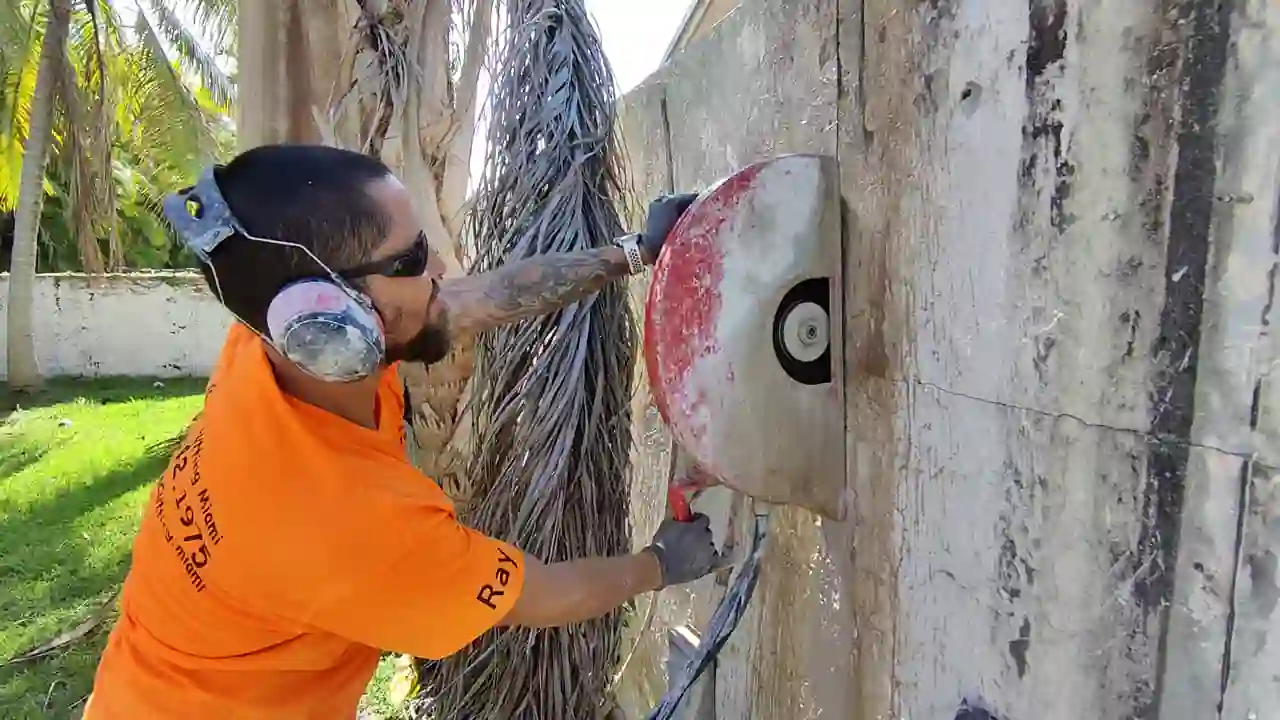
Engage blade at maximum RPM before contacting concrete. Feed rate: 4-8 inches/minute for 3000 PSI concrete. Maintain perpendicular orientation. Listen for pitch changes indicating aggregate density shifts. Reduce feed when hitting river rock or chert. Never force the cut – let diamonds work.
Step 4: Encountering and Cutting Through Rebar
When blade contacts rebar, expect:
- High-frequency vibration in handle
- Pitch drop in engine sound
- Blue-tinted sparks (carbon steel rebar)
Immediately reduce feed rate by 50%. Maintain constant water flow to prevent steel hardening. Apply steady downward pressure without twisting. Cutting #5 rebar (16mm) takes approximately 15 seconds per bar with proper technique. For epoxy-coated rebar, increase water volume to prevent coating buildup on segments.
Step 5: Completing the Cut and Post-Cut Inspection
After clearing rebar layer, return to standard feed rates. Complete final 1/2 inch of cut depth cautiously – secondary reinforcement often hides below primary mats. Inspect cut edges: Clean steel cuts indicate proper technique. Jagged edges or discolored rebar signal overheating. Measure cut depth with calipers to verify full penetration.
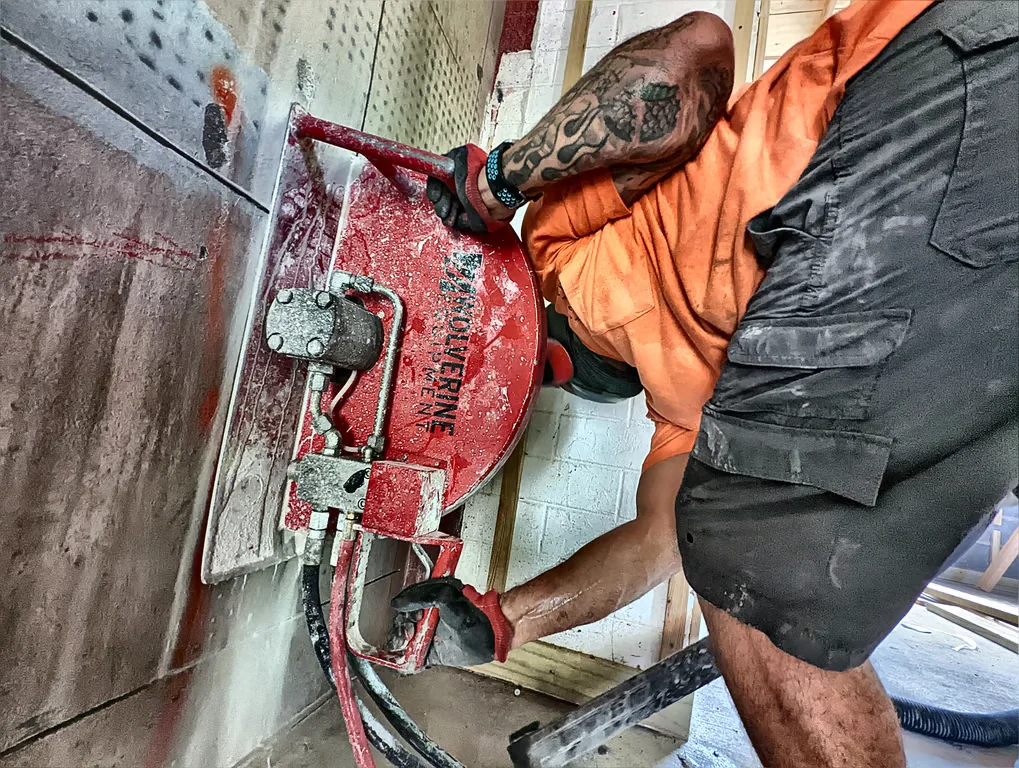
Safety Protocols When Cutting Reinforced Concrete
Rebar cutting amplifies standard concrete saw hazards exponentially. Mandatory precautions include:
- Respiratory protection: N95 minimum for dust, P100 for silica with OV cartridges for metal fumes
- Hearing conservation: 115 dB exposures require dual-protection (earmuffs + plugs)
- Eye protection: ANSI Z87.1+ rated goggles with side shields – standard safety glasses fail against wire fragments
- Blade containment: Always use certified blade guards – shattered segments become shrapnel
Electrical safety becomes critical when water meets saw motors. GFCI protection below 15mA trip rating is non-negotiable. For commercial sawing projects, implement spotter systems for hose/kink monitoring.
Common Mistakes and How to Avoid Them
Watching blades explode costs thousands. Prevent these errors:
- Mistake: Using green concrete blades on rebar
Solution: Switch to multi-purpose or dedicated rebar blades - Mistake: Cutting through lapped splices
Solution: Always scan for overlapping bars before cutting - Mistake: Dry cutting galvanized rebar
Solution: Water flow mandatory – metal fume fever hospitalizes workers - Mistake: Forcing blades through vibration
Solution: Reduce feed rate immediately upon rebar contact
Blade glazing manifests as shiny segments and smoke. Correct by cutting abrasive materials like concrete block to expose fresh diamonds.
Cost Factors in Reinforced Concrete Cutting
Rebar increases cutting costs 25-40% over plain concrete due to:
- Higher blade wear (15-20% faster segment erosion)
- Reduced linear footage per hour
- Mandatory scanning and layout time
- Specialized equipment requirements
For accurate budgeting, provide contractors with:
- Concrete compressive strength (PSI)
- Rebar size and spacing patterns
- Coating specifications (epoxy, galvanized)
- Access constraints
Detailed project specifications prevent change orders. Explore Miami cutting cost variables for commercial project planning.
When Professional Cutting Becomes Essential
Despite proper technique, some scenarios demand certified specialists:
- Post-tensioned concrete (cutting cables triggers explosive failures)
- Structural columns with >3% rebar density
- Cutting within 12 inches of existing openings
- Overhead cutting requiring robotic saws
For complex structural modifications in Miami, engineered cutting plans signed by licensed engineers carry legal weight. Never compromise when dealing with load-bearing elements – the liability outweighs DIY savings.