Technical Overview of Concrete Pipe Cutting in Regulated Environments
Modern concrete pipe cutting requires equal parts mechanical precision and environmental stewardship. In Miami’s sensitive ecosystem – where groundwater tables sit high and stormwater systems connect directly to Biscayne Bay – every cut carries regulatory consequences. This isn’t about choosing between a wet or dry saw; it’s about executing complex infrastructure work without spilling a drop of contaminated slurry into Florida’s protected watersheds.
EPA Compliance Framework for Underground Cutting
The Clean Water Act’s National Pollutant Discharge Elimination System (NPDES) dictates strict turbidity limits for construction dewatering. When cutting submerged or groundwater-saturated concrete pipes, contractors must:
- File Section 404 permits for work impacting wetlands
- Maintain pH-neutral discharge (6.5-8.5) in all captured water
- Test slurry for heavy metals from saw blades or pipe coatings
Our team recently navigated these requirements during a downtown Miami sewer line replacement, using real-time water quality sensors to auto-shutoff pumps when turbidity exceeded 29 NTU.
Hydrodemolition vs. Diamond Wire Sawing: Water Use Compared
Water containment starts at the cutting method selection phase:
- Hydrodemolition: 8-15 GPM flow rates require 360° containment skirts
- Diamond wire sawing: Dry cuts possible with vacuum dust control
- Wall saws: Recirculating water systems mandatory in flood zones
For a recent storm drain core drilling project near Biscayne Bay, we deployed a closed-loop filtration system that reduced freshwater consumption by 78% compared to traditional methods.
Three-Tier Slurry Containment for Urban Job Sites
Miami’s compact worksites demand layered protection:
- Primary barrier: Silicone-injected pipe plugs upstream/downstream
- Secondary capture: Vacuum-assisted cofferdams with 6mm HDPE liners
- Tertiary containment: Geotextile silt fences around entire work zone
This approach proved critical during a pool deck removal adjacent to protected mangroves, where 0.5 microns of sediment could trigger six-figure fines.
Slurry Dewatering Systems That Meet FDEP Standards
Florida Department of Environmental Protection (FDEP) Class III landfill disposal requires
- Centrifugal separation removing particles >50 microns
- Polymer flocculation tanks for colloidal solids
- Filter press producing stackable cake at 15% moisture
These systems process 250 gallons per hour – crucial for large projects tied to Miami’s infrastructure boom.
Real-Time Monitoring for Turbidity and pH Compliance
Wireless sensor networks now enable:
- Continuous TSS (Total Suspended Solids) measurement
- Automated chemical dosing for pH correction
- Cloud-based reporting for FDEP audits
During a recent 96″ culvert modification, this tech prevented 17 potential violations by alerting crews to a failing pump seal within 38 seconds of breach detection.
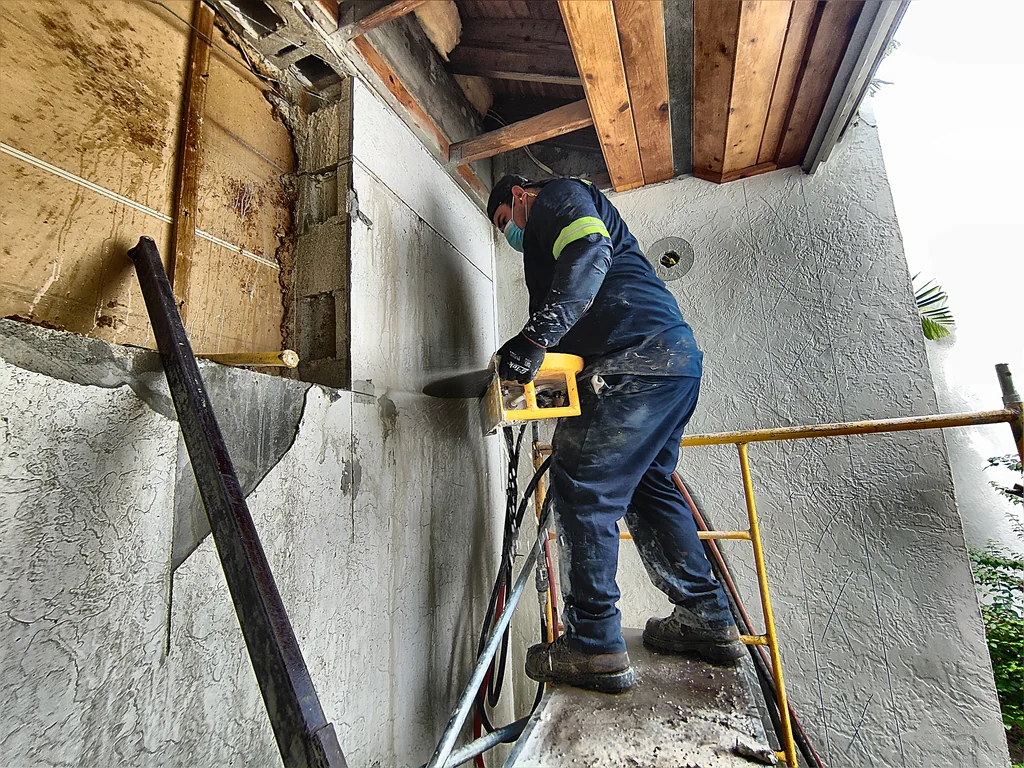
Case Study: Cutting 72″ RCP Under Biscayne Aquifer
Challenges:
- Reinforced concrete pipe 18′ below groundwater level
- Work zone 150 yards from Class I injection well
- 72-hour continuous operation mandate
Solution:
- Installed freeze pipes to create temporary groundwater barrier
- Deployed electric diamond wire saw to eliminate hydraulic fluid risks
- Used negative-pressure containment dome with HEPA filtration
Result: Zero discharge, 14 tons of dewatered slurry shipped to approved landfill, project completed 11 hours ahead of schedule.
Cost-Benefit Analysis: Compliance vs. Violation Penalties
Investing in proper containment isn’t optional – it’s actuarial math:
- FDEP daily fines: $10k-$50k for unauthorized discharges
- Average containment system rental: $1,200/week
- Downtime costs during stop-work orders: $8k+/day
Our data shows proper slurry management adds just 9-14% to project costs while reducing risk exposure by 83%.