What concrete cutting services near me should actually mean beyond the search result
When Miami property owners type concrete cutting services near me into a search engine, the results show contractors sorted by proximity, reviews, and advertising spend. None of these three factors tell you whether the contractor can cut your specific concrete correctly. Proximity means the contractor’s listed address is close to your property — it does not tell you they have a hydraulic wall saw, a GPR scanner, or a blade rated for Miami’s limestone-aggregate reinforced concrete. Reviews tell you past customers were satisfied — but those customers may have had a different type of concrete work than what you need. And advertising spend means the contractor invested in search engine marketing — an indicator of business scale, not of concrete cutting expertise.
The real question behind the search for concrete cutting services near me is: how do I find a contractor who will arrive at my property with the right equipment for my specific concrete, scan the concrete before cutting it, make clean, precise cuts, manage the slurry properly, and complete the work on the schedule and budget they quoted? Answering that question requires evaluating contractors on criteria that a search results page does not show — licensing, equipment, scanning capability, Miami-specific experience, and the contractor’s response when you ask detailed questions about how they will handle your specific job.
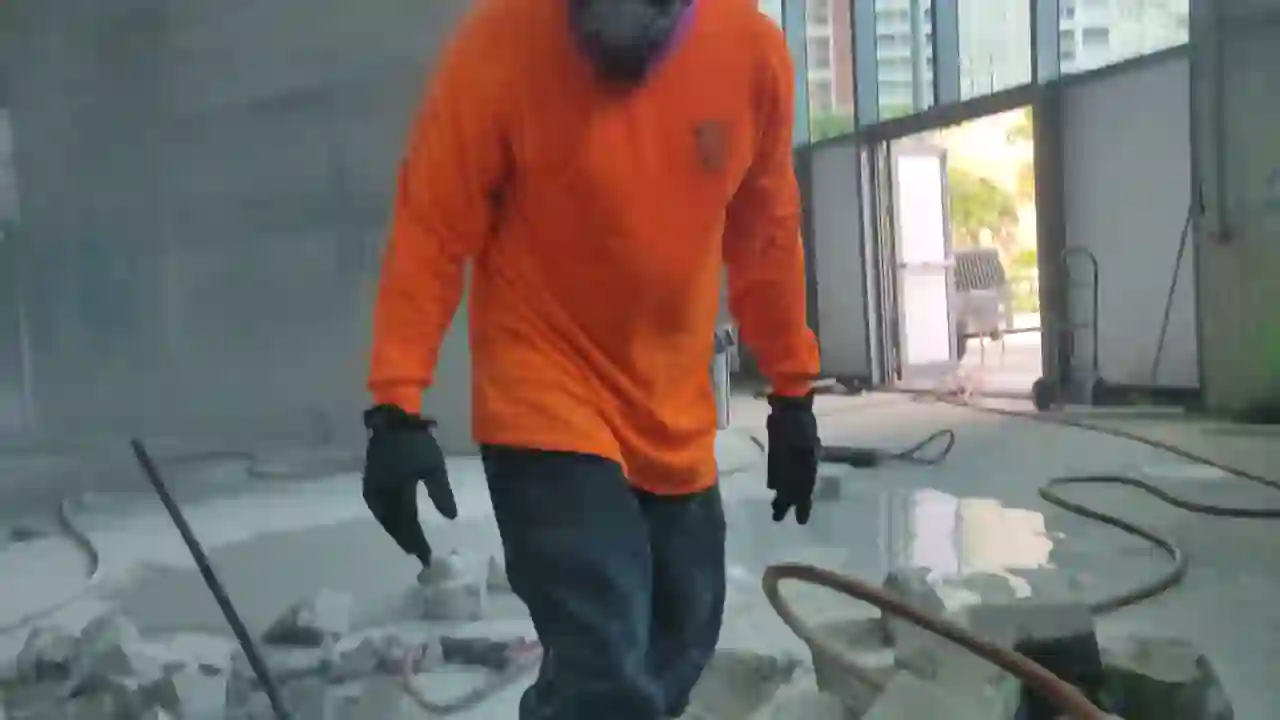
We are a Miami-based concrete cutting company serving the full Miami-Dade County area. We understand both the concrete cutting technology and the specific conditions of Miami construction — the limestone aggregate, the rebar density in hurricane-code construction, the high water table, the post-tension slabs common in South Florida residential and commercial buildings. When someone searches for concrete cutting services near them in Miami and finds us, we want them to know what questions to ask — because an informed customer makes better decisions and gets better results.
How to evaluate Miami concrete cutting services
Licensing and insurance verification
The first filter for any concrete cutting contractor should be licensing and insurance. In Florida, contractors performing concrete cutting and demolition must hold appropriate state and/or local licenses. Verify the license number on the Florida Department of Business and Professional Regulation (DBPR) website. The license must be current and active — not expired, not suspended, not under disciplinary review.
Insurance requirements for a concrete cutting contractor:
- General liability insurance: Minimum one million dollars per occurrence. This covers property damage and bodily injury arising from the contractor’s work. Verify the certificate of insurance directly with the insurance provider — do not rely on a photocopy the contractor provides.
- Workers compensation insurance: Required in Florida for any construction company with employees. Protects you from liability if a worker is injured on your property.
- Additional insured status: Your property or project should be listed as an additional insured on the contractor’s general liability policy for the duration of the work. This provides you direct access to the contractor’s insurance coverage if a claim arises.
Any contractor who resists providing license numbers and insurance certificates should be eliminated from consideration immediately. Licensed, insured contractors provide this documentation as a routine part of the quoting process. It is not a special request — it is standard business practice.
Equipment and capability assessment
Not all concrete cutting contractors own the same equipment. The right equipment for your job depends on what you need cut:
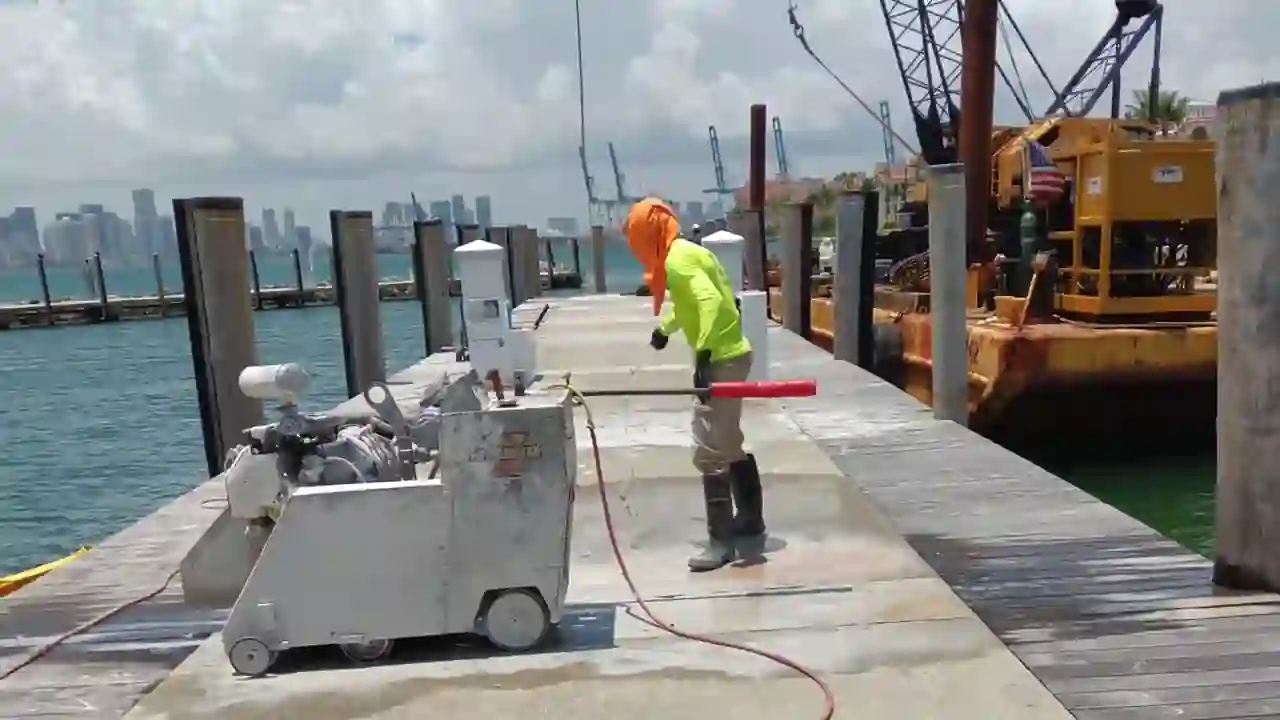
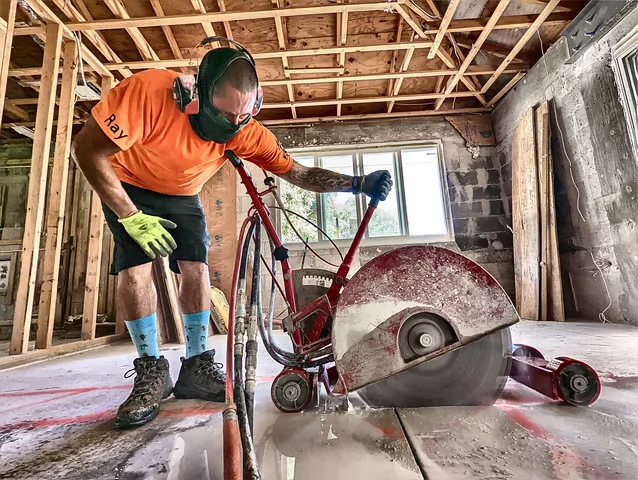
- Flat saw (walk-behind saw): For horizontal slab cutting — control joints, full-depth slab cuts, trench cuts. Blade diameters of 14-36 inches are common in contractor-owned equipment. If you need a slab cut, the contractor should have flat saws.
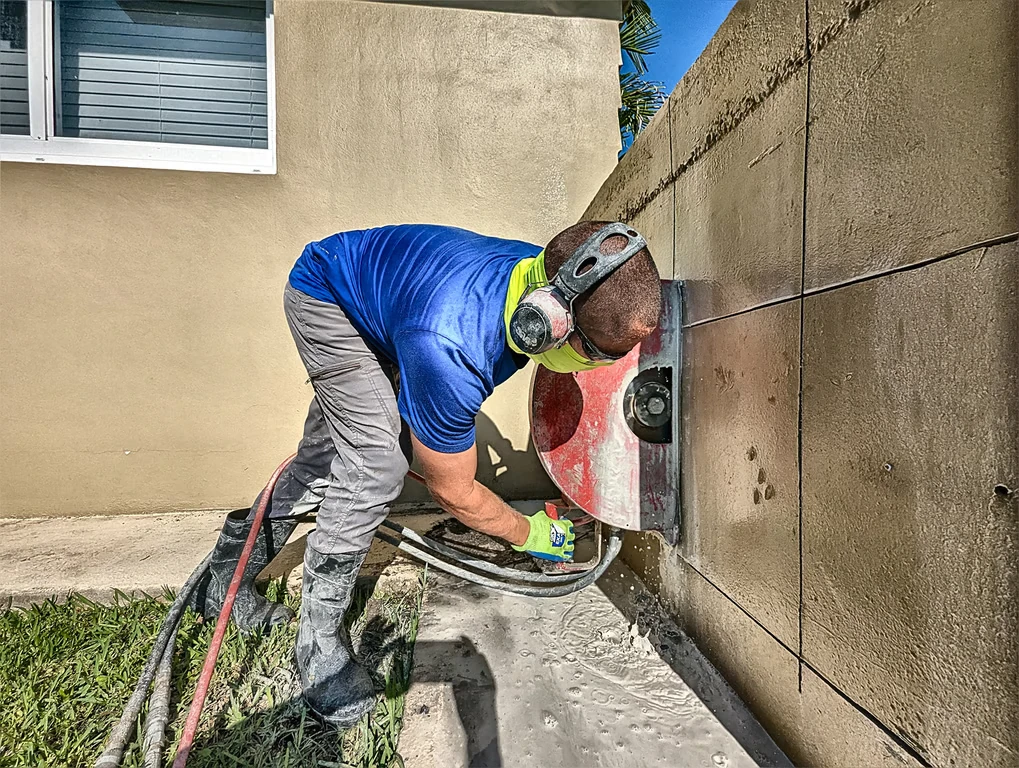
- Wall saw (track saw): For vertical and overhead cutting — door openings, window openings, mechanical penetrations through walls. Wall saws are more expensive and less common than flat saws. A contractor who does not own a wall saw either subcontracts wall cutting (which adds cost and scheduling complexity) or attempts wall cuts with hand saws (which compromises cut quality).
- Core drill: For circular penetrations through walls, floors, and ceilings. Core drills are common equipment, but the range of core diameters the contractor can drill matters — a contractor with a 4-inch maximum core diameter cannot drill the 8-inch HVAC duct penetrations your project may need.
- GPR scanner: For pre-cut scanning to identify rebar, conduits, and PT cables. GPR equipment is expensive, and many contractors do not own it — they subcontract scanning or skip it entirely. Subcontracting is acceptable if it is disclosed. Skipping scanning is not.
- Wire saw: For very thick concrete beyond the reach of circular blades. Wire saws are specialized equipment that many concrete cutting companies do not own. If your project requires wire sawing, this must be confirmed during contractor evaluation.
Ask the contractor what equipment they own versus what they rent or subcontract. Owning equipment is a capital investment in concrete cutting as a primary business. Renting the primary saw for your job may indicate that concrete cutting is an occasional activity rather than a core business.
Miami-specific experience
Miami concrete presents conditions that differ from concrete in other regions. A contractor with extensive experience in Central Florida or out of state may not be familiar with:
- Limestone aggregate: Miami concrete typically uses locally sourced limestone aggregate, which is softer than the granite or river rock used in other regions. Blade selection for limestone requires different bond hardness than for harder aggregates.
- Post-tension slabs: PT slabs are more common in South Florida residential and commercial construction than in many other regions. Cutting into a PT slab requires GPR scanning to locate tendons, and the tendons must not be cut. A contractor unfamiliar with PT construction may not recognize the telltale signs of a tensioned slab or understand the catastrophic consequences of cutting a tendon.
- High water table conditions: Concrete cutting that extends below grade — slab trenching, foundation cutting — encounters groundwater at shallower depths in Miami than in most regions. The contractor must plan for dewatering and for the effects of groundwater on cut quality and safety.
- Miami-Dade permitting and regulations: The county’s permitting requirements, stormwater regulations (slurry disposal), and building code (HVHZ hurricane provisions) affect concrete cutting and demolition. A contractor who does not regularly work in Miami-Dade may not know these requirements.
References and past work
Ask for references from projects similar to yours — similar in scale, in concrete type, and in project type (residential, commercial, industrial). Contact the references and ask:
- Was the work completed on the schedule quoted?
- Was the final cost consistent with the quote, or were there unanticipated charges?
- How did the contractor handle problems that arose during the work?
- Was the job site left clean and the slurry properly managed?
- Would you hire this contractor again for concrete cutting work?
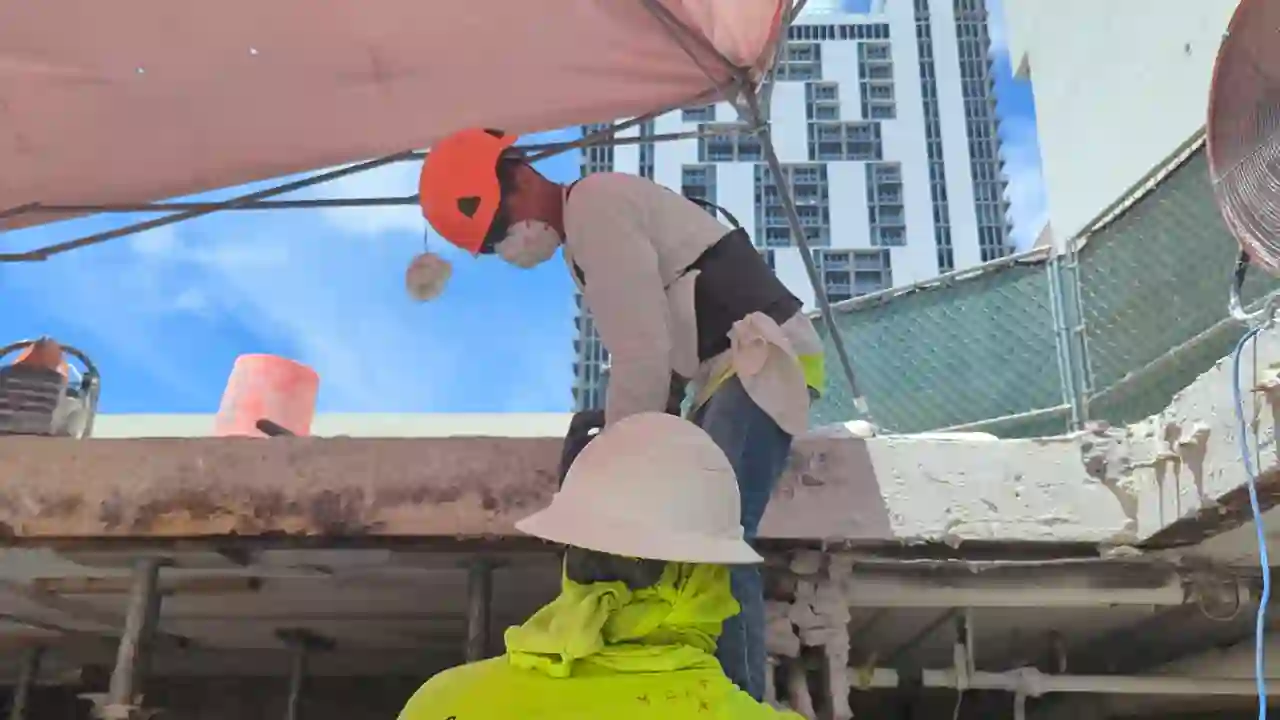
Questions to ask when you contact concrete cutting services
The first phone call with a concrete cutting contractor reveals more about their capability than their website or reviews. Ask these questions:
- “Can you describe the equipment you would use for my specific cuts?” A qualified contractor answers with specific equipment types (flat saw, wall saw, core drill) and blade specifications. An unqualified contractor gives a vague answer or talks about price before discussing method.
- “Do you perform GPR scanning before cutting, or do you subcontract it?” Either answer can be acceptable — scanning is scanning, whether in-house or subcontracted — but the contractor must have an answer. “We do not scan” is disqualifying for any cut deeper than two inches or any wall cut.
- “How do you handle slurry containment and disposal?” The answer should reference Miami-Dade stormwater regulations specifically, not just general practices. A contractor who does not know the local slurry disposal requirements is not a Miami concrete cutting specialist.
- “What is your policy if you encounter unexpected conditions — rebar at a different depth than expected, concrete that is thicker than planned?” The answer should describe communication and a change order process. The contractor should acknowledge that unexpected conditions happen in concrete cutting and describe how they handle them — not claim they never encounter surprises.
- “Can you provide a written quote with a scope of work that lists each cut, its dimensions, the equipment to be used, and what is included and excluded?” A professional contractor provides detailed quotes as standard practice. A contractor who provides only a verbal price or a one-line number is not providing enough information for you to compare quotes or understand what you are buying.
Red flags when evaluating concrete cutting services
- No license or insurance information available: Eliminate from consideration immediately.
- No GPR scanning mentioned or offered: For structural cutting, this is disqualifying. Cutting reinforced concrete without knowing what is inside it is gambling with your property.
- A quote that is dramatically lower than others: Concrete cutting is equipment-intensive and skill-intensive. There is no secret method that allows one contractor to cut the same concrete for half the price of everyone else. The low bidder is cutting something — possibly the scope, possibly the safety measures, possibly both.
- No specific Miami-Dade experience: A contractor who has never worked in Miami-Dade County does not know the local concrete conditions, the local regulations, or the local disposal requirements. They will learn them on your project, at your expense.
- Pressure to decide immediately: Professional concrete cutting contractors provide quotes that are valid for a reasonable period — typically 30 days. High-pressure sales tactics suggesting the price will expire if you do not sign today are a red flag.
Concrete cutting services near you exist because Miami is built on concrete. The question is not whether there is a contractor nearby — there is. The question is whether the nearby contractor is qualified to cut your specific concrete correctly. Use the evaluation criteria above. The contractor who answers your questions with specifics, provides documentation without hesitation, and demonstrates Miami-specific knowledge is the one worth hiring.