What is actually revolutionizing the concrete industry right now — it is not one thing, it is the convergence of four technologies
When people talk about what is revolutionizing the concrete industry, the conversation usually lands on a single technology — robotic demolition, or 3D-printed concrete, or self-healing concrete mixtures. But the real revolution happening on job sites across Miami and the rest of the country is not a single breakthrough. It is the simultaneous maturation of four technologies that, combined, have transformed concrete cutting and demolition from a brute-force trade into a precision engineering service. Diamond cutting technology that can slice through 18 inches of heavily reinforced concrete in a single pass. Ground-penetrating radar that maps every post-tension cable, conduit, and void inside a slab before the first blade touches concrete. Robotic and remote-controlled demolition equipment that keeps operators out of the hazard zone. And environmental containment systems that capture silica dust and slurry at the source, keeping job sites compliant with OSHA and EPA standards that have tightened significantly over the past decade.
In Miami, the impact of these changes is amplified by local conditions. Post-tension slabs are standard in South Florida construction, and the consequences of cutting a tensioned cable are severe. The high water table means slurry containment is not optional — it is enforced by Miami-Dade County environmental regulations, and violations carry fines that can exceed the cost of the cutting job itself. The prevalence of occupied building renovations in Miami’s dense urban environment — condo buildings, hotels, hospitals — means dust control is a non-negotiable requirement, not a preference. The technologies that are revolutionizing the concrete industry nationally are table stakes for operating professionally in Miami. Contractors who have not adopted them are not just behind the industry — they are not legally compliant to perform concrete cutting in Miami-Dade County.
Diamond cutting technology — the blade that changed everything
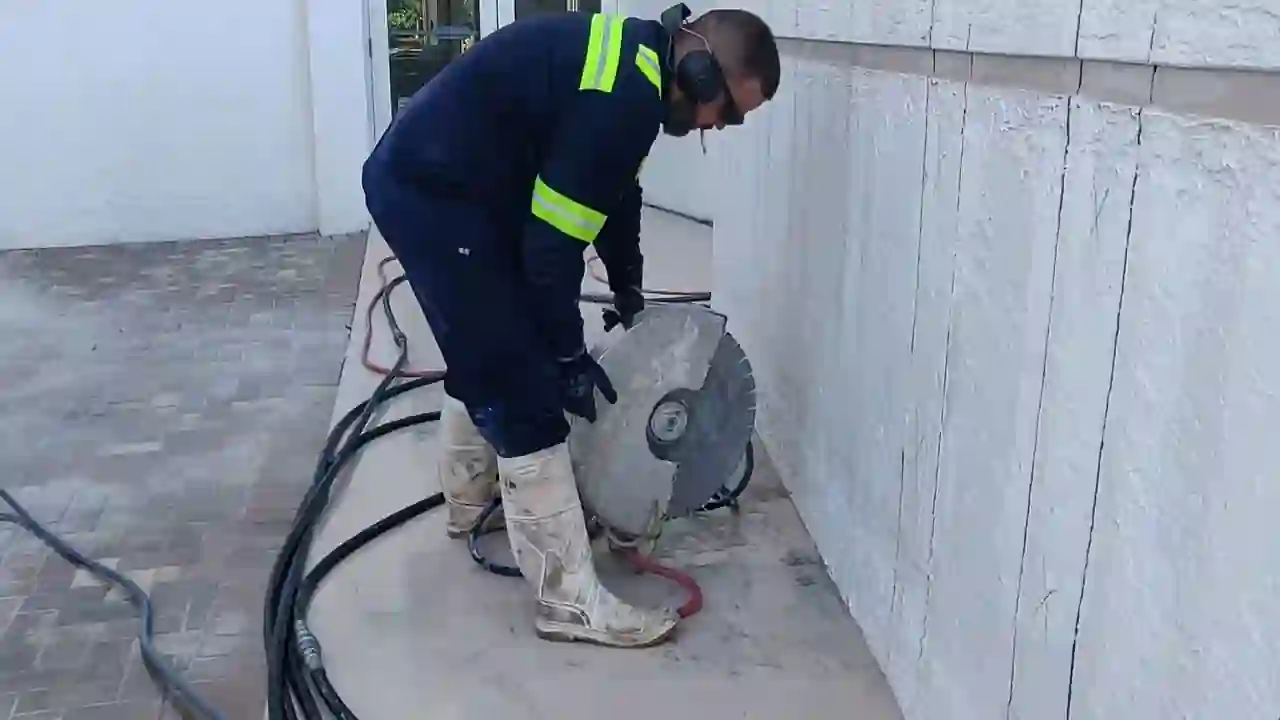
The single biggest factor revolutionizing the concrete industry over the past two decades is the maturation of synthetic diamond cutting technology. Early diamond blades — developed in the 1970s and 1980s — used natural diamonds brazed onto steel cores. They were expensive, wore unevenly, and were unpredictable in reinforced concrete. Modern diamond blades use synthetic industrial diamonds — manufactured under controlled conditions to produce crystals with specific size, shape, and fracture characteristics — laser-welded onto the blade core in engineered segment patterns. The result is a cutting tool that grinds through concrete predictably and efficiently, with blade life measured in thousands of linear feet rather than hundreds.
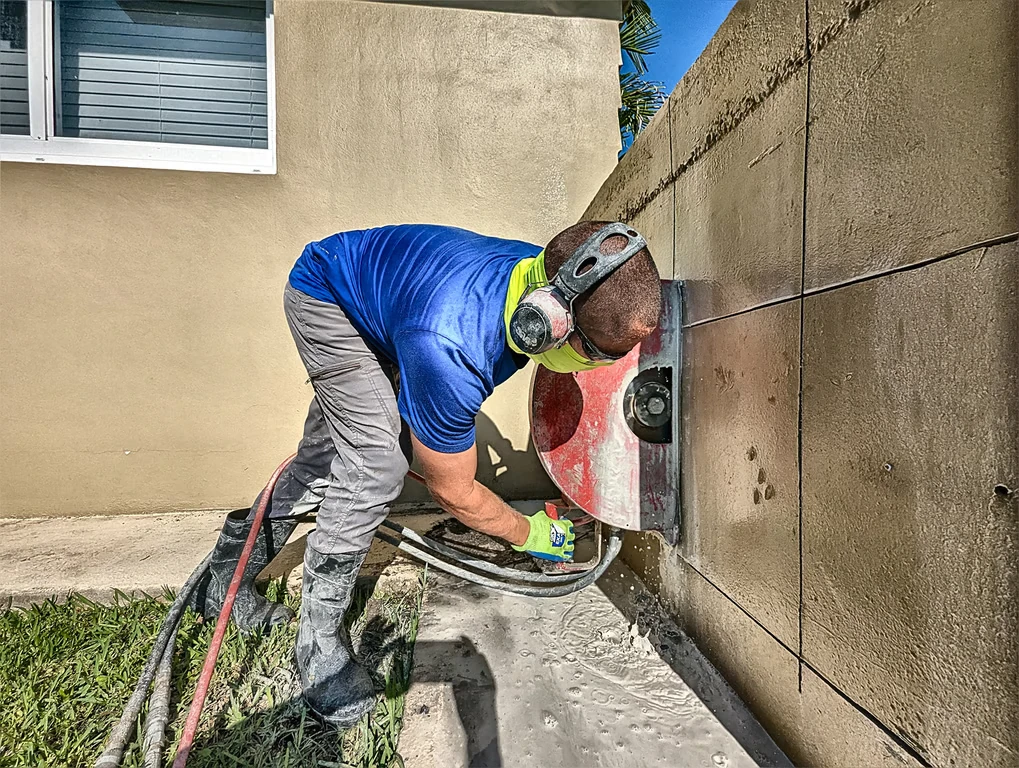
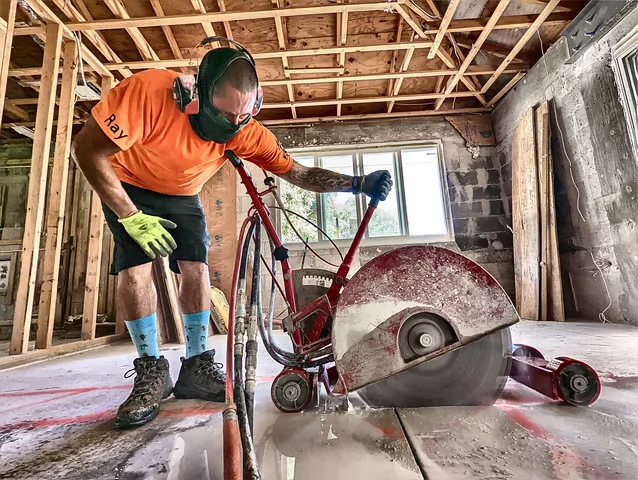
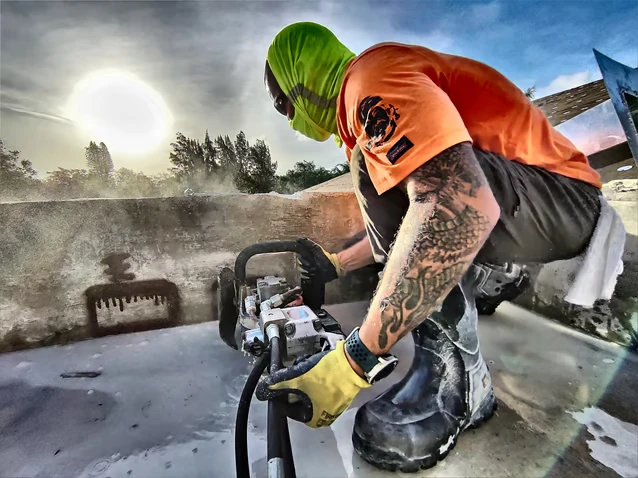
But the blade itself is only part of the story. The saws that drive those blades have evolved in parallel. Hydraulic wall saws now mount to vacuum-anchored track systems that can be set up in minutes instead of hours. The track systems are modular — sections snap together to accommodate any wall height — and the saw head travels along the track under power, producing a cut that is straight and plumb within a fraction of an inch over its entire length. Wire saws use a continuous loop of diamond-impregnated cable pulled through the concrete by a drive unit, allowing cuts through massive concrete sections — bridge piers, dam structures, power plant foundations — that no circular blade could ever reach across. These technologies together mean that virtually any concrete structure, of any thickness, in any location, can be cut cleanly and precisely rather than demolished with breakers and hammers.
GPR scanning — seeing inside concrete before touching it
Ground-penetrating radar is the second technology revolutionizing the concrete industry, and in many ways it is the most important for safety and liability. GPR sends electromagnetic pulses into concrete and measures the reflections that bounce back from changes in material density — rebar, post-tension cables, conduits, voids, and changes in concrete thickness all produce distinct reflection signatures. A trained GPR technician can map the interior of a concrete slab or wall with enough precision to locate PT cables to within a half-inch of their true position. This capability transforms concrete cutting from a calculated risk — “we think there is nothing here” — into a controlled operation — “we know exactly where everything is.”
Before GPR became widely available and affordable, concrete cutters located rebar by chipping away concrete to expose it — a slow, destructive process that was only practical at a few spot locations. Embedded electrical conduits were located by referencing as-built drawings that were frequently inaccurate or missing entirely. Post-tension cables were a constant source of anxiety on every cut. Today, a GPR scan is performed before the saw is even unloaded from the truck. The scan results are marked on the concrete surface, and the cut layout is adjusted to avoid or work around every marked hazard. This technology alone has reduced cutting-related accidents, utility strikes, and PT cable incidents by an order of magnitude compared to the era when cutters relied on drawings and experience alone.
Robotic and remote-controlled demolition equipment
The third technology revolutionizing the concrete industry is the Opening of robotic and remote-controlled demolition equipment. Traditional demolition places an operator in or immediately adjacent to the hazard zone — inside a machine cab during structural demolition, or holding a pneumatic breaker during slab removal. Remote-controlled demolition robots — compact, tracked machines equipped with hydraulic breakers, crushers, or shears — allow the operator to stand at a safe distance with a wireless control console. The robot enters spaces too dangerous or too confined for a human operator: partially collapsed structures, unstable floors, confined underground vaults, and interior spaces with compromised structural integrity.
In Miami, demolition robots are increasingly common on selective demolition projects in occupied buildings — removing concrete walls, slabs, or equipment pads while the rest of the building remains operational. The robot’s electric power eliminates exhaust emissions indoors. Its compact dimensions — many models are under 30 inches wide — allow it to navigate through standard doorways and into elevator cars. Its remote operation means the operator is not exposed to silica dust, falling debris, or the physical strain of operating handheld breakers for hours at a time. The technology is not cheap — a demolition robot costs substantially more than a skid steer with a breaker attachment. But on the right job, it pays for itself in safety, speed, and reduced collateral damage to surrounding structures.
Environmental containment — silica dust and slurry management
The fourth pillar revolutionizing the concrete industry is the regulatory and technological shift toward comprehensive environmental containment on cutting and demolition sites. OSHA standard 1926.1153, which took full effect in 2017 for the construction industry, set a permissible exposure limit for respirable crystalline silica of 50 micrograms per cubic meter of air averaged over an 8-hour shift — a standard that effectively mandates wet cutting or vacuum dust collection with HEPA filtration on virtually all concrete cutting operations. The days of dry-cutting concrete with a gas saw and no dust control are over — not just as a best practice, but as a matter of federal workplace safety law.
In Miami-Dade County, slurry containment adds a local regulatory layer on top of the federal silica standard. Slurry — the mixture of concrete dust and water produced by wet cutting — cannot be allowed to enter storm drains, sanitary sewers, or groundwater directly. It must be captured at the cutting location using vacuum systems or containment berms, collected, and disposed of in accordance with county waste regulations. Professional concrete cutting contractors in Miami invest in slurry containment systems — vacuums, berms, settling tanks — as standard equipment, not as optional accessories. Concrete cutting services that operate without proper slurry containment are not cutting costs — they are cutting compliance, and the liability for environmental violations ultimately falls on the property owner, not just the contractor.
What these changes mean for Miami property owners and contractors
The technologies revolutionizing the concrete industry have practical implications for anyone planning a project that involves concrete cutting or demolition in Miami. The contractor you hire needs to own or have access to diamond cutting equipment appropriate for your project — not just a gas cutoff saw, but hydraulic wall saws, wire saws, and core drilling rigs when the project calls for them. They need to perform GPR scanning before cutting — not as an upsell, but as an essential safety step, especially in Miami’s post-tension construction environment. They need to include silica dust control and slurry containment in their scope of work and their pricing — not treat environmental compliance as a surprise line item added after the contract is signed. And they need to understand Miami-Dade permitting and disposal requirements, because a contractor who does not is operating outside the regulatory framework that governs every legitimate concrete cutting job in the county.
The concrete industry is being revolutionized by technologies that make cutting safer, more precise, and more environmentally responsible than ever before. Contact us to discuss how these advances apply to your specific project and to receive a quote that includes the technology, safety practices, and environmental compliance that define professional concrete cutting in 2026.