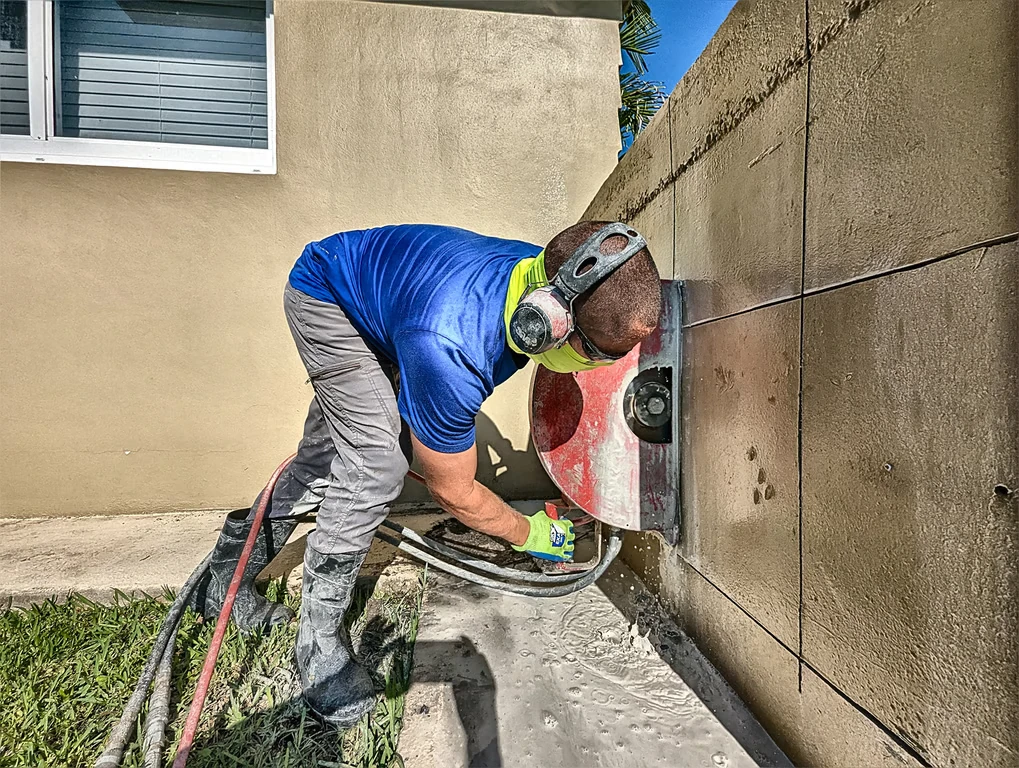
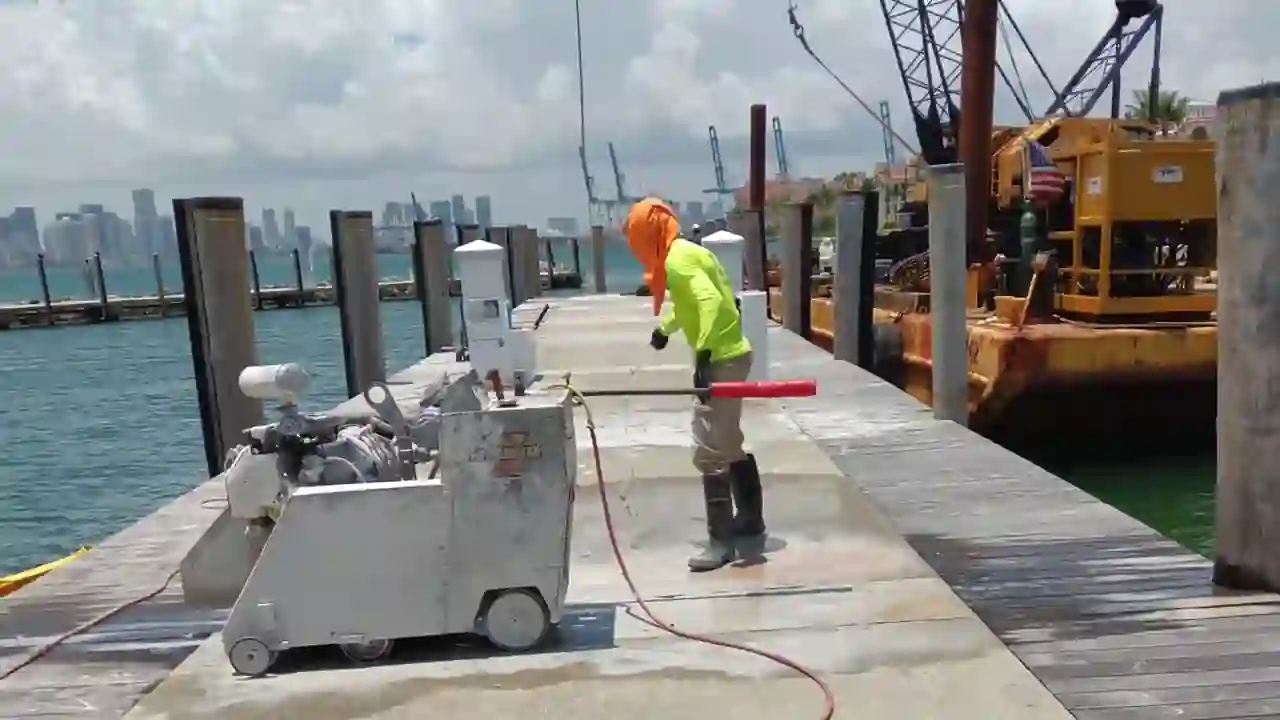
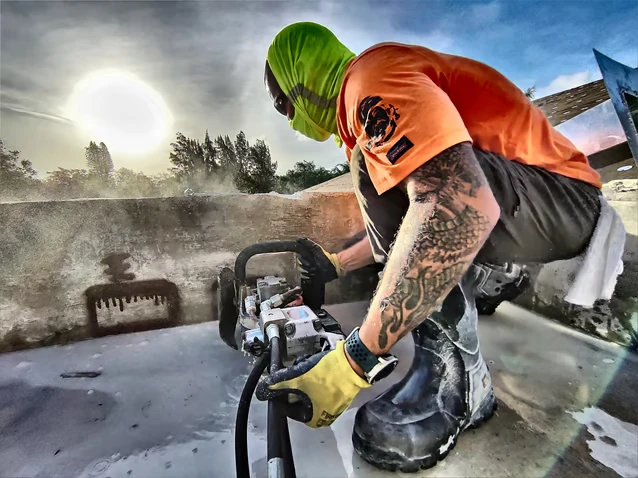
Why demolition in Miami is different from demolition anywhere else in the country
If you have watched a demolition in another city — a house coming down in a day under an excavator, a commercial building disappearing over a weekend — do not assume demolition in Miami works the same way. Miami-Dade County has a combination of factors that make demolition more complex, more regulated, and more expensive than in almost any other metropolitan area in the United States. The construction is different: hurricane-code buildings are built to withstand 180 mph winds, which means the concrete is thicker, the rebar is heavier, and the structural connections are stronger than in non-hurricane regions. The site conditions are different: Miami’s high water table means excavation below a few feet encounters groundwater, and the sandy limestone soil behaves differently under demolition equipment loads than the clay or rock soils of other regions. And the regulatory environment is different: Miami-Dade County’s building department, environmental protection agency, and stormwater management requirements create a permitting and compliance process that is more demanding than in most Florida counties and far more demanding than in non-coastal states.
A Miami demolition contractor does not just knock things down. They navigate a system of permits, surveys, utility disconnections, environmental assessments, and structural engineering reviews that turns demolition from a brute-force activity into a managed, documented, and inspected process. The demolition itself is the visible part. The invisible part — the paperwork, the planning, the regulatory compliance — is what determines whether the demolition happens on schedule and without enforcement actions.
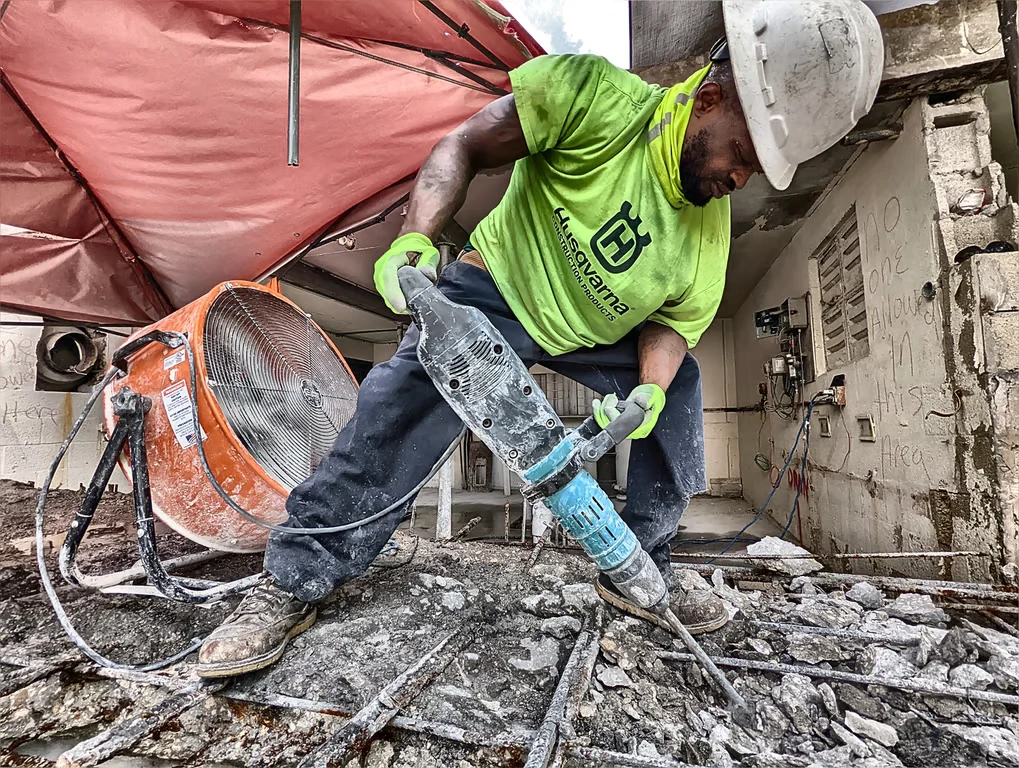
We have been doing demolition in Miami-Dade County for years. We know the permit desk staff by name. We know which demolition scenarios trigger which additional reviews. We know how to write a demolition plan that gets approved on the first submittal. Demolition in Miami is a local specialty, and contractors who do not know the local process learn it the hard way — with stopped work, code enforcement citations, and angry property owners wondering why their project is stalled.
The Miami demolition permit process, step by step
Pre-application requirements
Before a demolition permit application can be submitted to Miami-Dade County, several prerequisite items must be completed:
- Property survey: A current survey showing the structure to be demolished, property boundaries, easements, and adjacent structures. For partial demolition, the survey must show which portions of the structure are being demolished and which are being preserved.
- Asbestos survey: Florida law requires an asbestos survey by a licensed asbestos consultant for demolition of any commercial building regardless of age, and any residential building constructed before 1981. The survey identifies asbestos-containing materials (ACMs) that must be abated by a licensed asbestos contractor before demolition begins. If the survey finds ACMs, the abatement must be completed and cleared by air monitoring before the demolition permit is issued.
- Utility disconnect confirmation: Letters or work orders from FPL (electric), the gas utility, the water utility, and the telecommunications providers confirming that services have been properly disconnected at the street or property line. The utility companies have their own processes and timelines for disconnection — the demolition contractor cannot control when FPL schedules a disconnect, and the permit application cannot proceed without the confirmation.
- Structural engineering review (partial demolition only): If demolishing part of a building while preserving the rest, a Florida-licensed structural engineer must review the demolition plan and provide a stamped letter confirming that the remaining structure will be stable and compliant with the Florida Building Code after demolition. The engineer’s review considers the demolition sequence, any temporary bracing or shoring required during demolition, and the permanent condition of the remaining structure.
Demolition permit application
The permit application package submitted to Miami-Dade County includes:
- A completed permit application form with the property address, folio number, owner information, contractor information, and project description
- The site plan showing the demolition scope, equipment access, debris staging area, erosion control measures, and property boundaries
- The demolition plan describing the method (mechanical, selective, manual), the sequence of demolition, the equipment to be used, and the safety measures
- The waste management plan identifying the permitted disposal facilities for demolition debris and describing recycling or material recovery practices
- The erosion and sediment control plan demonstrating how soil and debris will be prevented from leaving the site
- The notice of commencement, recorded with the county, which establishes the start of the project for lien purposes
- All prerequisite documentation: asbestos survey, utility disconnections, engineering review
Permit review and issuance
Miami-Dade County permit review for demolition typically takes two to four weeks for a complete application, though this timeline varies with county workload and the complexity of the demolition. Expedited review may be available for an additional fee. During review, the county may issue comments requiring additional information or plan revisions. Once all comments are resolved and the permit is approved, the permit is issued and demolition can begin.
Miami-specific demolition challenges
Hurricane-code construction
Buildings constructed under Miami-Dade’s High-Velocity Hurricane Zone (HVHZ) provisions are built to resist extreme wind loads. This means stronger structural connections, more robust reinforcement, and in many cases heavier structural elements than comparable buildings in non-hurricane regions. Demolishing a Miami building takes more equipment time and more impact energy than demolishing a similar-size building elsewhere because the structure was designed not to come apart. The rebar in Miami concrete is typically denser and heavier than in other regions, and the concrete strength is typically higher. Demolition contractors from outside the region who quote based on their experience in other markets frequently underestimate the time and equipment required to demolish Miami construction.
High water table
Demolition that involves below-grade work — foundation removal, pool demolition, basement demolition — encounters Miami’s high water table. Depending on the property location and the time of year, groundwater may be encountered at depths of 3-6 feet below grade. Excavation below the water table requires dewatering — pumping groundwater out of the excavation during the work — and the dewatering must be managed so that the pumped water does not carry sediment into storm drains (requiring a dewatering permit and sediment filtration). The high water table also affects backfill compaction — saturated soil cannot be compacted to the same density as dry soil — and requires that backfill operations be timed with groundwater conditions.
Dense urban environment
Much of Miami’s older construction is on small lots with minimal setbacks from property lines and adjacent structures. Demolishing a building with zero-lot-line construction on both sides requires methods that protect the neighboring structures from vibration, flying debris, and structural damage. This may require hand demolition along property lines, vibration monitoring, and protective barriers — all of which increase cost and time compared to demolition on a large, open lot.
Stormwater and environmental regulations
Miami-Dade County’s location between Biscayne Bay and the Everglades makes environmental regulation of demolition particularly strict. Demolition debris, sediment, and slurry must be prevented from entering waterways — which in Miami means almost any surface drainage eventually reaches a bay, canal, or wetland. Erosion control is not a suggestion; it is an enforced requirement with significant penalties for violations. Contractors must plan for containment of all demolition byproducts and for proper disposal at permitted facilities.

Demolition debris disposal in Miami
Demolition generates waste that must be managed through Miami-Dade County’s waste management system. Concrete, masonry, asphalt, and similar inert materials are classified as construction and demolition (C&D) debris and can be disposed of at permitted C&D facilities or recycling centers. Many of these facilities crush concrete for reuse as aggregate, separating rebar for scrap metal recycling. Wood, drywall, roofing, and other non-inert C&D materials go to different facilities or different processing lines within C&D facilities.
Hazardous materials — asbestos, lead-based paint, mercury-containing devices, fluorescent lamps, refrigerants — must be removed before demolition and disposed of through licensed hazardous waste disposal channels. The asbestos survey and any lead-based paint assessment determine what hazardous materials are present and what abatement is required before demolition.
Demolition contractors include disposal costs in their quotes based on the estimated debris volume and the tipping fees at the specific disposal facilities they use. Disposal costs are a significant component of total demolition cost — 20-30 percent is typical — and vary with the distance from the demolition site to the disposal facility, the type of debris, and the current tipping fee rates.
Choosing a Miami demolition contractor
Select a demolition contractor based on Miami-Dade-specific experience, not on price alone. The questions to ask:
- “How many demolition permits have you pulled in Miami-Dade County in the last two years?” A contractor who regularly works in the county knows the permit process, the reviewers, and the common issues that delay permit approval.
- “Have you demolished structures similar to mine in terms of construction type and lot conditions?” Demolishing a wood-frame house on a large lot is different from demolishing a concrete block commercial building on a zero-lot-line site. The contractor’s experience should match your project’s conditions.
- “What is your plan for my specific site constraints?” A qualified contractor identifies the constraints — property line proximity, access limitations, neighboring structures — and describes how they will be managed, not dismissed as unimportant.
- “How do you handle the asbestos survey requirement?” They should describe a relationship with a licensed asbestos consultant and a clear process for obtaining the survey and, if necessary, arranging abatement before demolition begins.
Demolition in Miami is a regulated, documented, multi-step process that rewards experience and punishes shortcuts. The right contractor navigates the process efficiently because they have done it many times before. The wrong contractor learns on your project while your timeline slips and your costs increase. Hire for Miami-Dade experience — it is the factor that most directly determines whether your demolition happens on the schedule and budget you planned.