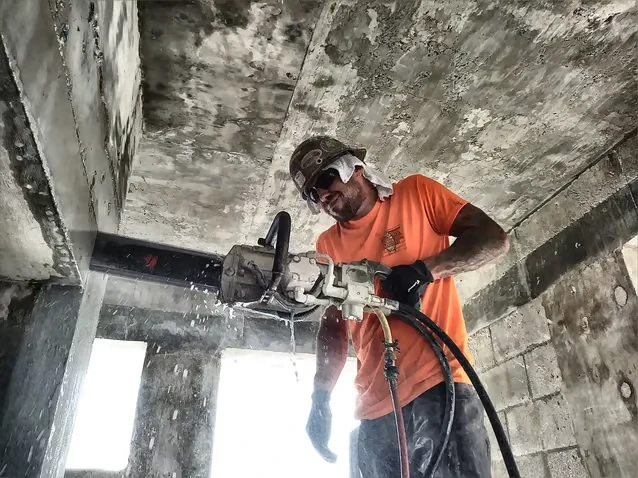
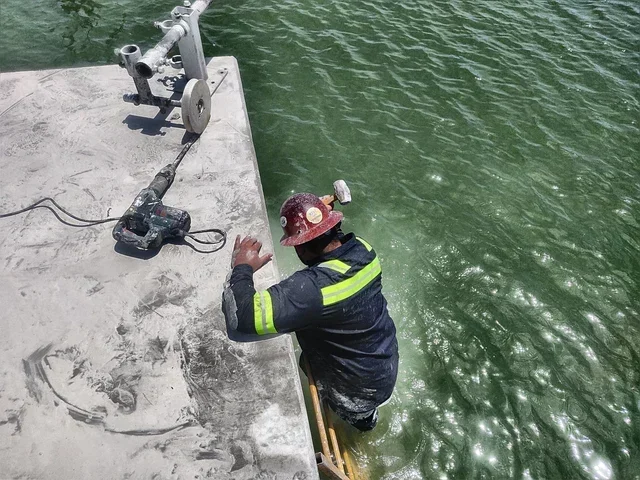
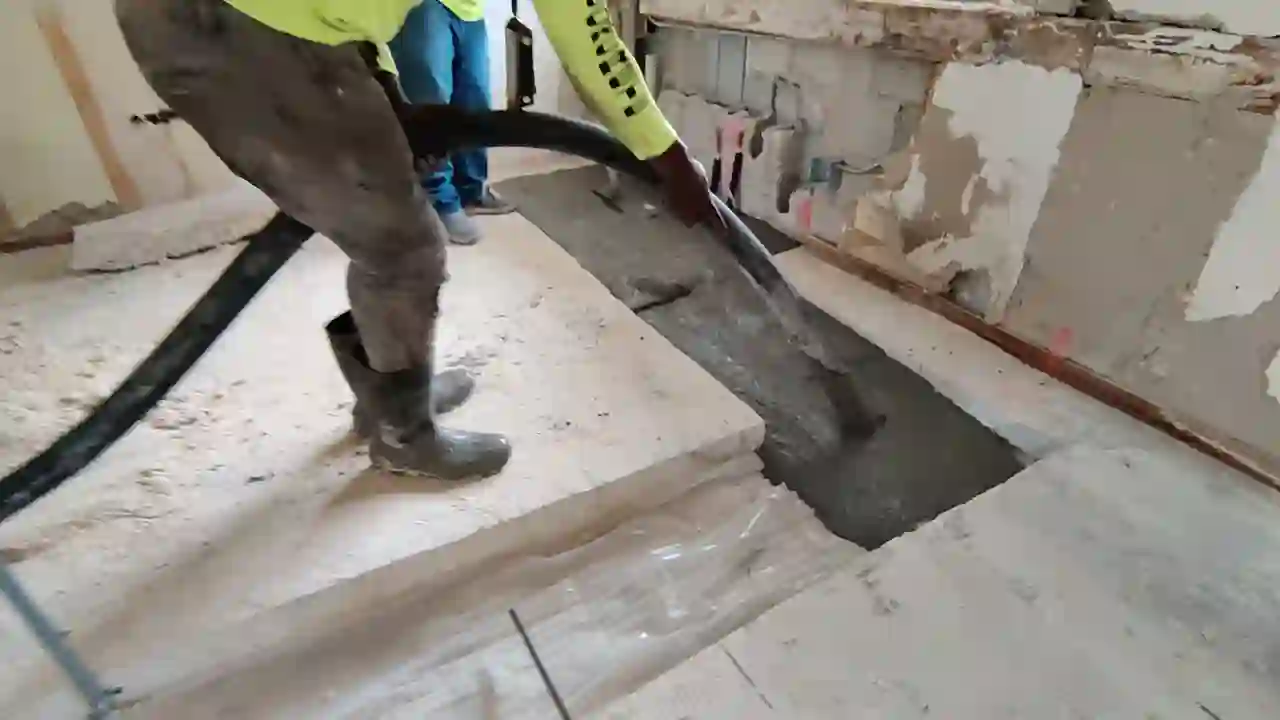
Concrete breaking is controlled force — not random violence against a slab
To the uninitiated, concrete breaking looks like the simplest task in construction: apply force until the concrete yields. A sledgehammer, a jackhammer, a breaker mounted on an excavator — all of them transfer kinetic energy into the concrete mass, creating fractures that propagate through the material until it separates into manageable pieces. The physics is straightforward. The application of that physics in the real world, on a Miami property where the concrete being broken is eight inches from a foundation wall, two feet from a pool coping, or directly adjacent to a neighbor’s driveway, is anything but straightforward.
We perform concrete breaking across Miami-Dade County as part of larger demolition and cutting projects. The question is never whether concrete can be broken. It always can. The question is which method applies the right amount of force in the right location to break the concrete that needs to go while leaving the concrete that needs to stay completely undisturbed. That is the difference between controlled concrete breaking — a professional demolition technique — and uncontrolled breaking, which is how you turn a simple slab removal into a foundation repair project.
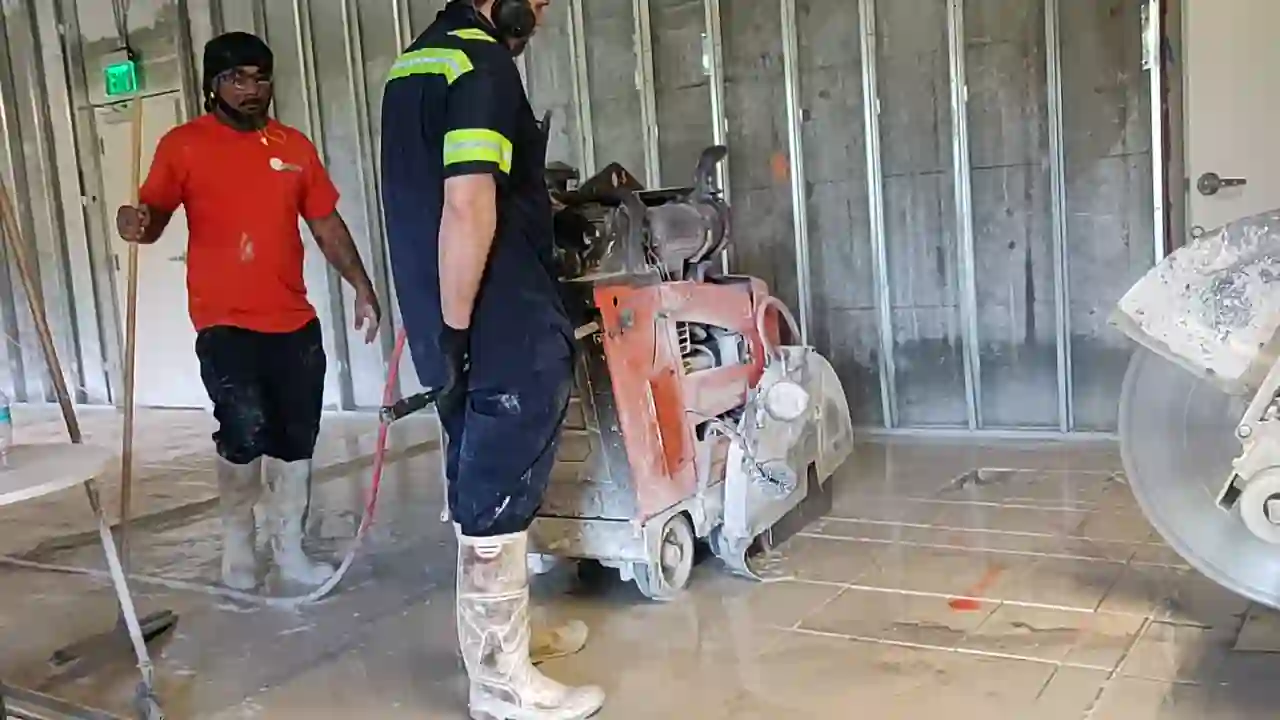
The concrete breaking method spectrum — from finesse to full force
Manual breaking — sledgehammers and pry bars
For thin concrete — 4-inch residential slabs, sidewalk sections, small patios — a 10 or 12-pound sledgehammer can break concrete effectively when the concrete is already separated from the surrounding slab by saw cuts. The saw cuts are the critical prerequisite: breaking concrete that is still connected to surrounding concrete transfers impact force into the surrounding slab, creating micro-fractures that become visible cracks over time. Saw-cut the perimeter first, then break the isolated section.
Pneumatic and electric breakers — the standard for most jobs
A 30 to 60-pound pneumatic breaker, or an equivalent electric breaker, is the most common tool for concrete breaking on residential and light commercial jobs. The key to effective breaker operation is: work from an edge inward where the concrete has room to fracture toward the open face; maintain a near-vertical angle — the breaker should strike nearly perpendicular to the surface; do not pry with the breaker, it is a hammer not a lever; and move systematically in a grid pattern to ensure complete coverage.
Hydraulic breakers — for thick, heavily reinforced concrete
When concrete is 8 inches thick or more, or heavily reinforced with rebar, a hydraulic breaker mounted on an excavator delivers the impact energy needed. Hydraulic breaking is the least precise method — used for bulk demolition where the surrounding concrete has been physically separated from the demolition area by saw cutting. Professional demolition services combine hydraulic breaking for bulk removal with smaller breakers for finishing work near sensitive interfaces.
Expansive grout — the silent, vibration-free alternative
When concrete must be broken within inches of sensitive structures, expensive finishes, or occupied spaces, expansive grout provides a vibration-free alternative. The grout is mixed with water and poured into drilled holes. Over several hours, it expands with enough force to fracture the concrete along the lines defined by the hole pattern. There is no noise beyond the initial drilling, no vibration beyond the concrete itself, and no flying debris. Used in Miami for hospital mechanical rooms, occupied office buildings, and historic structures.
Vibration management — the hidden priority in Miami concrete breaking
Vibration from concrete breaking travels through the ground and through connected concrete elements. In Miami’s densely built residential neighborhoods, where one home’s driveway abuts the neighbor’s foundation, vibration management is not optional — it is the primary constraint on how concrete breaking is performed.
Impact energy from a breaker travels through concrete as stress waves. When those waves reach an interface — a crack, a joint, a bond between concrete and tile — the stress can exceed the bond strength and cause separation. Professional concrete breaking manages vibration by saw-cutting separation lines before breaking begins (the separation line stops stress waves from traveling beyond the cut), using the smallest effective breaker (a 30-pound breaker creates less vibration than a 60-pound breaker), breaking in a sequence that moves away from sensitive areas, and monitoring adjacent structures with vibration monitors on sensitive jobs.
Safety considerations during concrete breaking
- Flying debris: Impact breaking launches concrete fragments at high velocity. The work area must be cleared, and operators wear face shields in addition to safety glasses.
- Silica dust: Dry breaking generates respirable crystalline silica. Water suppression reduces dust significantly. Operators wear respirators when water suppression is insufficient.
- Rebar exposure: Broken concrete exposes sharp, jagged rebar ends. Exposed rebar must be bent over, capped, or cut flush before anyone works near it.
- Noise: Pneumatic breakers produce noise levels above 100 decibels. Hearing protection is mandatory. Neighbors should be notified before extended breaking work.
- Hand-arm vibration: Extended operation of handheld breakers causes cumulative damage. Professional operators rotate tasks and take breaks to limit exposure.
When concrete breaking should be concrete cutting instead
Not every concrete removal job requires breaking. Slab sawing services can cut the concrete into sections that are lifted out intact, eliminating the vibration, dust, and debris of breaking entirely. Saw cutting is preferred when the concrete being removed is adjacent to concrete being preserved, when the removal area is small enough that saw cutting and lifting is faster than setting up a breaker, when the concrete contains rebar that would make breaking slow and difficult, and when the work is indoors and dust control is a primary concern.
Concrete breaking is a demolition skill that looks like brute force but is actually controlled force — applied in the right location, at the right intensity, with the right precautions to protect everything around it. When it is done well, the concrete you wanted gone is gone, and everything else looks exactly like it did before. When it is done poorly, the concrete you wanted to keep has new cracks, your neighbor is on the phone, and you are looking at a repair bill that exceeds the original demolition cost.