Why Concrete Pipe Cutting Demands Strict Safety Measures
Every time we set up on a Miami job site to cut concrete pipe, the risks are real. Reinforced concrete pipe (RCP) carries immense compressive strength, but the cutting process introduces flying debris, high-torque equipment, and the potential for catastrophic pipe collapse. Over my thirty years in this trade, I have seen what happens when crews skip the basics. A single misstep—like failing to secure the pipe before cutting—can send a section rolling and crush a worker’s leg. That is why our team at Concrete Cutting Miami, LLC treats every pipe cut with the same discipline we apply to bridge demolition or high-rise core drilling. Safety is not a checklist; it is a mindset that starts before the first blade touches the pipe.
Common Hazards on Miami Job Sites
Concrete pipe cutting in South Florida presents unique challenges. High humidity and frequent rain make surfaces slippery. Loose sand and unstable ground near excavation sites can cause equipment to tip. The most frequent hazards we encounter include:
- Uncontrolled pipe movement – Even a short section of 48-inch RCP weighs several tons. Without proper chocking and strapping, it can roll or shift during cutting.
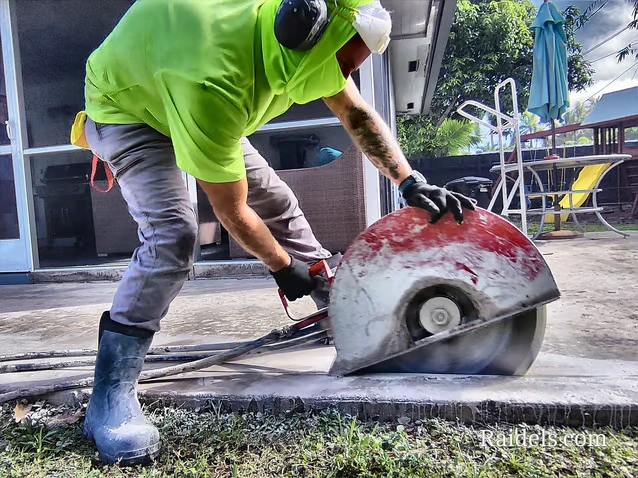
- Silica dust exposure – Dry cutting generates respirable crystalline silica. OSHA’s silica standard (29 CFR 1926.1153) requires wet methods or HEPA-filtered vacuum systems. We use water suppression on every pipe cut.
- Kickback and blade fracture – A dull or improperly tensioned diamond blade can bind and shatter, sending fragments at lethal speeds. Daily blade inspections are non-negotiable.
- Confined space risks – Cutting pipe in trenches or manholes introduces oxygen deficiency, toxic gas buildup, and entrapment hazards. Atmospheric monitoring is mandatory before entry.
- Electrical and utility strikes – Buried conduits and gas lines are common in Miami’s urban corridors. We always verify utility locates before cutting.
For a deeper look at how we handle similar risks on other projects, check out our concrete cutting services page.
OSHA Standards for Concrete Pipe Cutting
Compliance with OSHA’s construction standards is not optional—it is the legal baseline. When cutting concrete pipe, the most relevant regulations include 29 CFR 1926.300 (hand and power tools), 1926.350 (gas welding and cutting), and 1926.600 (equipment). But the standard I see violated most often is 1926.20(b)(2), which requires frequent and regular inspections of job sites, equipment, and methods. A crew that never inspects its saws or rigging is an accident waiting to happen.
We also follow the American Concrete Institute (ACI) guidelines for cutting and coring. For example, ACI 318-19 specifies minimum reinforcement cover that affects cutting depth. If you cut too close to the steel, you risk weakening the pipe structure. Our operators are trained to read pipe wall thickness and rebar placement before making any cut.
One area where many contractors fall short is recordkeeping. OSHA requires a written hazard communication program, training documentation, and a log of work-related injuries and illnesses. We maintain digital records for every job, including pre-cut safety briefings and equipment maintenance logs. This not only keeps us compliant but also provides a clear audit trail if an incident occurs.
If you are preparing a job site for concrete cutting, our construction site preparation resources can help you get started on the right foot.
Essential Safety Gear for Cutting Concrete Pipe
Personal protective equipment (PPE) is the last line of defense, but it must be selected and worn correctly. For concrete pipe cutting, the minimum PPE includes:
- ANSI Z87.1-rated impact goggles – Not just safety glasses. Flying chips and slurry require a sealed goggle that prevents particles from entering from the sides.
- Hearing protection – Diamond saws and hydraulic power units often exceed 90 dBA. Dual protection (earplugs plus earmuffs) is recommended for sustained cutting.
- Cut-resistant gloves – Handling sharp pipe edges and changing blades demands gloves with at least a ANSI A4 cut level. We use Kevlar-lined gloves for all manual tasks.
- Steel-toed boots with puncture-resistant soles – Miami job sites are littered with rebar ends and metal strapping. A puncture through the sole can cause a serious infection.
- Respiratory protection – Even with wet cutting, fine silica mist can be inhaled. We use N95 respirators as a minimum; for confined spaces, we switch to supplied-air respirators.
Beyond PPE, we equip every crew with a dedicated safety kit containing a first-aid trauma pack, a fire extinguisher rated for electrical fires, and a portable eyewash station. These items are staged within 25 feet of the cutting zone.
Pre-Operation Inspection and Job Site Preparation
Before the first cut, our senior operator walks the entire job site. We inspect the pipe for cracks, spalling, or exposed rebar that could cause unpredictable breakage. The ground beneath the pipe must be level and compacted. If the pipe is in a trench, we verify that shoring is adequate and that the excavation meets OSHA’s slope or benching requirements (29 CFR 1926.652).
Equipment checks are equally thorough. We test hydraulic hoses for leaks, check blade arbor nuts for proper torque, and verify that the water supply for wet cutting is pressurized and flowing. Any saw with a worn blade or damaged guard is tagged out immediately. We also confirm that all electrical cords and tools are GFCI-protected—especially important in Miami’s damp conditions.
Communication protocols are established before cutting begins. Each crew member knows the hand signals for “stop,” “emergency,” and “all clear.” We use two-way radios in noisy environments. A designated safety observer stands clear of the cutting zone but maintains visual contact with the operator at all times.
For projects involving fence posts or small-diameter pipes, our concrete fence post core drilling service follows the same rigorous preparation steps.
Safe Cutting Methods for Different Pipe Materials
Not all concrete pipe is the same. Reinforced concrete pipe (RCP) with steel cages requires a different approach than non-reinforced clay or vitrified clay pipe (VCP). For RCP, we use diamond wire sawing or a hydraulic ring saw to cut through both concrete and rebar without overheating the blade. The wire saw’s continuous loop allows us to make precise cuts while keeping tension constant—critical for avoiding blade snagging.
For VCP, which is brittle and prone to shattering, we use a diamond blade with a segmented rim and a slower feed rate. The saw must be mounted on a track to prevent lateral movement. We also pre-wet the pipe to reduce dust and cool the blade. In both cases, we never cut more than halfway through the pipe in one pass; we rotate the pipe or reposition the saw to complete the cut from the opposite side.
When cutting large-diameter pipe (36 inches and above), we often employ a chain saw attachment on a hydraulic power unit. This method is common in landscaping and drainage work. For more on that technique, see our hydraulic chain sawing tag page.
We also offer specialized services for landscaping concrete cutting, which frequently involves cutting irrigation pipe and culverts.
Emergency Response and First Aid Readiness
No matter how thorough your safety protocols, emergencies can happen. A blade fragment can strike a worker. A pipe can shift and crush a foot. A hydraulic hose can burst and spray hot oil. Our crews are trained to respond within seconds. Every job site has a designated emergency coordinator who knows the nearest hospital and the quickest route. We carry a trauma kit with tourniquets, hemostatic gauze, and chest seals—items that can control bleeding until paramedics arrive.
We also conduct monthly emergency drills. These are not just fire extinguisher demonstrations; we simulate real scenarios like a caught-between accident or an electrical shock. Each drill is documented and reviewed to identify gaps in response time or communication. OSHA’s emergency action plan standard (29 CFR 1926.35) requires these drills, but we go beyond compliance because we know that muscle memory saves lives.
First aid training is mandatory for every crew member. We partner with the American Red Cross to provide CPR and AED certification. On larger jobs, we station a certified first responder on site full-time.
Training and Certification Requirements
Cutting concrete pipe is not a task for untrained laborers. Every operator on our team holds a certification from the National Association of Concrete Cutting and Coring (NACCC) or an equivalent program. Training covers blade selection, machine operation, rigging, and hazard recognition. We also require annual refresher courses on OSHA’s silica standard and confined space entry.
New hires spend a minimum of 80 hours under direct supervision before they are allowed to operate a saw independently. During that period, they learn to read pipe markings, identify rebar patterns, and perform pre-use inspections. We also train them on the specific dangers of Miami’s geology—soft limestone, high water tables, and buried utilities that are often unmarked.
Our commitment to training extends to our clients. When we subcontract for general contractors, we provide a safety orientation that covers our cutting procedures and their role in maintaining a safe work zone. This collaborative approach reduces accidents and keeps projects on schedule.
For a full list of our capabilities, including core drilling and wall sawing, visit our main services page.
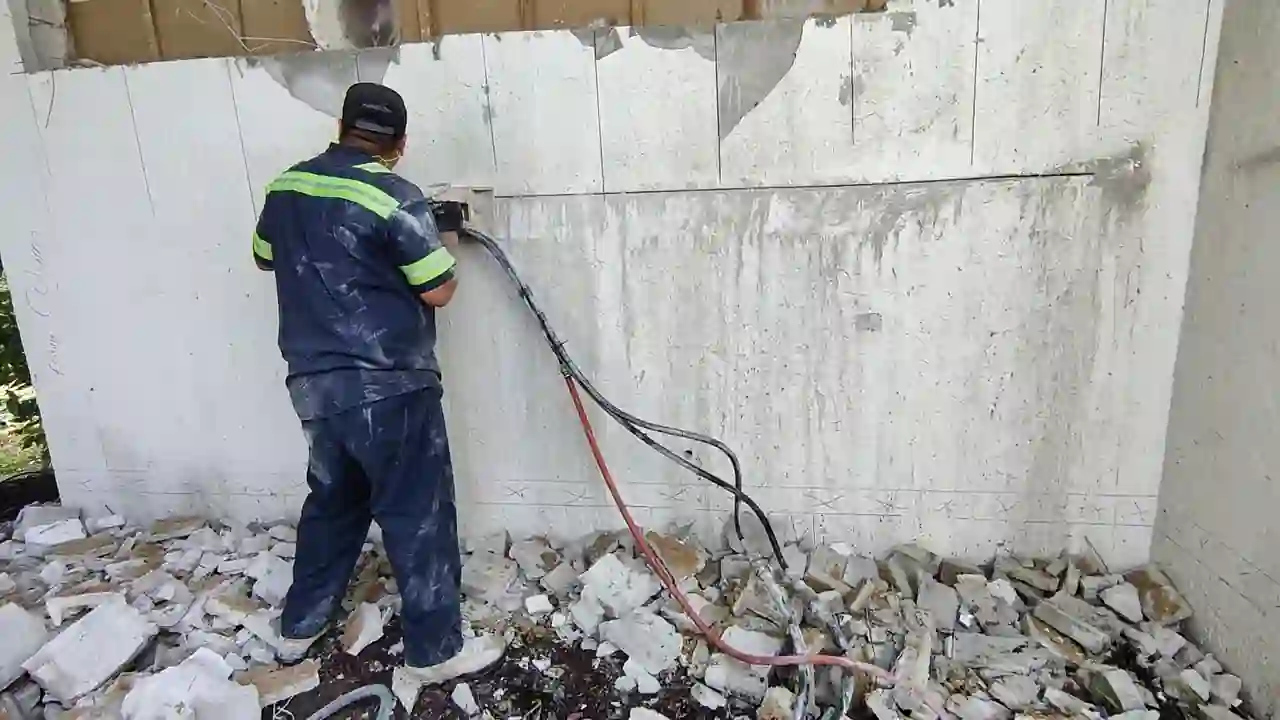
Cutting concrete pipe is a high-risk operation that demands respect, preparation, and constant vigilance. By following OSHA standards, using proper PPE, inspecting equipment, and training crews, we at Concrete Cutting Miami, LLC ensure that every job is completed safely and efficiently. Whether you are a contractor planning a drainage project or a homeowner needing a pipe cut for landscaping, never compromise on safety. The few extra minutes spent on inspection and planning can prevent a lifetime of regret.