The real question behind how to get rid of a swimming pool
When Miami homeowners start searching for how to get rid of a swimming pool, the surface question is about process and cost. The deeper question — the one that determines the right answer for your specific property — is about what you want to do with the land after the pool is gone. Can you build on it? Can you sell the property without disclosing a buried pool? Will the filled area drain properly in Miami’s wet season, or will it become a mosquito-breeding swamp? These are the questions that determine whether you need full pool removal or whether a partial fill-in is sufficient. And the answer to these questions is different for every property in Miami-Dade County because the water table, the soil type, and the future plans for the land are different for every property.
There are fundamentally two ways to get rid of a swimming pool. The first is full demolition and removal: every piece of the pool structure — concrete shell, rebar, coping, tile, plumbing, equipment pad — is demolished, excavated, and hauled away. The hole is backfilled with compacted engineered fill in lifts. After this process, the land is buildable — you can construct an addition, a garage, or any other structure on the former pool site. The second is partial fill-in (pool abandonment): the pool equipment is removed, drainage holes are cut through the bottom, the top few feet of the shell walls are broken off and placed in the bottom, and the remaining cavity is filled with compacted fill and topped with soil and sod. After this process, you have a backyard — but you cannot build a structure on it, and you must disclose the buried pool to future buyers.
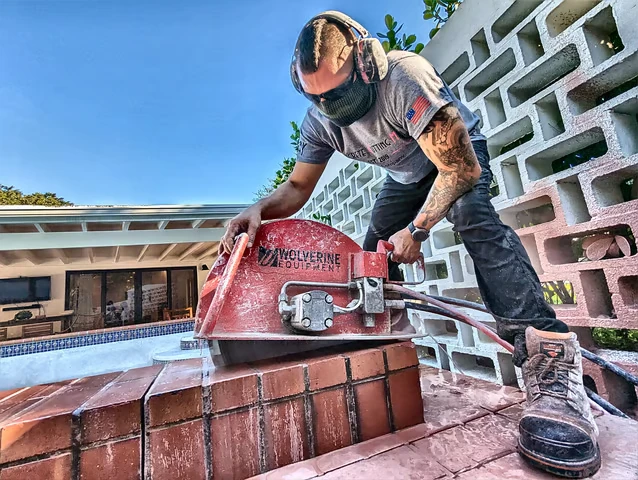
We help Miami homeowners navigate this decision every month. The choice between full removal and partial fill-in is not about what costs less today. It is about what you need the land to do for you over the next ten, twenty, or thirty years. Getting this decision right at the start saves tens of thousands of dollars compared to getting it wrong and having to fix it later.
Full pool demolition and removal: the comprehensive solution
Full pool removal is the most thorough way to get rid of a pool. The process:
Step 1: Permitting
A demolition permit is obtained from Miami-Dade County. The permit application includes a property survey showing the pool location, a demolition plan describing the removal method and equipment, an erosion and sediment control plan, and a debris disposal plan identifying the permitted C&D facility where pool debris will be taken. Utility disconnect verification — confirmation that electricity and gas to pool equipment have been properly disconnected — is required before demolition begins.
Step 2: Equipment removal and utility disconnect
The pool pump, filter, heater, chlorinator, and all associated plumbing and electrical are removed. Pool equipment is separated for recycling or disposal. Electrical circuits feeding pool equipment are disconnected at the panel and the wiring is removed or properly terminated. Gas lines to pool heaters are disconnected and capped by a licensed plumber.
Step 3: Pool shell demolition
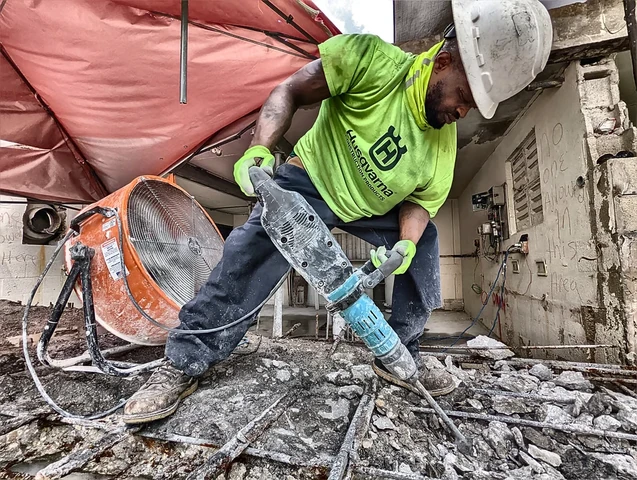
The concrete or gunite pool shell is broken up using excavator-mounted hydraulic breakers. The shell walls, floor, steps, and benches are all broken into pieces sized for debris removal. For gunite pools — which are reinforced with rebar — the concrete is broken away from the steel, and the rebar is cut into manageable lengths for recycling. This is a heavy equipment operation that produces significant debris volume — a typical residential pool shell contains 30-50 cubic yards of concrete.
Step 4: Debris removal
All concrete, rebar, coping, tile, and plumbing are loaded into dump trucks and hauled to a permitted C&D recycling facility. Concrete is crushed and recycled as aggregate. Rebar is recycled as scrap steel. The debris removal phase requires truck access to the pool area — if access is restricted, smaller equipment and more trips may be required, increasing cost.
Step 5: Backfill and compaction
The excavation left by the removed pool shell is backfilled with clean engineered fill — soil or crushed aggregate free of organic material, debris, or contaminants. The fill is placed in lifts — typically 12 inches at a time — and each lift is mechanically compacted before the next lift is placed. Compaction testing — a nuclear density test performed by a geotechnical engineer — verifies that each lift meets the required compaction standard, typically 95% of maximum dry density. The compaction testing report is submitted to the county as part of the final permit closeout.
Step 6: Final grading, topsoil, and restoration
The final lift is graded to match the surrounding grade and provide positive drainage away from structures. Topsoil is placed if the area will be sodded or landscaped. The site is stabilized — sod, seed, or mulch — to prevent erosion. A final inspection by the county closes the permit.
Partial pool fill-in: the practical approach for many Miami homeowners
Partial fill-in costs significantly less than full removal and is the right choice for homeowners who want to eliminate the pool and replace it with yard space, with no plans to build on the site. The process:
Step 1: Drainage hole cutting
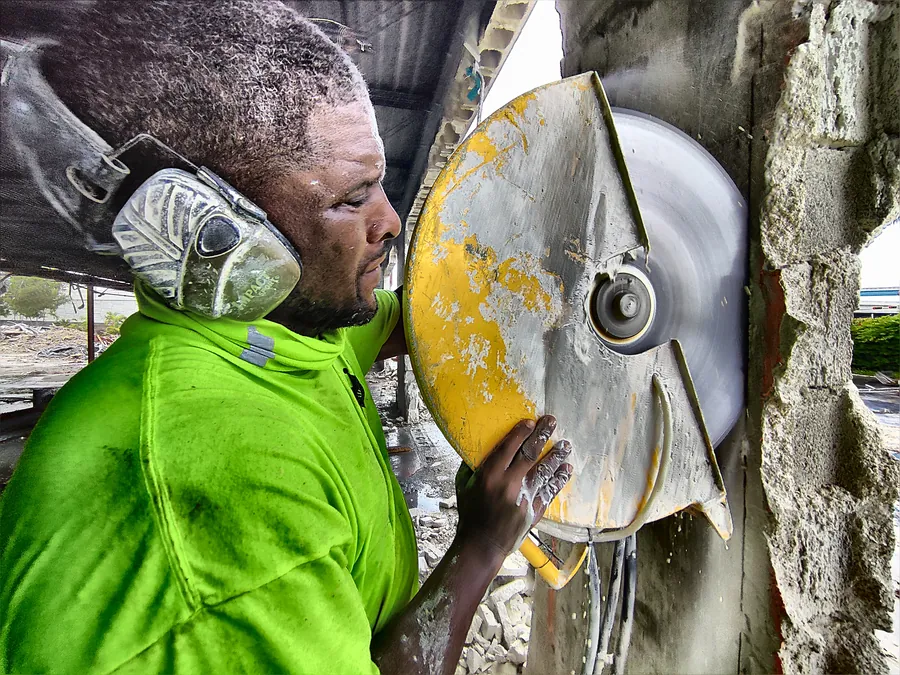
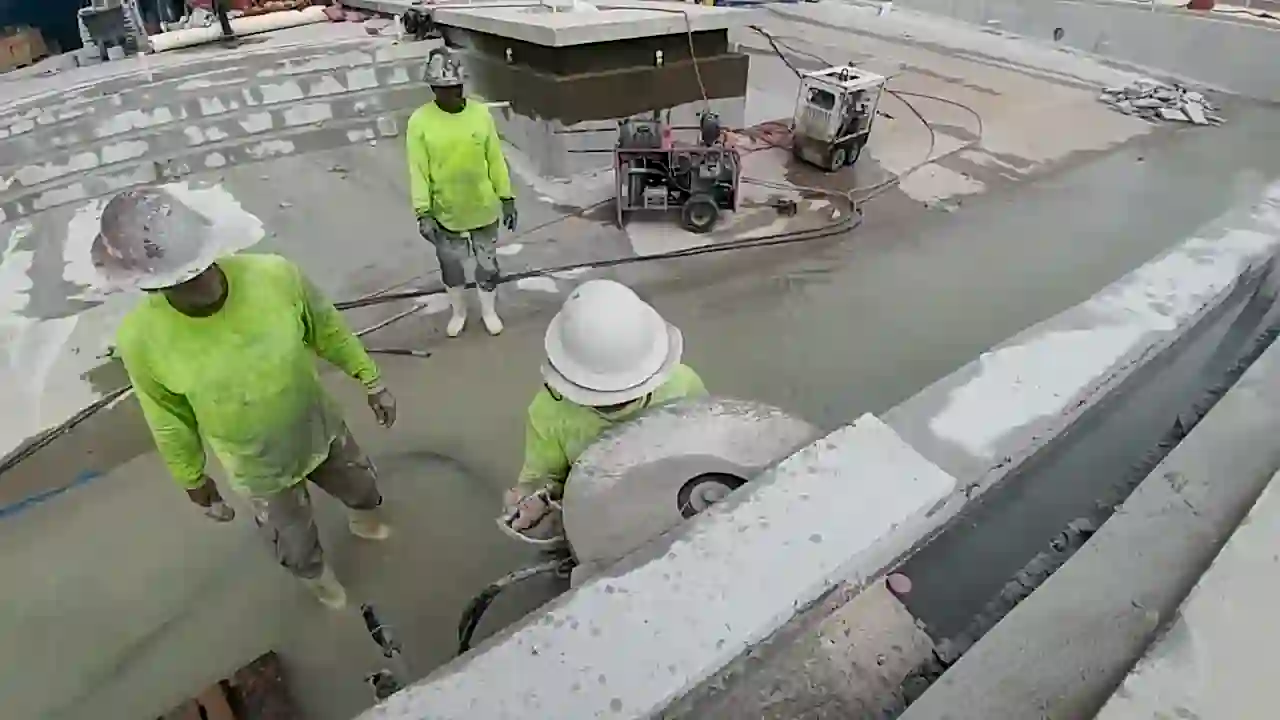
Before any filling occurs, drainage holes are cut through the pool shell floor. These are typically 12-18 inch diameter cores cut at multiple locations across the pool bottom — the number depends on pool size and shape. The purpose of these holes is to prevent groundwater accumulation in the buried shell. In Miami’s high water table, a buried pool shell without drainage holes fills with groundwater. The water creates hydrostatic pressure that can lift the buried shell, crack the fill above it, and create a sinkhole. The drainage holes are the single most important detail of a partial fill-in in Miami-Dade County. They must be cut, not punched through with a breaker — the core cut creates a clean, round hole that resists clogging, while a broken hole is irregular and prone to clogging with silt.
Step 2: Wall demolition to below grade
The top 2-3 feet of the pool shell walls are broken off around the entire perimeter and the broken concrete is placed in the bottom of the pool. This step ensures that the remaining pool shell is at least 12 inches below finished grade — deep enough that normal yard activities, landscaping, and shallow excavation will not encounter it. Leaving the walls intact up to grade creates a situation where a future homeowner digging a garden bed or a fence post hole hits concrete and discovers the buried pool in an unpleasant way.
Step 3: Fill placement and compaction
The pool cavity is filled with clean fill material placed in lifts and compacted. The fill material must be free of organic material, construction debris, and large rocks that would create voids. The compaction in a partial fill-in is less demanding than in a full removal because the remaining pool shell provides lateral containment — but the fill inside the shell still consolidates over time, and poor compaction results in surface settlement that creates a depression in the yard.
Step 4: Topsoil and restoration
The final 6-12 inches are topsoil, graded, and sodded or seeded. The surface restoration should blend the former pool area with the surrounding yard. The filled area will always settle slightly differently than the surrounding undisturbed soil, and over years a subtle depression may form. This is normal for a partial fill-in and is not a sign of a problem — provided the drainage holes are functioning and preventing water accumulation.
The decision: full removal vs partial fill-in
Full removal is the right choice when:
- You plan to build on the former pool site — a house addition, garage, or any structure requiring a foundation
- You are selling the property and want to eliminate the pool disclosure requirement and the buyer concern about a buried pool
- The pool shell is severely cracked, shifted, or structurally compromised in a way that makes partial fill-in risky
- The property has drainage issues that a buried pool shell could worsen
- You have the budget for full removal and want the complete peace of mind that comes with it
Partial fill-in is the right choice when:
- You want to convert the pool area to yard or garden space with no plans to build on it
- Budget is a primary consideration and the cost difference between full and partial is significant for your situation
- You are staying in the home long-term and accept the disclosure requirement when you eventually sell
- The property has good drainage and the water table is not unusually high for Miami-Dade County
- The pool shell is in good structural condition — no major cracks, no significant shifting
Miami-specific considerations for pool removal
- High water table: In areas of Miami where the water table is within a few feet of the surface, pool removal must account for groundwater during excavation. Dewatering — pumping groundwater out of the excavation during backfill — may be required. The drainage holes in a partial fill-in must be adequate for the specific water table conditions at the property.
- Hurricane code requirements: Miami-Dade’s HVHZ (High-Velocity Hurricane Zone) building code does not specifically regulate pool removal, but if the removal is in preparation for new construction, the new construction must meet HVHZ requirements — including deeper foundations and stronger structural connections than in non-hurricane regions.
- Access for equipment: Many Miami residential lots have limited side-yard access to the backyard pool area. Pool removal equipment — excavators, skid steers, dump trucks — must be able to access the pool. If access is restricted, smaller equipment (mini-excavators, small dumpers) can work but more slowly, increasing cost.
- Neighbor proximity: Miami lots are often small with pools close to property lines and neighboring structures. Vibration from demolition, dust control, and debris management must account for the proximity of neighbors.
Getting rid of a swimming pool is a one-time project with permanent consequences. The decision between full removal and partial fill-in determines what the land can do for decades. Choose based on your long-term plans for the property, not just on the upfront cost comparison. The pool that costs more to remove correctly today costs nothing to fix tomorrow.